


 Shkruar nga Stefano Cingolani*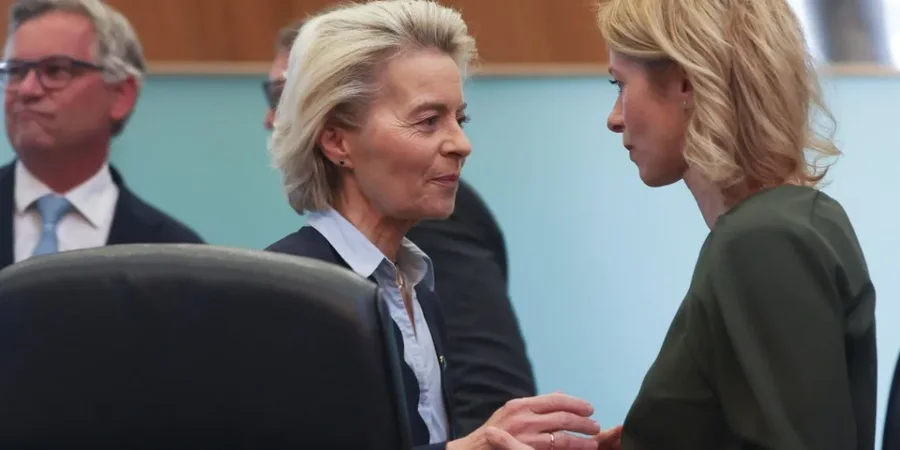
The hard line does not appeal to Merz's Germany, Meloni's Italy or Tusk's Poland, nor to the Netherlands or the Nordic countries.
The divisions in the EU are very strong: it is therefore impossible to face the strategic challenges that arise. Tariffs, defense, budget; the European Union finds itself engaged on three strategic fronts and its forces are advancing in disarray, divided by the political positions, economic interests and internal weaknesses of individual states. Thus, national governments blame the Commission and the Commission blames the governments. The fundamental flaw is exposed, perhaps more clearly than in the past: to overcome these three obstacles and to respond to the new American challenge, a real Union is needed, which does not currently exist and no one knows whether it will exist in the near future.
The soothing messages of recent days on tariffs are being undermined by Donald Trump’s recent mood swings. Before going to bed, he once again showed his belligerent side, apparently calling for a tough fight without fear. There are also divisions within the Administration, and “doves” like Treasury Secretary Scott Bessent, who seek to soften the Commander-in-Chief’s intransigent stance, are constantly opposed by the hawks who surround the White House and infiltrate the Oval Office. So the lottery continues: the EU accepts 10%, but is subject to 25% on vehicles and a whopping 50% on steel and aluminum; Trump is not giving in and instead raises the standard to 20% on everything without lowering the tariffs already in place.
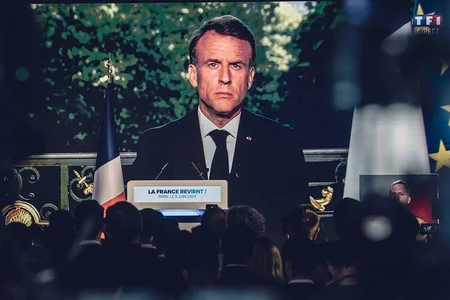
How far should we push the confrontation? To the breaking point with the United States? Emmanuel Macron believes that this is the right path, so the EU must use all its weapons, both economic and strategic-military. Therefore, taxes on American multinationals, from Google to Netflix and all the big technology companies, but also restrictions on military giants, in short, to put it briefly: more Eurofighters and fewer F-35s, more Anglo-French nuclear warheads and fewer American bombs.
This difficult situation could turn into outright blackmail: what if a government denies airspace to US planes bombing Iran? Or what if the use of US bases on European soil, which are not under NATO control but are only under the control of the Pentagon, like Sigonella in Sicily, is called into question?
These are no longer just academic hypotheses; they are also being discussed in American defense circles and among foreign policy analysts, who are calling on the White House not to underestimate the strategic importance of Europe, including for the protection of American interests.
The hard line does not appeal to Merz's Germany, Meloni's Italy or Tusk's Poland, nor to the Netherlands or the Nordic countries. Creating an Atlantic wall would also be dangerous for Europeans. This certainly applies to defense as well as finance.
The €2 trillion budget immediately seems difficult to pass. The commitment for the seven years between 2028 and 2034 is double that of the previous seven-year period. The budget is more centralized and reduces direct contact with local authorities and interest groups. It includes taxes on businesses and services that are certainly not well-known (from waste to tobacco) and creates a €409 billion competitiveness fund.
Each Member State will adopt a National and Regional Partnership Plan (NRP) that will integrate all support measures, whether for workers, farmers or fishermen, cities or rural areas, regions or national level. These plans will identify the necessary investments and reforms and will be developed and implemented in close cooperation between the Commission, Member States, regions, local communities and all other stakeholders.
Germany, which can afford to spend, has decided to do so mainly domestically, and the chancellor ultimately has good reason to say no. Moreover, her government certainly does not have the numbers to guarantee stability. France is even worse. Prime Minister François Bayrou has just announced a budget filled with blood and tears that includes not only spending cuts but also increased work by removing two public holidays: Easter Monday and May 8, the day of the Nazi surrender in 1945.
A bold move that could become reckless given the political balance in France: right-wing and left-wing oppositions are ready to join forces, and public opinion, which has made long holidays part of the French way of life, is already in turmoil. Not to mention that France, like Italy, is under infringement proceedings for excessive public deficits, and the planned cuts will only bring the deficit to 4.6% by 2026.
Rome immediately demanded changes to the draft European budget, requesting an exit from the procedure and a suspension of the Stability Pact to support businesses, while the government tries to use additional resources, such as those from the PNRR or allocations for the Messina Strait Bridge, to cover military spending. If we then look at Pedro Sánchez's Spain, which is paying attention to the French sirens, his minority government is now at its peak.
Political rather than economic weaknesses, conflicts between different national interests and a Commission seemingly full of ambitions but lacking the power to translate them into reality, bring us to the main issue: this is a Union in name, not in fact, that decides unanimously between 27 very different countries. It is true that defence, trade and competitiveness are three common challenges, but when it comes to making a choice, a single veto can block all the others.
Of course, Trump now has a phone number to call when he wants to discuss issues with the EU - that of Ursula von der Leyen. However, as crazy as he may be (or appear to be), Donald understands that this is not about a state and a government with the authority and power to decide. The EU may find common ground, but it would still be a defining moment.





Lini një Përgjigje