


 Shkruar nga Marcus Jung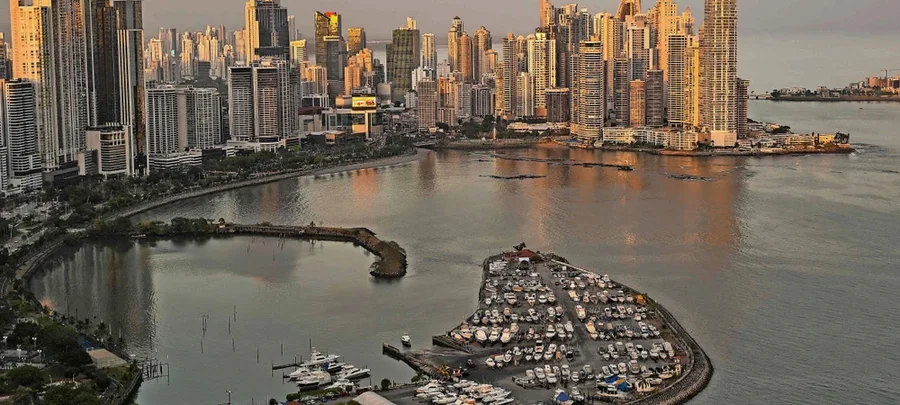
Ten years after the global scandal, investigations, reforms and their limits remain in the spotlight
One of the most important court cases of the year is currently underway at the Cologne State Court. However, there are no well-known figures in the dock. The decision of the panel is not expected to have the weight of a fundamental decision by the Constitutional Court in Karlsruhe. Christopher Z., a Swiss citizen with a Panamanian passport, is on trial in Cologne, accused of aiding and abetting tax evasion and forming a criminal organization. The damage to the state budget is estimated at 13.4 million euros.
Tax evasion, criminal organization and Panama? The accused lawyer was for years a partner in the now-defunct Mossack Fonseca firm and is suspected of helping very wealthy investors and high-net-worth individuals connect with so-called offshore companies based in Panama and other tax havens, in return for payment. The main goal was to hide financial flows and investments from tax authorities.
This Friday marks exactly ten years since Mossack Fonseca and its associated shell company industry became known around the world overnight. A data leak of more than 11.5 million documents was handed over to the International Consortium of Investigative Journalists (ICIJ). In Germany, the lead reporting was done by the Süddeutsche Zeitung. The revelations became known as the Panama Papers.
Almost every day, new names of politicians, celebrities and high-profile athletes who had hidden their assets through Mossack Fonseca and similar providers were published. For many readers and listeners, this was the first time they learned about countries with very low taxes and fast procedures for creating fictitious companies. The “Panama Papers” revealed not only legal strategies for tax avoidance, but also previously unknown violations and cases of money laundering.
The revelations also put heads of state in a difficult position. Iceland's Prime Minister Sigmundur David Gunnlaugsson resigned. British Prime Minister David Cameron faced intense pressure over his late father's offshore activities. Former Egyptian President Hosni Mubarak and former Spanish King Juan Carlos I were also implicated in the scandal.
The scandal sparked a political backlash in Brussels and Berlin. In the spring of 2016, there were calls for more transparency. Norbert Walter-Borjans, then finance minister in North Rhine-Westphalia, said that those who hide money and those who help them can no longer feel safe in their own skin. He also highlighted the difficulties of international cooperation in this area.
The Federal Ministry of Finance announced that over 100 countries already participate in the automatic exchange of information.
The then-Minister Wolfgang Schäuble emphasized that globalization makes action at the national level alone insufficient and requires global rules.
The German government also took concrete steps: it resumed negotiations with Panama on a double taxation treaty and proposed new laws to increase transparency on offshore companies. One controversial element was the lifting of bank secrecy for tax matters.
During the legislative process, these measures were criticized. Business representatives argued that companies outside the EU were being put under general suspicion, while tax justice organizations emphasized that the laws did not close all the loopholes. According to data, in the British Virgin Islands alone, there were about 400,000 “shell” companies in existence at the beginning of 2017.
New laws against harmful tax practices were passed in April 2017. However, Schäuble warned against creating false expectations due to the complexity of the problem.
Investigative authorities also took action. In 2017, the German Federal Criminal Office purchased millions of records from offshore leaks. This data was analyzed and shared with tax administrations and at least 17 European countries. Large-scale inspections were also carried out, including an operation at Deutsche Bank's headquarters in Frankfurt in 2018.
At that time, Mossack Fonseca no longer existed. The firm was dissolved in 2018 under legal pressure. In Panama, a major criminal trial against 28 defendants began in 2024, but ended with an acquittal for all.
According to a study published by Oxfam on the occasion of its 10th anniversary, in 2024, around $3.55 trillion in untaxed wealth was still held in tax havens. The organization estimates that this situation negatively affects the financing of public services and increases inequality.
German authorities report that over 800 offshore companies with links to Germany have been identified and around 700 people have been investigated. Additional tax revenues have been collected and fines have been imposed on banks and financial intermediaries.
According to the Cologne prosecutor's office, most of the case can be considered closed. However, the final conclusion is expected from the verdict in the current trial against the former Mossack Fonseca lawyer, which is expected to be announced soon. /Adapted from FAZ /




Lini një Përgjigje