


 Shkruar nga Chris Bryant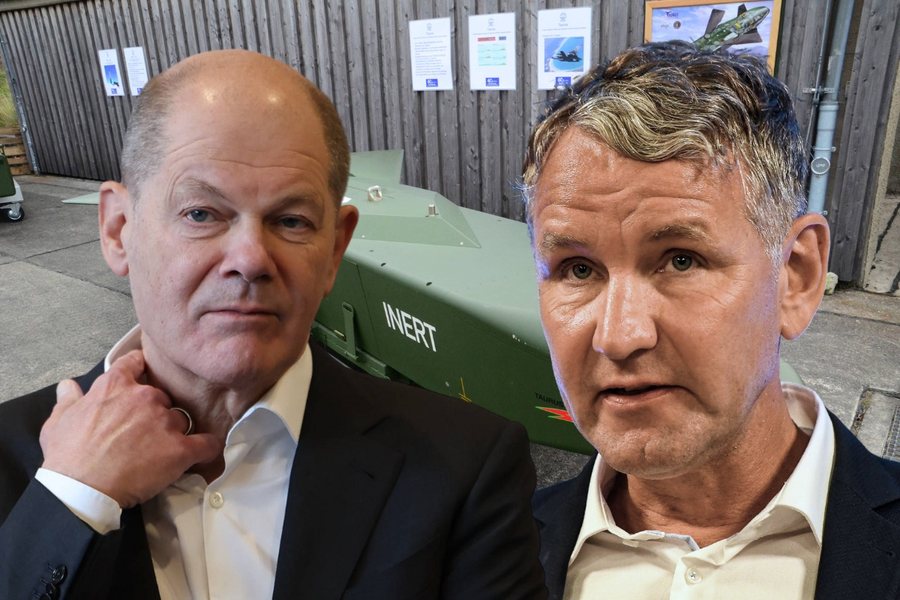
Violent crime has increased (much of it allegedly committed by immigrants); and Germany, instinctively pacifist, tends to stop defending Ukraine for fear of a Russian invasion with devastating consequences.
Sunday's victory for the Alternative for Germany in the state of Thuringia, the first for a far-right party in a German regional election since World War II, is indicative of a country with very low self-confidence. To keep extremist parties out of power and remain a reliable partner for international allies, the country desperately needs to reform its economic and political model.
Conversely, a troubled Germany could become a serious problem for Europe and the world. Although populist groups on the left and right won more than 60 percent of the vote in Thuringia and almost half in Saxony, other parties have ruled out joining regional governments with the AfD.
This means they may not be able to enforce their policies. And if the current polls are correct, the AfD won't do so well in next year's federal election. The conservative Christian Democrats are expected to win around 30 percent of the vote and thus the right to lead the next federal government.
Early elections are almost impossible, as all three members of the coalition have experienced the departure of supporters. This is reassuring, but only up to a point: A political barrier against the AfD would reinforce the sense of disdain among its voters.
Meanwhile, the opposition conservatives are now led by Friedrich Merz, whose views on immigration are tougher than Angela Merkel's (He has at least ruled out cooperation with the AfD, and has been a strong supporter of Ukraine).
For now, Germans see trouble everywhere, which makes them more easily lured by the AfD and Sahra Wagenknecht's Buendnis, a new left-wing group that opposes migration and wants to end sanctions against Russia. The economy has been stagnant for 2 years, and inflation is just starting to fall.
But violent crime has increased (much of it allegedly committed by immigrants); and Germany, instinctively pacifist, tends to stop defending Ukraine for fear of a Russian invasion with devastating consequences. Instead of providing security, the coalition government has reinforced the impression that the country has gone off the rails.
Reconciling the Lib Dems' liberal views on borrowing with the Social Democrats' commitments to welfare and the Greens' zeal for de-carbonisation is often a very difficult task. Disillusionment is particularly high in the former communist east, where there is no loyalty to establishment parties, where average wealth is lower and where the population is aging rapidly as many young people have migrated to the more prosperous west.
It's been almost a decade since he allowed in refugees from Syria and Afghanistan, but now a good part of the population feels that this humanitarian act has gone too far. The killing of 3 Germans last month by a Syrian asylum seeker has changed the mood. Now even moderates are now in favor of restricting migration.
Meanwhile, Chancellor Olaf Scholz has rightly offered unwavering support for Ukraine, but concerns about the cost of funding its defense and supporting Ukrainian refugees are beginning to be felt strongly among voters. This year, it will meet NATO's goal of spending at least 2 percent of GDP on defense for the first time in decades.
Some of the fears of Germans are motivated and stem from unhealthy addictions that were not properly addressed during Angela Merkel's long rule. Cheap Russian gas and China's seemingly insatiable demand for German cars and capital goods gave the country a false sense of security.
The low level of national debt was partly a product of the failure to repair the country's degraded infrastructure. On the other hand, German companies stuck to traditional engines for a long time, instead of embracing the industries of the future without wasting time.
Meanwhile, the shrinking of the working-age population will curb the country's economic growth potential. Other concerns are excessive or self-imposed. All things considered, Germany has done a decent job of coping with the loss of Russian gas. While some energy-intensive businesses closed, the lights have mostly stayed on.
A 49-point economic plan unveiled by the coalition government in July contains some good ideas to boost investment, cut red tape and boost employment, including financial incentives for overtime work and later retirement.
However, the legal restraint of the level of debt in Germany remains an obstacle to the proper financing of the country's needs, and makes inevitable the fight within the coalition for the limited financial resources. Unfortunately, a parliamentary consensus on this issue seems out of reach, because changing the constitution requires a 2/3 parliamentary majority, and opposition conservatives have no incentive to help.
Germany's European allies have benefited greatly from its willingness to accept refugees, but also from its financial support for Ukraine. It is the second largest aid provider after the US. Meanwhile, Germany is a major destination for exports to most EU member states.
But if the economy does not grow, then fights and grudges will increase over the way funds are distributed, thus helping the extremists of the left and the right a little. A stronger and more secure Germany is in everyone's interest. With the exception of Vladimir Putin, of course. /Adapted "Pamphlet", from "Bloomberg"



Lini një Përgjigje