


 Shkruar nga Pamfleti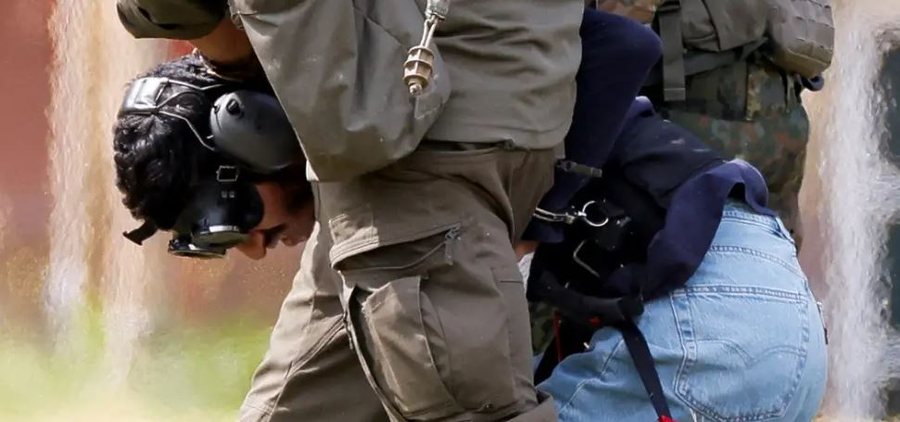
Germany's Office for the Protection of the Constitutional Order talks about the "TikToking of Islamism". Are social networks being used as a model for attacks like the one in Solingen?
Issa al H., the alleged attacker from Solingen, perfectly fits the main target group of the terrorist organization "Islamic State" (IS) and other extremist groups such as "Muslim Interactive". Islamists target young people on social networks such as TikTok or Telegram to attract them to their often deadly ideology.
For them, any form of democracy, in which political and social freedoms are guaranteed, such as equality between men and women, is an enemy. Anyone who adheres to and lives by these values, anywhere in the world, is considered an infidel and can be killed.
According to the knowledge of the security services and terrorism experts in Germany, jihadists or "warriors of God", individuals who, as in Solingen, kill people with the most ordinary means, are increasingly being recruited on the Internet.
The attacker from Solingen could be a "soldier" of the Islamic State
IS claimed responsibility for the Solingen attack. But it has not yet been definitively proven whether Issa al H. acted as a so-called "soldier" at the behest of a terrorist group. Although he fits the profile of such attackers.
Thomas Mike from the "Violence Prevention Network" (VPN) in Berlin is familiar with this type of group of people through his daily work. He knows exactly what role social networks play in radicalization - there are many propaganda films aimed at all age groups, for attract children and young people. "They try to arouse emotions in young people and create a sense of community," Mike told DW.
Video clips with a simple message: "You are ours!"
All this is not a new phenomenon, but according to Mike's observations it is intensifying. They offer young people an identity and try to remove them from society with simple messages: "You are ours if you behave according to the rules of true Islam." You must fight against this world!
This type of propaganda has become even more present since the beginning of the Gaza war, after the terrorist attack of the Islamic Hamas on Israel on October 7, 2023. "We see very clearly that the extremist scene uses the conflict in the Palestinian territories as a topic for mobilization, for to promote its political ideology".
The knife attack as "revenge also for what is happening in Palestine"
The terrorist attack in Solingen is terrible, but unfortunately not surprising, says Mike. "IS called the attack in Solingen revenge for what is happening in Palestine. The connection with the conflict in the Middle East is more than obvious".
Internet as a place where so-called hate preachers call for attacks? For terrorism expert Hans-Jakob Schindler, there is no doubt about it. "They specifically target people who are in chats where these preachers are present, and then move from those open groups to closed groups for further radicalization," says the director of the International Combating Project. of Extremism (CEP).
Security services and their work
That's why surveillance is a key part of early detection in the fight against terrorism, Schindler points out. However, German security services often complain that they do not have sufficient authority to do so. They believe that it is necessary to preserve all electronic communications. For this, each individual IP address must be registered. This is not possible so far, because the German government has not yet agreed on this issue, which concerns data protection.
The Minister of the Interior, Nancy Faeser (SPD), supports this request. On the other hand, the Minister of Justice, Marco Buschmann (FDP), thinks that the temporary storage of the data of suspicious persons, the so-called "Quick-Freeze", is sufficient.
The Constitutional Order Protection Service and the police knew nothing
Whether the stabbing in Solingen could have been prevented through record keeping remains debatable. It is certain that the suspected attacker was not on the radar of the police or the Service for the Protection of Constitutional Order. Current findings indicate that Issa al H. was radicalized as an individual online.
Preventing such people from carrying out their deadly plans, according to Thomas Mick of the Violence Prevention Network, is almost impossible.
Anti-terrorist war through networks
However, security services often manage to prevent planned attacks. Sometimes they receive information from foreign intelligence services. Or they eavesdrop on suspicious people as part of a secret internet search. With the so-called monitoring of the communication source, it is also allowed to intercept live conversations and read messages in messaging applications. But this is possible only by court order.
To combat radicalization online, the channels of extremist groups are often hidden on social networks. "These measures cannot completely prevent the spread of jihadist content, but they make it more difficult," says the current report of the Service for the Protection of Constitutional Order./DW




Lini një Përgjigje