


 Shkruar nga Federico Fubini
The two most powerful diplomatic powers of the last century, Washington and Moscow, were replaced by three businessmen in a game that will decide the future of Europe. The result was a 28-point plan that took months to formulate, though it bears the marks of professional incompetence on both sides.
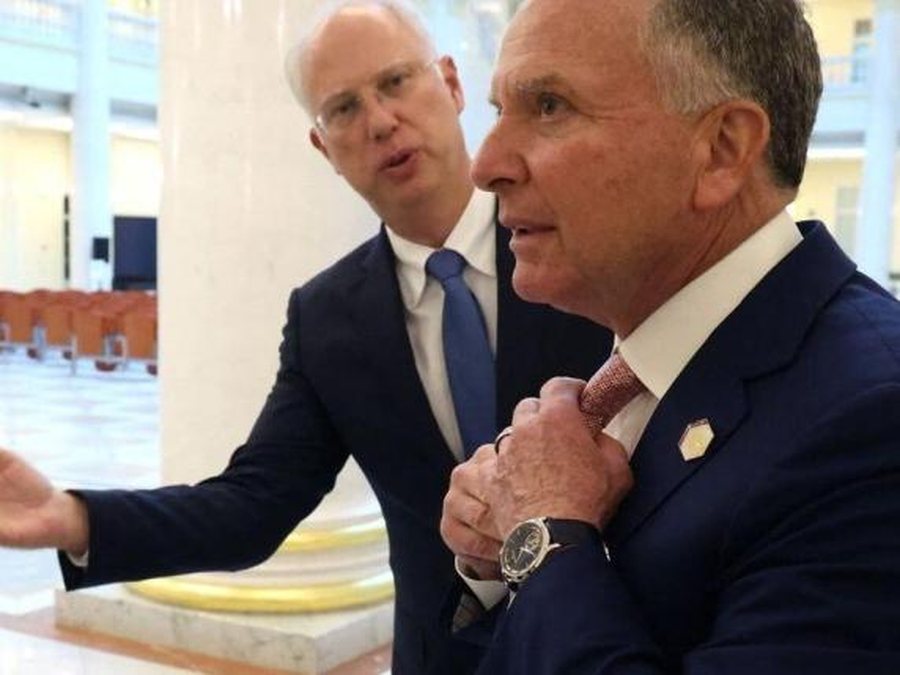
Kirill Dmitriev, the manager who negotiated the peace plan for Moscow, is not at all like the men Vladimir Putin has always surrounded himself with. He was born fifty years ago in Kiev. He did not experience the collapse of the Soviet Union because he moved to the United States at the age of 14, later graduating from Stanford and Harvard.
He has no formal experience in intelligence, but he had experience at McKinsey and Goldman Sachs before returning to Moscow (where he runs a government “direct investment” fund). He does not practice outright obscurity; instead, he seems increasingly committed to cultivating his profile on social media and the global press.
That's why his presence in Miami late last month is a sign of the times. Donald Trump had just signed his first sanctions against Russia, targeting oil majors Rosneft and Lukoil, which were due to take effect on November 21. These measures have now been postponed until December 13 due to the mandatory divestment of foreign assets, but they remain in place for crude oil exports: starting today, employees of Litasco, Lukoil's trading company, will be out of work.
Secret meeting
For this reason too, Dmitriev's movements appear to be part of a carefully planned sequence. To arrive in Miami in late October, Vladimir Putin's emissary must have had a special exemption, because his name appears on Washington's sanctions list (but not Brussels'). The Kremlin's choice to rely on him is no coincidence. Dmitriev already represented Putin at the secret 2017 meeting between Erik Prince, the informal emissary of the newly elected Trump in his first term, and Zayed al-Nahyan, the head of Abu Dhabi's sovereign wealth fund.
Now Dmitriev continues to manage the dictator’s interests, without the authority to make a single change himself, but with a perfect touch. The seemingly informal nature of the Miami meetings must have convinced Putin to send him. The Russians needed a profile that matched that of Steve Witkoff and Jared Kushner, Trump’s business partner and son-in-law, respectively, since neither has a mandate to negotiate on Ukraine on behalf of the White House, but for both, the personal connection to the president is far more important.
Thus the Miami paradox took shape: the two most powerful diplomatic powers of the last century, Washington and Moscow, were replaced by three businessmen in a game that will decide the future of Europe. The result was a 28-point plan that took months to formulate, although it bears the marks of professional incompetence on both sides.
Kremlin Footprints
In recent hours, various voices within the US administration have vowed to maintain that the plan was not inspired by Moscow, but at least one passage betrays the Kremlin's footprint: the proposal that Ukraine withdraw from the parts of Donetsk that it still controls and that, to convince everyone, they should (in theory) be "demilitarized". It is an idea discussed confidentially within the Russian government three months ago and today it reappears, unchanged, in the peace plan. He must have traveled with Dmitriev to Miami. As for the recognition of Crimea, Trump offered it as early as April. But the key point lies in the continuity between the Dmitriev-Witkoff meeting and the Trump-Putin summit in Alaska in August: there is a connecting thread between the two, which the Kremlin has emphasized in recent days, citing "communication channels" with Trump's inner circle.
Unconditional surrender?
The work was supposed to continue at a new summit between the two leaders in Budapest, but it collapsed after a phone call between Foreign Ministers Marco Rubio and Sergei Lavrov. Since then, Trump has decided to rely on such personal and informal networks that their plan does not even include ratification of the peace agreements in the Kiev parliament. Almost as if it were an unconditional surrender./ Corriere della Sera


Lini një Përgjigje