


 Shkruar nga Pamfleti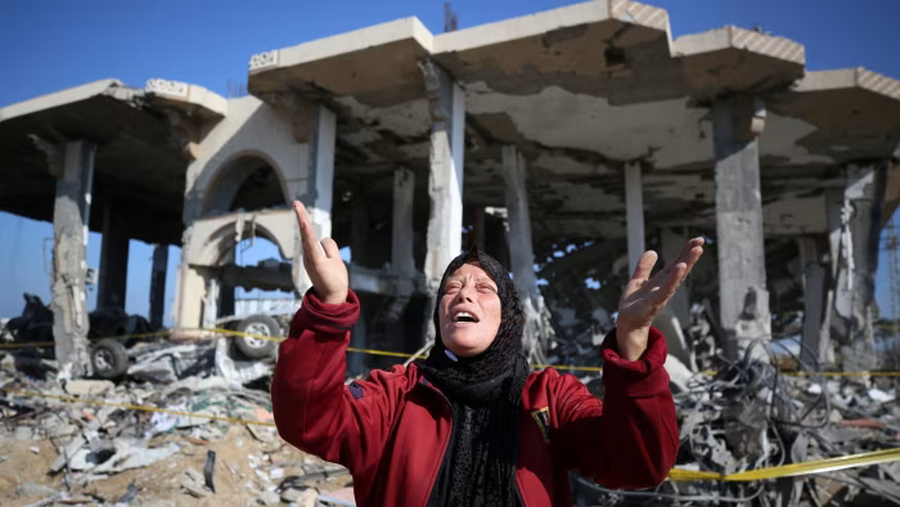
Hamas' attack on Israel was horrific, but the response has inflamed the region.
The Middle East would change from the moment Hamas militants broke through the security barrier around Gaza on October 7, entered Israel and killed more Jews than any day since the Holocaust. A nation's worst nightmare was realized in the most brutal way. Her enemy went on a rampage through the house, killing and maiming. About 1,200 people were killed; Another 250 were dragged to Gaza.
Israel received widespread sympathy as it bounced back from its darkest day. Allies supported her right to hold those responsible to account as Prime Minister Benjamin Netanyahu declared war and launched a major offensive against Hamas in Gaza. But there were also words of caution.
President Joe Biden warned the traumatized nation to avoid the mistakes Washington made after the 9/11 attacks, when it invaded Afghanistan and Iraq. As the death toll mounted in Gaza, US Defense Secretary Lloyd Austin warned that Israel risked replacing "a tactical victory with a strategic defeat" if it did not do more to protect civilians.
These friendly words of advice at a dangerous time for Israel and the region seem to have fallen on deaf ears. Traditional red lines between old enemies have been repeatedly crossed, historical precedents rendered useless. A year of catastrophic death and destruction ensued, with tragedy layered upon tragedy.
On Monday, Israelis will mark the somber anniversary of October 7 with their country at war not just in Gaza, but on many fronts. Hamas has been severely impoverished. But it is not gone. Israel's offensive has caused unimaginable suffering, killing more than 41,000 people, mostly women and children, according to Palestinian health officials. Most of the residents of Gaza have been driven from their homes after Israeli bombs reduced part of the enclave to rubble. Disease and famine threaten the population as Israel encircles the belt.
Dozens of Israeli hostages are still trapped in a hellish existence, their suffering families unaware of their fate. Repeated attempts to broker a ceasefire and a hostage deal have failed. Israel still has no viable post-war plan as Netanyahu promises "total victory".
The occupied West Bank, meanwhile, has endured one of its bloodiest years in decades under a barrage of Israeli military attacks. Israel has dramatically escalated its offensive against Hezbollah, launching a ground offensive in southern Lebanon while wreaking havoc across the country with waves of airstrikes. More than 1,000 Lebanese have been killed and 1 million displaced.
Hezbollah was wrong when it started firing rockets into the Jewish state since October 8, allegedly in solidarity with Hamas. Its attacks forced 60,000 Israelis from their homes and fueled Israeli fears that it faced an existential threat from Iran and the groups it arms and supports. However, there was no evidence that Tehran - a malign force in the region - was involved in the Hamas attack. Today, Israel's escalation against Hezbollah, including the assassination of its leader, Hassan Nasrallah, and Iran's retaliatory missile barrage on Israel, have pushed the region to the brink of an all-out war for a long time.
The Biden administration has repeatedly called for de-escalation, the crisis underscoring its position as the only power with the diplomatic clout to put out the flames. But it has also exposed its impotence in reining in Netanyahu and his far-right allies. He remains defiant, but his country looks increasingly isolated, his government facing accusations of committing genocide in Gaza.
Twelve months of conflict have left Israel no safer, its people still traumatized and the region around it in pain and flames. Israel's allies have long understood that the path to lasting security for the Jewish state involves a peaceful settlement with the Palestinians, not a perpetual war. Unfortunately, Israel, under Netanyahu, has lost faith in the promise of coexistence and in the advice of its friends./ Adapted "Pamphlet" from "Financial Times"







Lini një Përgjigje