


 Shkruar nga Godfrey Buccini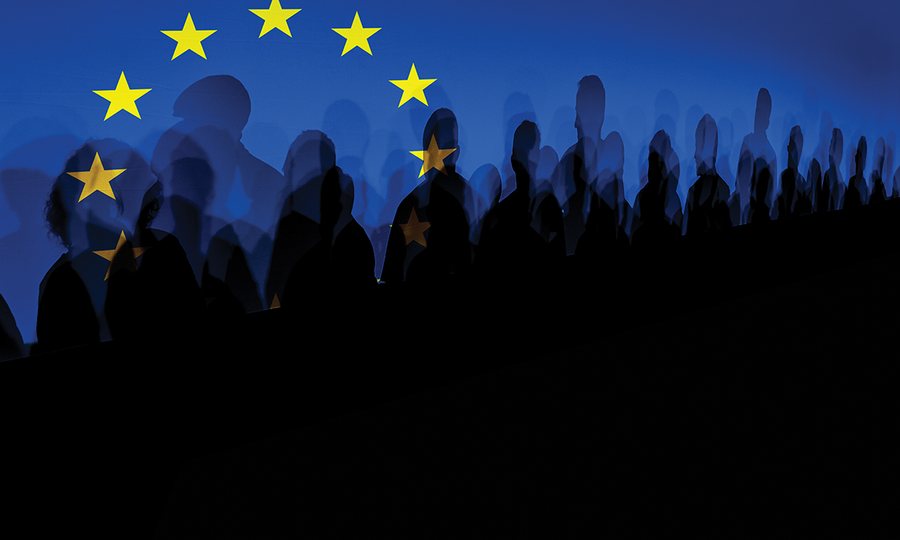
The absence this year of JD Vance, replaced by US Secretary of State Marco Rubio, is expected to bring a more diplomatic tone to the debate...
The turning point seems decisive, but requires careful assessment. Twenty-four hours separate two events that could determine the direction of a new Europe. Yesterday, in the Belgian castle of Alden Biesen, the heads of the Commission and the European Council met with the twenty-seven heads of government of the European Union. The aim of finally implementing the recommendations presented by Mario Draghi and Enrico Letta on the delays in the single market and in competitiveness has gradually been enriched with new perspectives and slogans.
Also on the table is the openness to forms of enhanced cooperation, mentioned by Draghi himself with the formula of "pragmatic federalism" and now also supported by Ursula von der Leyen. Also striking is an unprecedented rapprochement between Rome and Berlin, which asks Brussels to simplify procedures, accelerate decision-making and a greater role for member states in legislative processes, even at the cost of putting into question, in certain cases, the principle of unanimity. This framework also includes a strategic project for European defense, such as the sixth-generation GCAP fighter jet, developed with the involvement of the Italian company Leonardo and which is attracting the interest of Germany. In short, despite the usual divisions and hesitations, there are signs of a will, for those who are ready, to move at the pace of a world that, with the return of Donald Trump to the scene, has begun to move rapidly, reformatting priorities through direct pressure.
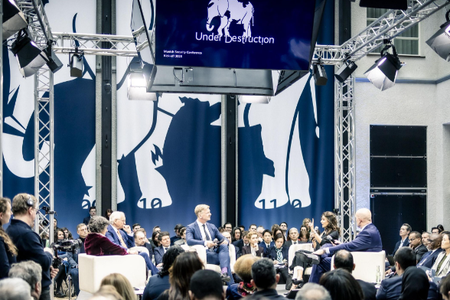
This world returned to the spotlight today, less than 800 kilometers away, at the Bayerischer Hof hotel in Munich, where the annual two-day Security Conference kicked off. The event is not considered routine. Last year it was shaken by the intervention of the newly elected US Vice President, JD Vance, who, in the name of an ethno-nationalist sovereignty, criticized European liberal democracies, accusing them of restricting freedom of expression to the detriment of forces like the Alternative for Germany (AfD). This 62nd edition, also as a result of that intervention and subsequent American pressure, will reopen the doors to the German far-right party, which had been excluded in recent years due to suspicions of crypto-Nazi overtones and links to Russia.
The link between the political and security dimensions is inevitable. The Italian-German agreement, the result of the gradual rapprochement between Giorgia Meloni and Chancellor Friedrich Merz, constitutes one of the most important developments of the summit in Belgium. It has temporarily created distance with France, which is in a different position from Berlin and Rome on issues such as the joint debt or the alternative Franco-German fighter project, in competition with the GCAP. However, this agreement could also attract other countries, forming an initial nucleus of cooperation capable of taking forward some of the proposals of Letta and Draghi, widely appreciated in 2024, but then left in the shadow of a European Union that has been facing regulatory deadlocks and the use of vetoes for years.
The urgency is heightened by the first year of Trump's new term, accompanied by the use of punitive tariffs and strong statements regarding Greenland, Europe and NATO, which have caused new tensions.
However, a paradoxical challenge to the cooperation between Meloni and Merz could come precisely from Munich. It remains to be seen what weight the legitimacy given to the AfD will have in the future in the eyes of heads of state, ministers and global leaders of security and cyber intelligence. If the AfD, currently rising in the polls, were to one day manage to take power in Berlin with such international support, this would affect the nature of the strategic alliance between Italy and Germany.
The AfD has been officially declared an extremist organization and contrary to the democratic order by the German Federal Office for the Protection of the Constitution. Regional authorities in Thuringia have raised suspicions of links to Moscow, citing repeated parliamentary initiatives on sensitive national security issues. At the European level, the head of the AfD delegation in Brussels has publicly expressed support for Italian General Roberto Vannacci and, under the slogan of “remigration”, has signaled a willingness to bring together figures who have caused political tensions in Italy due to their positions on Ukraine and relations with the Russian Federation.
The absence this year of JD Vance, replaced by US Secretary of State Marco Rubio, is expected to bring a more diplomatic tone to the debate. However, the return of the Alternative for Germany to one of the most prestigious geopolitical forums in the world carries a symbolic weight that cannot be underestimated.
Alice Weidel's party represents an ethno-nationalist current that opposes the European model built on democracy and rights. Its exposure on an international stage also affects the internal political competition in Germany, directly affecting the partner that the Italian prime minister has chosen as a key figure for a Europe facing numerous tensions, at a time when the global political climate seems more favorable to figures with authoritarian tendencies.
Christoph Heusgen, the diplomat who organized previous editions of the conference and who had decided not to invite the AfD, recalled that the Security Conference was founded by Ewald von Kleist, one of the Wehrmacht officers who took part in the attempt to assassinate Hitler in 1944. “I can imagine very well that von Kleist would have supported my decision,” he told the Tagesspiegel daily. But it was already a different world. / Adapted from “Pamphlet” by “Corriere della Sera”



Lini një Përgjigje