


 Shkruar nga Pamfleti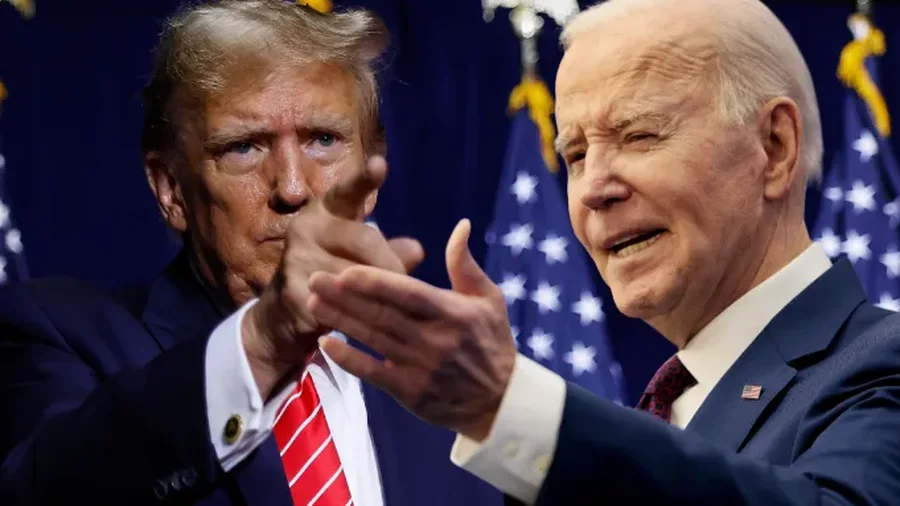
The more crisis-ridden and dangerous America seems — and the shooting in Pennsylvania this weekend will only add to that — the more the country needs a president who can speak and represent the future.
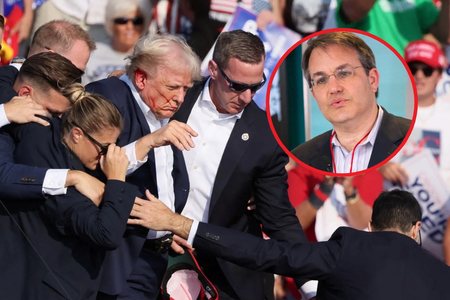
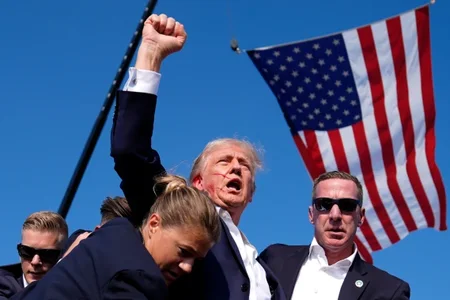
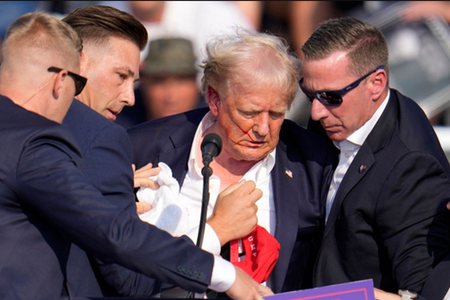
Until the moment a would-be assassin's bullet hit Donald Trump's ear, the US presidential election had looked like a tragicomic clash between the "doomed" and the "weak".
The debate over the elder Joe Biden's performance in the last debate with his nearly elderly predecessor fueled an already growing sense that American democracy is at risk, regardless of who wins in November.
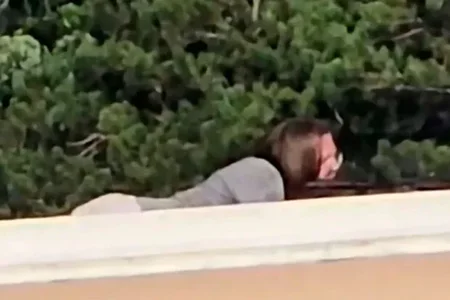
The assassination attempt on Trump has dramatically intensified this sense of crisis. And the appalling penetration of campaign violence brought with it the specter of democracy turning into civil war.
Those of us outside of America used to want to vote in American elections. They have always seemed more dramatic, unpredictable, theatrical, and consequential than anything our own democracies could serve up—let alone the succession of geriatric leaders in the old Soviet Union, today's run-of-the-mill elections in Russia, or the grumbling congresses of the Communist Party. chinese.
In 2008, for example, many around the world would have jumped at the chance to pull the trigger on Barack Obama – just as people once dreamed of traveling to outer space. And in 2020, more than a few outsiders were eager to put their finger on the scales to decide the fate of Trump's re-election campaign.
However, this year may be the one in which US elections finally lose their magic. The November survey is perhaps the most important in generations. But talking to people outside the US, I no longer hear them fantasizing about participating in the only elections that matter. Experts around the globe rightly assert that America faces a dramatic choice. But something has changed. Seen from afar, the contrast between Biden and Trump doesn't seem as stark as it once did. People just see two old guys who have been unpopular presidents.
In a much-discussed recent article, historian Niall Ferguson argued that comparisons between today's gerontocratic politics in America and the last years of the Soviet Union, while misleading, are nevertheless also revealing. He has a point: comparisons are not predictions, but warnings.
Washington in 2024 is certainly not Moscow in the late 1980s. The American economy is strong, the American military is formidable, and people still risk their lives to come to America. However, there is an emerging consensus that, as happened at the end of the Soviet Union, American society is in crisis and American power is in decline.
Absent some dramatic changes, the US and its global influence may be the biggest loser of this election. The more crisis-ridden and dangerous America seems — and the shooting in Pennsylvania this weekend will only add to that — the more the country needs a president who can speak and represent the future.
In 1982, Leonid Brezhnev, the general secretary of the Soviet Communist Party, died at the age of 75. Like many of his colleagues in the Politburo, he was old and sick. He was replaced by KGB chief Yuri Andropov. Andropov had the ambition to renew, or at least to discipline, the Soviet regime. But he too was old and infirm and died only 15 months after taking office.
Andropov was succeeded by 73-year-old Konstantin Chernenko. What Chernenko sought to do is unknown because he too passed away just a year after his ascension. When Mikhail Gorbachev, the youngest member of the Politburo, came to power in 1985, the task of regime renewal had become mission impossible.
I was in my twenties when all this happened, and the successive burials shaped my view of the communist regime and its future more than anything else. The Soviet Union may be said to have died of the exhaustion of having to bid farewell to its leaders.
The coming months will shape the view of American democracy for young and old, citizens and foreigners alike. The magic of democracy lies in its capacity for renewal and self-correction. In this respect, neither a Biden victory nor a Trump victory looks like a date with the future. Biden is a noble defender of a vanished world, while Trump sadly mistakes revenge for greatness.
The Biden camp must understand that in times like this, the greatest risk is not to take risks. If people no longer expect that democracy can change itself in a moment of crisis, it will have lost its most important advantage over non-democratic regimes./ Adapted from The Economist


Lini një Përgjigje