


 Shkruar nga Mark Urban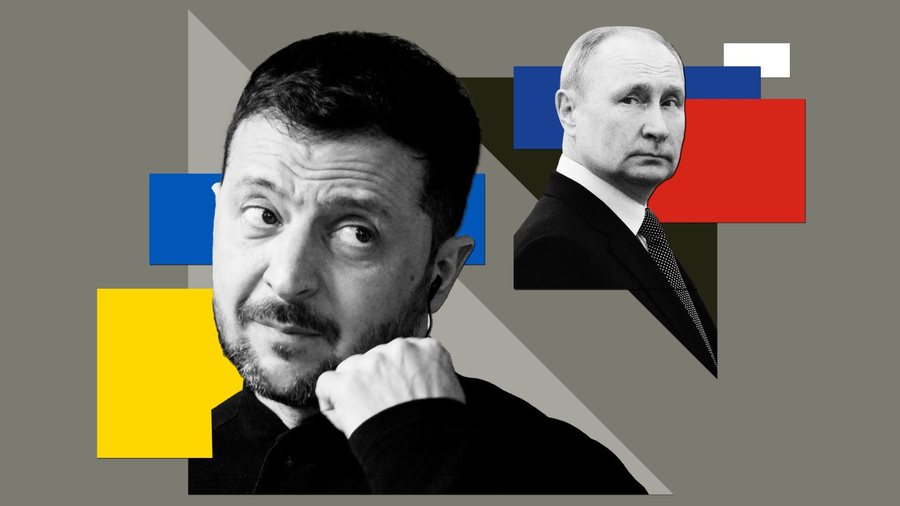
In the upcoming negotiations, much will depend on the willingness of both sides to make concessions...
There are many questions about whether a peace agreement can be reached between Russia and Ukraine.
But the answers will begin to become clearer today in Riyadh. The warring parties have sent their delegations to the Saudi capital, aiming to expand on the basic idea announced this week that they will stop targeting each other's energy systems and key national infrastructure.
So far, whether peace is possible and how it can be guaranteed has been largely a debate between Ukraine and its Western allies. Russian President Putin has accepted the idea of a deal in principle, but without making any concessions on its terms. But he too has reason to change his mind.
From the new round of talks in Saudi Arabia, we may finally have an idea of what the Russian leader is or is not willing to give up to end the war, or at least temporarily halt it.
1. Ceasefire restrictions
State Department spokeswoman Tammy Bruce said last week that Ukraine and Russia were “on the verge of a full ceasefire,” and that talks in Riyadh could lead to “a lasting peace.” But until that point, many obstacles remain to be overcome.
The first stated goal of the talks is to clarify which points, such as power stations or oil depots, will be exempt from long-range attacks. The next point is the extension of the ceasefire to the Black Sea. The Russian fleet has been hit during the 3 years of war, losing its flagship “Moskva” in April 2022, as well as many other ships.
Ukraine's supporters doubt whether the Kremlin would be more inclined to protect the remnants of its fleet and its oil facilities from Ukrainian attacks with long-range drones than to stop fighting on the front lines, where its ground troops are still advancing.
However, despite recent success in driving Ukrainian troops out of most of the Russian territory captured during the Kursk offensive last year, the ground war is yet to yield any significant gains for the Kremlin. Last week, the British intelligence service estimated that the war has cost the lives of 250,000 Russian soldiers so far.
2. Military monitoring of the pact
Ukrainian President Zelensky has always made it clear that he does not want the war to end with a repeat of the Minsk Agreements of 10 years ago, a ploy that stopped the fighting in Donbass, postponing until later topics in which the Kremlin refused to sincerely engage.
And a ceasefire at this point could be similar: it would guarantee Russia's territorial gains of the past three years. Kiev would demand effective monitoring and guarantees that the Russians would not destabilize Ukraine and resume fighting whenever they wanted. The monitoring would have to be carried out by Western aircraft and satellites. But this is unlikely to be accepted by Moscow.
3. NATO and Ukraine
Russia has rejected the deployment of Western troops in Ukraine. Zelensky will try to insist that Ukraine has solid security guarantees from its Western military allies. But how can a deal be made? First, it would be wrong to assume that Putin’s constructive approach in recent days is his final position.
It is clear that Ukraine will not join NATO. But what if Western countries create military training bases in designated geographical areas, for example west of the Dnipro River, which divides the country in two? NATO armies have carried out such missions in Ukraine before the 2022 invasion. British and French strategists foresee the deployment of at least 20,000-30,000 troops with a still unclear mandate.
4. A matter of territory
Zelensky has said his country will never recognize Russian sovereignty over the more than 20 percent of its occupied territory, but that it cannot be retaken by force. Meanwhile, the Trump administration has declared that it considers the annexation of areas like Crimea a fait accompli.
A face-saving formula, in which both sides acknowledge that the current front line is their de facto border - and the status of the occupied territories to be decided later - is suggested by some who cite the example of the 1953 Korean armistice. But the problem is that this brings us back to the kind of agreement that Zelensky is determined to avoid.
5. Dictating the future of Ukraine
Two of Moscow's demands that could most easily derail this process are a halt to Western arms shipments and efforts to limit the size of Ukraine's military. Insistence on the latter is likely to be taken as a clear sign that the Kremlin intends to invade again after it has refreshed and rebuilt its military.
So Zelensky and European leaders will resist until they see clear signs of a ceasefire. Even if Zelensky accepts that Russia has blocked his country’s NATO membership, the fundamental importance of Europe to Ukraine’s future security could make developing a stronger relationship with the EU a “red line” for the Ukrainian president./Pamphlet from the “Sunday Times”


Lini një Përgjigje