


 Shkruar nga Pamfleti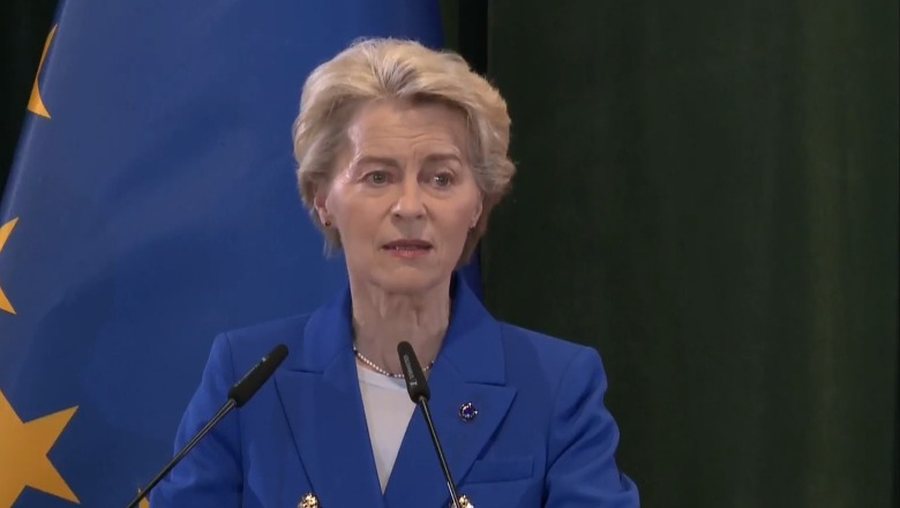
The issue was legally complicated for von der Leyen because she not only personally signed the bloc's largest vaccine contract, but also heads the institution charged with enforcing EU law, which includes principles of transparency and accountability.
The European Commission was wrong to refuse to publish Ursula von der Leyen's messages with Pfizer CEO Albert Bourla at the height of the Covid-19 pandemic, an EU court has ruled.
Journalists had asked to see secret messages between the Commission president and the head of the pharmaceutical company, which they exchanged before a multi-billion euro vaccine deal reached between Pfizer and the EU.
The decision is likely to have major consequences for transparency and accountability in the EU and deals a major blow to von der Leyen's reputation.
The decision is a “strong blow to transparency,” said Dutch MEP Raquel García Hermida-van der Walle, who is co-negotiating changes to a law regulating access to documents on behalf of the liberal Renew Europe group. “People simply want and are allowed to know how decisions are made, that is essential in a democracy. Even if it is done via a text message.”
In a statement, the EU General Court said that the Commission “had failed to explain in a credible manner why it considered that the text messages exchanged in the context of the procurement of vaccines against Covid-19 did not contain important information, the preservation of which must be ensured.”
At issue is whether text messages should be classified as documents and therefore admissible for publication in the name of transparency. While activists and many outside observers say they should be treated the same as any other official means of communication when it comes to policymaking, the Commission said they should not.
"Transparency has always been of the utmost importance to the Commission and President von der Leyen," the Commission said in a statement after the decision.
The Commission further emphasizes: “we will continue to strictly adhere to the strong legal framework in place to implement our obligations.” It said it would “decide on further steps.”
The existence of the messages, which the Commission initially did not confirm, was revealed in an interview von der Leyen gave to the New York Times in 2021.
But the EU executive told the court in Luxembourg during a preliminary hearing last year that their content was not important enough for them to be classified as documents - therefore they were not registered and available for release to journalists.
In its statement, the court added: “The Commission cannot simply declare that it does not possess the requested documents, but must provide credible explanations that enable the public and the Court to understand why these documents cannot be found.”
The case was legally complicated for von der Leyen because she not only personally signed the bloc's largest vaccine contract but also heads the institution charged with enforcing EU law, which includes principles of transparency and accountability. With the court ruling against her, it provides political ammunition to a wide range of critics.
But this is also a great shame considering that only a few months have passed since she publicly pledged to uphold standards of transparency, efficiency, and honesty in her second term.
The case was initiated by The New York Times and its former bureau chief in Brussels, who filed a lawsuit against the Commission's decision not to publish the text messages in 2022.
The existence of the messages was revealed in an interview with the New York Times in April 2021, where Bourla described their exchanges as fostering “deep trust” and facilitating negotiations for a significant vaccine deal. That deal, finalized in May 2021, included the EU’s commitment to purchase up to 1.8 billion doses of the Pfizer-BioNTech Covid-19 vaccine, the largest so far of all deals signed by Brussels. /Adapted from Politico/





Lini një Përgjigje