


 Shkruar nga Pamfleti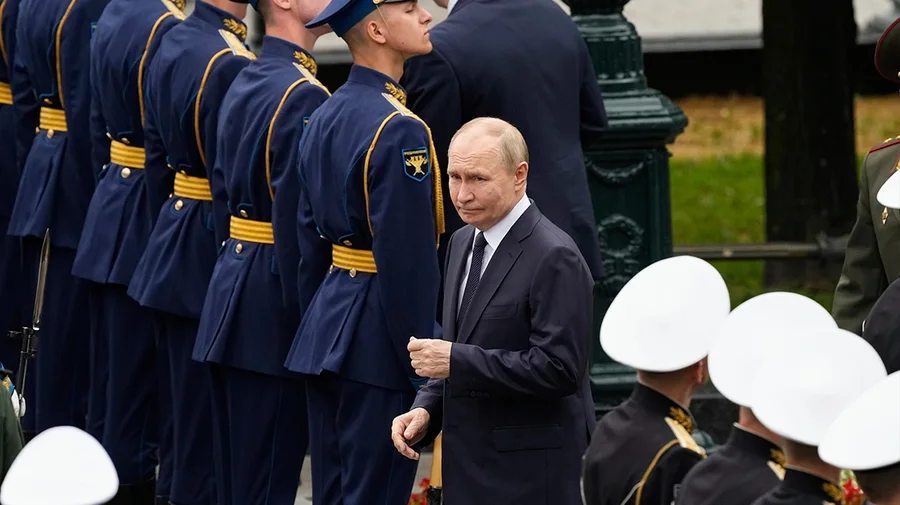
In a move that demonstrates the Kremlin's intention to elevate Vladimir Putin to the central guarantor of international order, Russian Foreign Minister Sergei Lavrov said that Ukraine's security could be ensured by a group of countries, with the participation of members of the UN Security Council, of which Russia is a member.
More specifically, Sergei Lavrov, in an interview with NBC, which was published on Sunday, argued that Ukraine's security model could be based on international guarantees, with a leading role for the five permanent powers of the United Nations Security Council.
The Russian foreign minister's statement echoes a previous proposal from the Kremlin, which aims to transform Moscow from an aggressor power into a decisive factor in the region's security.
Last week, a Reuters report reported that Russian President Vladimir Putin had set as non-negotiable conditions the surrender of all of Donbas to Russian influence, Kiev's renunciation of the prospect of NATO membership, maintaining neutrality and the removal of Western troops from Ukraine, conditions that, according to sources familiar with the Kremlin's strategic thinking, form the basis for any future negotiations.
Lavrov recalled that Putin had already raised the issue with US President Donald Trump, and it was also raised in fruitless talks in Istanbul in 2022. At that time, the idea of an agreement on permanent neutrality of Ukraine was considered, in exchange for security guarantees from the United States, Russia, Britain, France and China, as well as other countries.
The Russian Foreign Minister's new position expands this framework, explicitly stating that the group of potential guarantor countries could also include Germany and Turkey. The goal, he argued, is to provide guarantees for the security of a neutral Ukraine, outside military alliances and without nuclear weapons.
In this way, the Kremlin is trying to present Putin not simply as a leader who sets conditions, but as the central broker of an international agreement. In this narrative, Moscow is presented not only as a pressure force, but also as a guarantor of stability through a mechanism that goes through the UN Security Council.
However, Lavrov made it clear that for Russia, Ukraine's accession to NATO is a "red line," while he once again put on the table the need to protect Russian-speaking populations and the mandatory territorial discussion with Kiev. Given these data, it becomes clear that Moscow continues to play a difficult negotiating game, trying to determine not only the terms of war, but also the framework for peace.




Lini një Përgjigje