


 Shkruar nga Pamfleti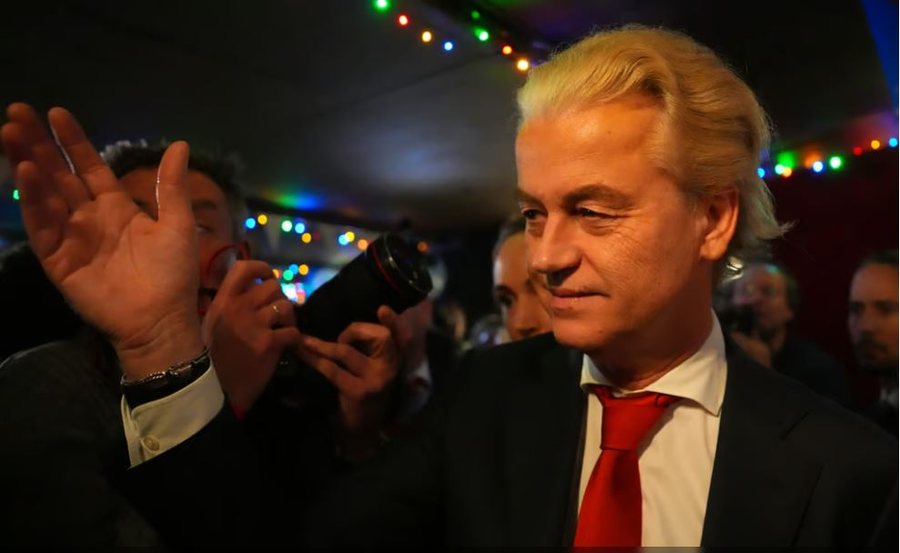
And while Wilders has toned down his anti-Islam rhetoric in recent weeks, there are no signs he wants to tone down Euroscepticism after his shock election victory.
Even if Dutch voters are not persuaded to follow the British path out of the EU, a Wilders-led government is still a nightmare for Brussels.
It was a sentence from Geert Wilders' speech to Dutch voters, which turned into a nightmare for Brussels: a referendum on leaving the EU.
Seven years after Britons voted for Brexit, a so-called Nexit ballot was a key point of the far-right leader's ultimately successful bid in the Netherlands.
And while Wilders has toned down his anti-Islam rhetoric in recent weeks, there are no signs he wants to tone down Euroscepticism after his shock election victory.
Even if Dutch voters are not persuaded to follow the British path out of the EU, a Wilders-led government will still be a nightmare for Brussels.
A seat for Wilders around the EU summit table would transform the dynamic, along with other far-right and nationalist leaders already in office. Suddenly, policies ranging from climate action to EU reform and arms to Ukraine will be up for debate, even change.
Since the exit polls were announced, potential center-right partners have not ruled out forming a coalition with Wilders, who emerged as the clear winner. This despite the fact that for the last 10 years, he has been kept out by the centrists.
For his part, the 60-year-old veteran seems to be serious about taking power this time.
Ever since Mark Rutte's replacement as head of the VVD, Dilan Yeşilgöz, indicated early in the campaign that she might enter coalition talks with Wilders, the far-right leader has worked hard to appear more reasonable.
On Wednesday night, as the results came out, Wilders said he understood very well why parties don't want to be in a government with a party that wants unconstitutional measures," he said.
Even if Wilders is willing to drop his demand for an EU referendum in exchange for power, his victory will still send tremors through EU institutions.
Brexiteer Nigel Farage showed the UK that you don't need to be in power to be influential.
The winds of change
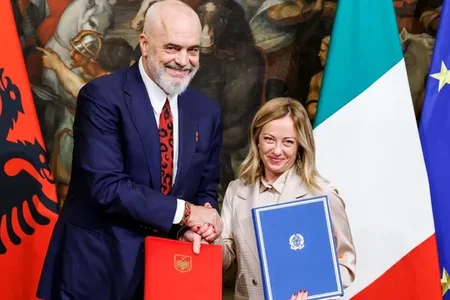
Migration was a dominant issue in the Dutch election. For EU politicians, it remains a pressing concern. As the number of immigrants continues to grow, so does support for far-right parties in many countries in Europe. In Italy last year, Giorgia Meloni won power for her Brothers of Italy. In France, Marine Le Pen's National Rally remains a powerful force, in second place in the polls. In Germany, Alternative for Germany has also climbed to second place in recent months.
In his victory speech, Wilders vowed to tackle what he called the "tsunami of asylum" hitting the Netherlands.
"The main reasons voters have supported Wilders in this election is his anti-immigration agenda, followed by his stances on the cost of living crisis and his health care position," said Sarah de Lange, a professor of politics at the University of Amsterdam. The main parties "legitimized Wilders" by making immigration a key issue, she said. "Voters may have thought that if this is the issue at hand, why not vote for the original and not the copy?"
For the left, the bright spot in the Netherlands was a strong showing for a well-organized alliance between Labor and the Greens. Frans Timmermans, the former vice-president of the European Commission, galvanized support behind him. But even that joint ticket couldn't come close to beating Wilders' result.
Next June, the 27 EU countries hold elections for the European Parliament.
On the same day that voters elect their MEPs, Belgium is holding a general election. Far-right Flemish independence leader Tom Van Grieken, who is also eyeing a big advance, offered his congratulations to Wilders, saying "Parties like ours are on their way to winning across Europe."
Hungarian Prime Minister Viktor Orbán was also celebrating, according to him "the winds of change are here!" / Politico





Lini një Përgjigje