


 Shkruar nga Eric Posner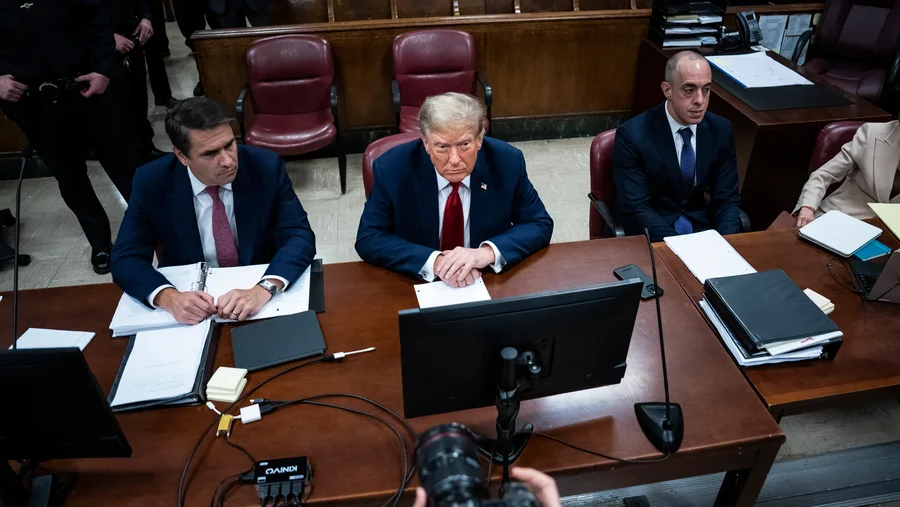
Defendants benefit from increased publicity, and from voters' inherent suspicion that governments may attempt to abuse their power.
As America's attention turns to the November presidential election between Kamala Harris and Donald Trump, the lawsuits against the former president have been almost forgotten. But Democrats are hoping that Harris' previous role as a prosecutor can help persuade some key voters to ditch a convicted felon and support someone who comes from the justice system.
Will this scheme work? Or has the failed assassination attempt on Trump mythologized prosecutions like the former Stations of the Cross of Jesus Christ on the way to his near-martyrdom? To date, the prosecutions have failed to damage Trump's campaign.
The dossier on the misuse of classified documents, presented to the court on June 8, 2023, by Special Prosecutor Jack Smith, was blocked as presiding judge Aileen Cannon, who held the hearing late, before finally dismissing the case, on the grounds that Smith's actions were unconstitutional.
Also, the suit on interference in the election, also filed by Smith, can be called dismissed due to the decision of the Supreme Court, that Trump enjoys immunity for some of the actions listed in the indictment. And the Georgia election meddling case was dropped when the court learned that the prosecutor, Fannie Willis, had been involved in a romantic relationship with one of her subordinates.
The case is now on hold as the Georgia Court of Appeals considers whether or not it should be dismissed. The only successful prosecution so far was New York District Attorney Alvin Bragg's fraud suit that resulted in Trump's conviction for falsifying his business records in order to conceal a payment not to talk about a pornographic actress.
Ironically, it was the weakest case of the 4 cases, and the least likely to result in a prison sentence or other serious punishment. However, the decision had no impact on Trump's performance in the polls. Instead, it led to a flood of donations to the Trump campaign from voters outraged at what they saw as a political prosecution.
Finally, there was the failed attempt to keep Trump off the ballot based on the insurrection clause of the Constitution. An argument rejected by all nine judges of the Supreme Court. All this has given the Republicans the powerful political argument that Trump's opponents have abused the legal system to damage his image, because they cannot defeat him fairly in the next elections.
Of course, the reality is more complicated than that. Trump pleaded with Smith to drop the confidential documents, which he refused to hand over when asked. The chaos of January 6, 2021, has led to hundreds of legitimate prosecutions of violent protesters, and of course Trump can be held morally responsible for the deaths and injuries that occurred that day, whether or not he broke the law.
Above all, Smith was unfortunate in recusing Judge Cannon from the case, an act that can be described as overcautious at best, and one-sided and pro-Trump at worst. named him. It is still possible that Trump will end up in prison.
If he loses the election, the proceedings in the remaining 3 cases will continue. But the prosecutions appear to have improved his prospects in this election, and if he beats Kamala Harris, they will likely be dropped or suspended because of the difficulties of prosecuting a sitting president.
Much of this could have been predicted. However, this situation still has some lessons to teach us. The standard worry about criminal prosecutions of political officials is that they can trigger an endless round of vindictive prosecutions. Trump himself has said he will prosecute Democrats in retaliation for their harassment of him. And it's easy to imagine that future Democratic presidents will retaliate against Trump, his aides and other Republicans.
This kind of retaliation, which could spread to several states, will further strain US politics and potentially prompt presidents and other government officials to plan to stay in power by all means, rather than risk prosecution if they voluntarily leave after losing the elections.
And if that happens, it would be the end of American democracy. According to this theory, constitutional democracy has survived precisely because the political class has resisted the temptation to launch political trials. This norm is said to have been established 200 years ago, when the prosecution of various political opponents met with opposition from the courts and popular opinion, thanks in part to still-fresh memories of British rule.
The problem with this view, of course, is that Trump violated the norm against political harassment long before Democrats took this approach. In 2016, he promised to prosecute Hillary Clinton; and since then — as president and former president, and before and after his impeachment — he has threatened to order the prosecution of a number of political opponents, and even his former supporters, who he believes betrayed him. .
The current round of criminal prosecutions of Trump and his aides can be seen as the inevitable result of a manhunt initiated by Trump himself. But there is another, better way to look at all this.
The lawsuits against Trump show that the trials of political opponents are extremely dangerous in a democratic country, because defendants can always accuse prosecutors of abusing the legal system for their own political reasons.
Defendants benefit from increased publicity, and from voters' inherent suspicion that governments may attempt to abuse their power. All this makes it impossible for the courts to ignore the small mistakes made by the prosecution.
Perhaps Willis' romantic escapades would not have become an issue if she had prosecuted someone other than Trump. Likewise, the slow pace of proceedings in all cases is the result of reasonable care shown by judges who are responsible for maintaining public confidence in the judicial system.
They are facing delicate and unprecedented questions about how to handle a defendant running for president. If Trump is elected president, he will certainly not keep his promise to order the prosecution of half of the Democratic leadership but also of some Republicans who have opposed him.
But even if he does, the odds will turn against him. If there is any lesson from the Trump trials, it is that political prosecutions in a democratic country are more likely to harm those in power than their opponents. / Adapted "Pamphlet" from "Project Syndicate"
*Note: Eric Posner, professor at the University of Chicago Law School, USA.




Lini një Përgjigje