


 Shkruar nga Pamfleti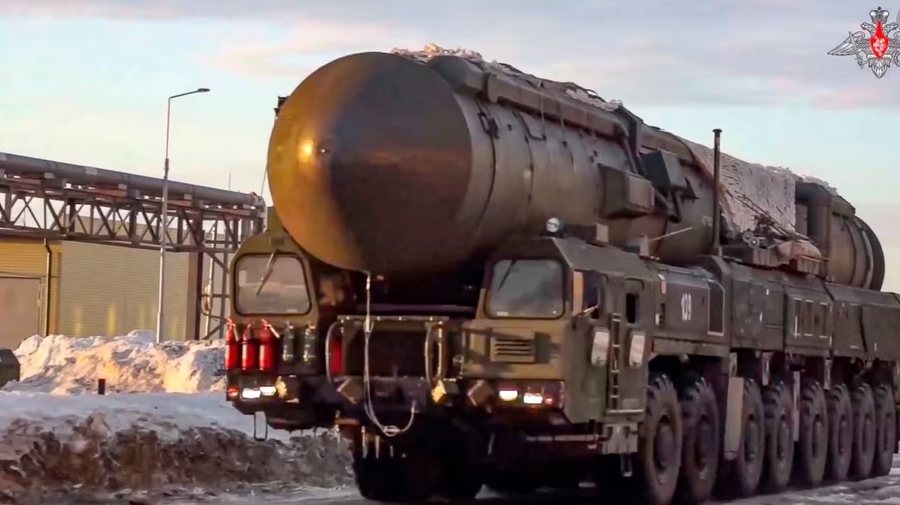
President Vladimir Putin says Russia may modify its nuclear doctrine regarding the use of its atomic arsenal, a message clearly aimed at the West in an effort to prevent increased military support for Ukraine.
He warns that if Kiev strikes inside Russian territory with long-range weapons sent by the West, and if NATO sends troops to Ukraine, it would constitute a major escalation and could result in a strong response.
Mr. Putin has said that the country's nuclear policy is not rigid and that it can be changed depending on the conditions.
Since Russia launched its aggression against Ukraine in 2022, President Putin and other Kremlin figures have often used the nuclear arsenal as a tool to warn the West.
On the first day of the war, Putin said that "anyone who tries to restrain us, let alone pose threats to our country and people, should know that the Russian response will be immediate and with unprecedented consequences."
Since the war began nearly 2 1/2 years ago, the West has provided Ukraine with billions of dollars worth of sophisticated weapons, some of which have struck inside Russian territory. And although the threats have been more numerous from the Kremlin – which has even placed nuclear weapons in Belarus, near the border with Ukraine – to date Russian warnings have remained limited to rhetoric.
But what could trigger a nuclear response?
Asked about this in June by international news agencies, Mr Putin cited Russia's so-called nuclear doctrine.
"Look at its wording. If someone's actions threaten our sovereignty and territorial integrity, we consider the possibility of using all the means at our disposal," Mr. Putin said.
Now hardline voices in Moscow are urging him to change the doctrine by lowering the threshold for using nuclear weapons, and the Russian president says the document could be modified, depending on the global situation.
What is Russia's nuclear doctrine?
Officially known as the "Basic Principles of State Policy on Nuclear Deterrence", the doctrine was signed by Mr Putin in 2020 and sets out when Russia can use its atomic arsenal, the world's largest.
According to this document, nuclear weapons are "a means of deterrence", and their use would be an "extreme and forced measure". The doctrine states that Russia "takes all necessary steps to reduce the nuclear threat and prevent the deterioration of international relations to the point of military conflicts, including nuclear ones."
The document states that "nuclear deterrence is intended to make it clear to a potential adversary that in the event of aggression against the Russian Federation and/or its allies, a response is inevitable."
In what cases is the use of nuclear weapons foreseen?
According to the doctrine, Russia can use these weapons "in response to the use of nuclear weapons and other types of weapons of mass destruction against itself and/or its allies, as well as in the event of aggression against the Russian Federation with conventional weapons, when the very existence of the state is in danger".
The document details the concrete cases of activation of these weapons:
— If there is reliable information on the launch of ballistic missiles aimed at the territory of Russia or its allies.
— If nuclear weapons or other weapons of mass destruction are used against Russia or its allies.
— If an attack with conventional weapons threatens the existence of Russia.
— If attacks are undertaken against important Russian government or military facilities that could undermine the country's ability to mount a nuclear response.
Have there been attacks that have approached the limit set for the use of these weapons?
After Russia attacked parts of northeastern Ukraine near the city of Kharkiv, Washington allowed Kiev to use longer-range weapons sent by the United States for attacks in the border region inside Russian territory. But the range of these attacks has been limited and they do not appear to pose an existential threat under the nuclear doctrine.
However, Moscow's most hardline voices have cited a series of Ukrainian attacks on Russian air bases that house warplanes with long-range nuclear capabilities, as well as strikes on early warning radars.
They say that these cases justify the use of nuclear weapons, as provided for in the doctrine.
Russian officials have not commented on the attacks on more sensitive targets. The early warning radars are intended to dictate the possible launch of US missiles so that Russia can activate its missiles and thus prevent their destruction.
James Acton, co-director of the Carnegie Institution's nuclear policy program, said in a recent analysis that Ukrainian attacks on early-warning radars could create the impression in the Kremlin that Washington has encouraged these attacks in an effort to weaken the country's nuclear deterrent. Russia.
"If Moscow believes that Washington can launch a successful pre-emptive strike against its nuclear forces, this increases the risk that Russia will launch a large-scale nuclear attack based on a false or misinterpreted alert," he says.
What changes are being considered?
Kërcënimet bërthamore të Kremlinit janë reduktuar kohët e fundit, ndërsa Moska ka shënuar përparim në fushën e betejës në Ukrainë. Megjithatë, ka pasur edhe thirrje në Rusi për ndryshimin e doktrinës bërthamore dhe zoti Putin ka thënë se ajo mund të modifikohet, në varësi të zhvillimeve globale.
Ka pasur zëra që kanë bërë thirrje në mënyrë të përsëritur për ta bërë atë më të ashpër, duke argumentuar se dokumenti aktual është shumë i butë dhe lë vend për interpretime. Ata thonë se doktrina nuk e ka frenuar Perëndimin të rrisë ndihmën për Ukrainën dhe krijon përshtypjen se Moska nuk do t’i përdorte kurrë armët bërthamore.
Dmitri Trenin, ekspert për marrëdhënie me jashtë në Institutin e Ekonomisë Botërore dhe Marrëdhënieve Ndërkombëtare, një institut i financuar nga Kremlini, sugjeron rishikimin e doktrinës në mënyrë që ajo të parashikojë se Rusia mund të jetë e para që godet me armë bërthamore kur "interesat jetike kombëtare janë në rrezik", si në rastin e Ukrainës.
"Detyra urgjente në vitin e tretë të konfrontimit ushtarak është të parandalohet angazhimi i mëtejshëm i NATO-s," thotë ai.
“Nëse nuk e bëjmë këtë, përshkallëzimi i vazhdueshëm nga Perëndimi do të çojë në një përplasje të drejtpërdrejtë mes ushtrisë ruse dhe NATO-s, gjë që mbart rrezikun e një lufte bërthamore globale”.
Sergei Karaganov, një ekspert i politikës së jashtme që këshillon Kremlinin, i ka kërkuar gjithashtu Presidentit Putin të ndryshojë doktrinën, duke ulur pragun e përdorimit të armëve bërthamore.
"Shpresoj që të ndryshohet së shpejti në mënyrë që t'ju japë zyrtarisht të drejtën për t'iu përgjigjur çdo sulmi në territorin tonë me një sulm bërthamor," iu drejtua ai udhëheqësit rus gjatë një forumi në Shën Petersburg.
"Shpresoj që një dispozitë e tillë t'i shtohet doktrinës sonë në mënyrë që kundërshtarët tanë të zmbrapsen", vazhdoi ai.
Presidenti Putin tha se aktualisht nuk sheh kërcënime që do të justifikonin përdorimin e armëve bërthamore, por ai e la të hapur mundësinë për rishikimin e dokumentit.
"Kjo doktrinë është një instrument i adaptueshëm. Ne po ndjekim me kujdes se çfarë po ndodh në botën përreth nesh dhe nuk i përjashtojmë ndryshimet," tha ai.
Nevoja për të modifikuar dokumentin, tha ai, është nxitur nga shqetësimet se Perëndimi po shqyrton mundësinë e përdorimit të armëve bërthamore me kapacitet të ulët. Zoti Putin nuk dha detaje, por komentet e tij mund t’u referohen diskutimeve në Shtetet e Bashkuara për vendosjen e raketave bërthamore me kapacitet të ulët të lëshuara nga nëndetëset.
Përkrahësit e kësaj ideje thonë se armë të tilla nevojiten për t’u bërë ballë kërcënimeve ruse, ndërsa kritikët argumentojnë se do të rrisnin rrezikun e luftës.
"We are aware of ideas circulating in expert circles in the West that extremely low-power nuclear devices are being developed and that they could be used. In itself, this is not something particularly terrible," Mr. Putin said. "But it is our duty to closely follow such a thing and that is exactly what we are doing"./ VOA





Lini një Përgjigje