


 Shkruar nga Pamfleti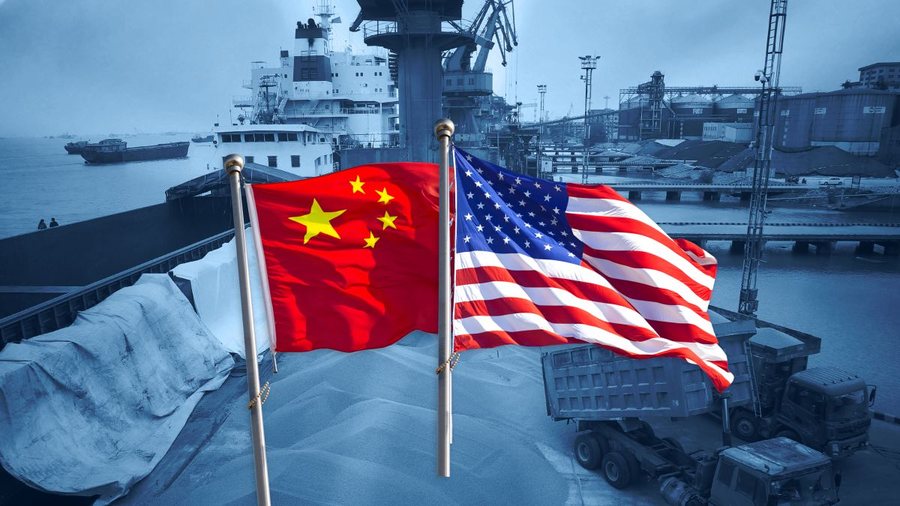
The progressive end of neutrality in the Indo-Pacific, an endless space increasingly dominated by dangerous alliances, risks producing the opposite of desired results...
The Indo-Pacific has become the main arena of competition between the great powers, and not only because of the rivalry between the United States and the People's Republic of China, but because it is the factory of the world and the roof of 60% of the world.
Against the backdrop of Sino-American strategic competition, which has extended from the Indo-Pacific to the rest of the world, other countries such as India, declining great powers such as Japan, emerging regional powers such as Indonesia and the Philippines have also come into play. with Vietnam.
Within the most important chapter of competition between great powers, Taiwan is the "powder keg". Washington and Beijing are using similar tools to the same end: good, old, evergreen alliances. But the inherent danger in this modus operandi is that what is designed to prevent conflicts, causes them to explode.
Towards an Asian NATO?
The Asia-Pacific is taking the form of a risk: military and security pacts between two or more states are growing significantly. The Atlantic alliance is trying to figure out how to shape the pivot to Asia without clashing head-on with the project of an Asian NATO, which is being discussed with greater frequency and intensity in China and in US control rooms. -'s.
What is certain, according to Washington, is that the Quadrilateral Security Dialogue (QSD) is no longer sufficient to contain Beijing's centrifugal forces: more members are needed, a transformation from an intergovernmental pact to a collective alliance is needed.
The Indo-Pacific equivalent of NATO could arise as an evolution of the CSTO, whose members are united against a powerful state that is China. This structure will attract South Korea, the Philippines, New Zealand and Vietnam. Which can then go towards a pact with NATO.
Even if the United States would not be able to make the SDF a NATO for Asia, as there are various factors that could work against this scenario, there are still many alternatives available to Washington to make the Indo-Pacific an arena mined for Beijing.
The Biden presidency has made strengthening the "island chain" system one of the objectives of its foreign policy. The result, in three years of non-stop diplomatic activity, was the transformation of the island chain into a chain of partner islands and peninsulas. So we have alliances with Vietnam, Aukus, South Korea, Japan and the Philippines.
China has responded to the US offensive by trying to ease tensions with key states in the region, such as Singapore, and draw in balancers such as Papua New Guinea, while increasing its presence in territories included in its orbit. her, like the strategic Solomons. A chess game between Beijing and Washington, which has brought militarization in the Indo-Pacific to Cold War levels.
All the dangers of militarizing the Indo-Pacific
The intertwined fortunes of the competing great powers in the Asia-Pacific have created a tangled web of alliances, forums and intergovernmental bodies. If on the one hand the United States is using Vietnam to contain China in Southeast Asia, on the other hand ASEAN (Association of Southeast Asian Nations) is acting, which is connected to China by a maximum free trade area and for this reason does not want to take sides in the arena of the world war in fragments.
The pressures of China and the United States on the small and medium powers of the Asia-Pacific are leading to the slow death of the triple policy (No friends, no enemies, no foreign bases) that has traditionally characterized the softer actors of the macro-region.
The conditions are being created for a proxy war between the United States and China in the Asia-Pacific. Until now, between the two great powers, it has been a war based on diplomatic scaremongering, coup d'état and excessive diplomatic exposure, but the chances of frontal and lateral confrontations are increasing along with worsening competition in the Asia-Pacific.
In Washington, as Beijing ponders its next moves in the new Pacific War, what was once a faint whisper is beginning to shout: "Never say never to an Asian NATO." The complementary step of the offensive in China's backyard, Southeast Asia, which in the vision of the United States could convince China to set aside its aspirations for regional hegemony or, in worst case scenarios, should serve to defeat it in open war
The progressive end of neutrality in the Indo-Pacific, an endless space increasingly dominated by dangerous alliances, risks producing the opposite of desired results: the logic of reticular systems requires that strikes be struck at a point to cause chain effects to the rest of the structure. Thus the two world wars broke out. And so the third could erupt, if the Asia-Pacific became a vast network of military alliances answering to Beijing and Washington. / Adapted "Pamphlet" from "Inside Over"





Lini një Përgjigje