


 Shkruar nga Pamfleti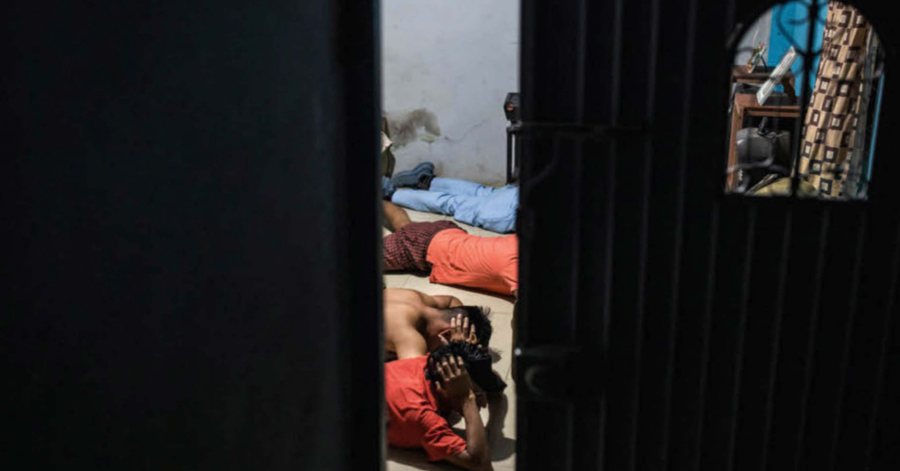
On one of the last days of October, 90 policemen, 22 vehicles and a water cannon stood ready in a field on the outskirts of Santiago, the capital of Chile. They were not there to maintain order in a noisy protest. They were to monitor the burial of a young woman with suspected links to drug traffickers. Such an event, which usually ends with mourners firing bullets into the air, would once have been unthinkable in Chile, long considered one of Latin America's safest countries. But between May 2019 and September 2023, gangs held nearly 2,000 such funerals, according to Gabriel Boric, the country's president. In September, Boric sent a bill to Congress to limit them.
Latin America's homicide map is shrinking. The homicide rate in the region has fallen since 2017, although countries such as Mexico and Brazil are still home to some of the highest homicide rates on Earth. But in once-safe countries, homicide rates are reaching record levels, including Ecuador, Costa Rica and Chile.
Call it the new narcotics network: a cocktail of drugs, guns and migration is fueling gang violence across the region.
Let's take Ecuador first. His descent into chaos has been swift. In 2018, the country was a sleepy Andean region of 17 million people. It exported oil and fish. It had the fourth lowest homicide rate in Latin America, at 5.8 per 100,000 inhabitants. But this year this rate is expected to reach 35 per 100,000 inhabitants. It is almost higher than that of Mexico and Brazil. Criminal gangs kill with impunity, setting off car bombs and hanging dead bodies from bridges. In August, a presidential candidate running on an anti-corruption platform was assassinated.
Cocaine is the main cause of Ecuador's problems. For several decades, the country was ignored by international drug traffickers. That changed in the late 2000s, when gangs realized they could make even bigger profits by shipping cargo further afield, to Europe and Australia. Partly as a result of this, the gangs then changed their methods of transportation: instead of packing it on planes or boats to the United States, cocaine began to be distributed inside container ships among legitimate goods.
After Colombian ports strengthened security measures, criminals sought alternative transport routes. Ecuador's poorly monitored ports became even more attractive after 2009, when left-wing Rafael Correa, then president, undermined the country's defenses by closing a US naval base and ending cooperation with the DEA. n. Ecuadorian gangs like Los Choneros began moving cocaine to Mexican gangs and the Albanian mafia. By 2019, Ecuador had turned into a cocaine superhighway.
Imprisoning gangsters simply helped them strengthen their networks. Los Choneros thrived in the overcrowded prisons, recruiting many and organizing attacks on enemies. Targeted killings escalated into massacres, where dozens of prisoners were dismembered and burned. In 2021, 330 prisoners were killed in Ecuador, the highest number in the world. That same year, cocaine was registered as the sixth largest export in the country.
Also, this year in Costa Rica, human casualties are projected to reach a record 17 per 100,000 population, compared to 11 per 100,000 population three years ago. Cocaine is also a big part of the problem. Increased production in Colombia, where record amounts of coca leaves have been harvested in recent years, translates into larger ships arriving in Costa Rica, says Alvaro Ramos, former security minister.
However, the head is not the only reason for the increase in violence. In recent years, many murders have been for the domestic marijuana market. Illegal cannabis is big business in Costa Rica: 3% of residents say they use it every month, one of the highest consumption rates in Central America. Many gangs prefer weed to cocaine. White movement is difficult: it requires connections and corrupt officials (of which there are relatively few in Costa Rica). In contrast, grass has few barriers to entry and can be sold anywhere.
The state is poorly equipped to stop these new gangs from flourishing. Costa Rica abolished its army in 1949. Rodrigo Chaves, the country's president, blames the previous administration and the judiciary for the situation. He says the country doesn't have enough police, the laws are outdated and the judicial system is too soft on criminals.
The third country in this new narco-network situation, Chile, is not a hot spot for murders. Last year, the homicide rate there reached a record 6.7 per 100,000 residents. This is well below its neighbors and close to the United States average of 6.3. But as the narcofunerals prove, crime is getting much worse. More cocaine and cannabis are being banned than ever before, with cannabis seizures tripling between 2018 and 2021. Its ports have become targets for would-be assassins. Timber trafficking is also a problem. The copper industry, which accounts for nearly 11% of the country's GDP, has been hit by armed kidnappings.
Chile is one of the richest countries in the region. It also hosts half a million Venezuelan migrants fleeing the regime of Nicolas Maduro. This combination has attracted mafias like the Tren de Aragua, Venezuela's largest gang. She is fighting to control Chile's underworld, building a human trafficking empire across South America. Gunfights occur regularly in the port city of Iquiques as local gangs fend off attacks by Venezuelans.
Tren de Aragua cells run prostitution rings in several cities. About 40 suspected members were jailed in one province last year. Dozens have been arrested in police raids this year. As a result, the share of Chileans who say immigration is bad has risen from 31% in December 2018 to 77% in April 2023, according to Cadem, a pollster. Another poll found that most blame illegal immigration for the increase in crime. Facing regional elections next year, the government has focused more on security. After three police officers were killed in March, Mr. Boric pledged a 40% annual increase in the security budget and passed tougher laws punishing crimes against the police. However, many consider it too soft on crime.
What does this new network of drug traffickers mean for the countries that were once among the success stories of Latin America? Many citizens will vote with their feet. Last year, Ecuadorians were the second largest nationality to cross Panama's Darien Strait on their way north.
Those who stay at home may turn to more extreme solutions. According to Latino bar 6 metro, a regional polling company, fully 48% of Ecuadorians, 31% of Chileans and 22% of Costa Ricans rank security as their country's biggest problem, well above the regional average of 13%.
Many Latin Americans admire El Salvador's authoritarian president, Nayib Bukele, who in recent years has jailed 1.6% of the population in a sweeping crackdown on gangs, and support for him is 88%, the highest in the region.
Politicians across Latin America are taking note. On October 15, Daniel Noboa, a 35-year-old right-winger, won the presidential election in Ecuador. He has promised to accept the approach of Mr. Bukele and build floating prisons in the Pacific. Some are skeptical that it will curb the gang problem there. But such strange solutions are increasingly popular. Faced with increasingly powerful gangs, many Latin Americans feel that sacrificing civil rights is a price worth paying for security. / The Economist ( bota.al )







Lini një Përgjigje