


 Shkruar nga Pamfleti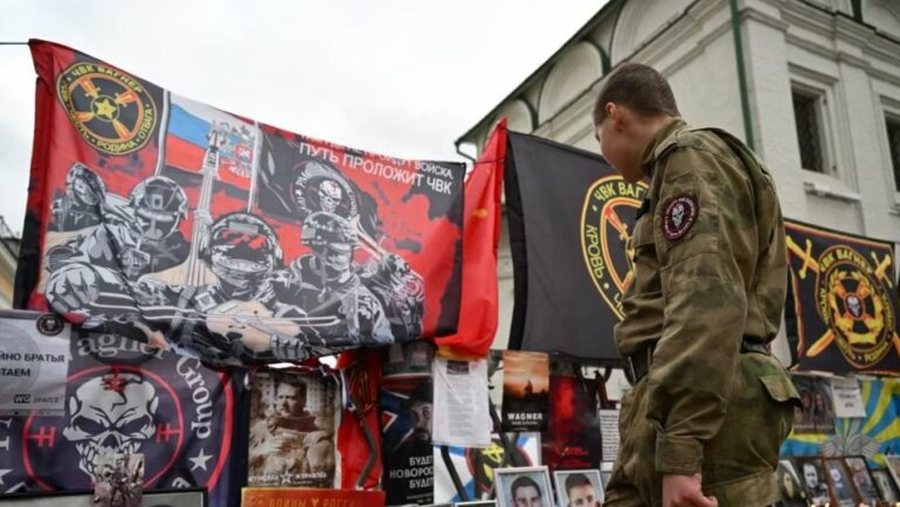
The mayor's office in the southern Russian city of Volgograd announced on January 17 that part of a street in the city would be named in honor of Alexei Nagin, an ex-convict who had joined the notorious Wagner mercenary group. He was killed near the city of Bahmut, in the Ukrainian region of Donetsk in September 2022.
Despite Wagner's June 2023 rebellion against Russia's top military leadership and the mysterious death of the group's leader, Yevgeny Prigozhin, municipalities across Russia are continuing to name public spaces in honor of mercenaries killed in Ukraine .
Prigozhin was killed two months after leading the rebellion, after the plane he was traveling in crashed.
However, it seems that the authorities are choosing their heroes more selectively than in the past and are increasingly forgetting their connections to Wagner. The aim, according to analysts, is to increase the ideological motivation to recruit more volunteers and to ensure that current mercenaries will not be forgotten.
"The glorification of mercenaries, whether by Wagner or other groups, is being separately supported by [pro-Kremlin] authorities and propaganda," said political analyst Ivan Preobrazhensky. “This is because the Russian Army has essentially turned into a mercenary formation, either through contracts [with the Ministry of Defense] or various 'volunteer' formations. In essence, they are mercenaries" .
"Right values of life"
A few months after the Russian invasion of Ukraine began in February 2022, Wagner began recruiting war convicts from Russian prisons, promising them remission of sentences if they served six months. As a result, tens of thousands of prisoners, many of them serving long sentences for heinous crimes, were recruited. Of them, thousands were killed and thousands more returned to Russia as free men.
There has been outrage in many Russian cities over the official tributes paid to the slain, whom local residents fear as hooligans, troublemakers and criminals. Even the return of convicts, who were pardoned after serving a short time in Ukraine, has in many cases been accompanied by social tensions.
Nagin, unlike the others, had a less troubled past and had more military credentials. In 2014, he was sentenced to seven years' probation after stealing a car and forcing the car's owner to sign the car's sales documents under threat of violence. According to court records, the judge was lenient in his ruling because Nagin had already served military duties in Chechnya, Georgia, Syria and Libya and had been awarded five military medals.
In Ukraine, he had been the commander of a Wagner unit. Before the full-scale invasion, Nagin had served in Moscow-instigated separatist conflicts in parts of eastern Ukraine, training those areas' fighters at a base in the Russian-occupied Ukrainian region of Crimea.
He was seriously wounded in May 2022, but returned to the front before he recovered. He was reportedly killed on September 21, 2022, at the age of 41. He was awarded the Hero of Russia order, as well as the highest military honor of the administrations installed by Russia in the occupied parts of the Ukrainian regions of Luhansk and Donetsk, as well as the platinum star of the Wagner Group.
The funeral of Nagin, who was originally from Volgograd, was a major event in the region, with a service held at the Battle of Stalingrad museum under the iconic "Mother Earth Calls" statue. Prigozhin and the regional governor of Volgograd, Andrei Bocharov, attended the event, where it was announced that President Vladimir Putin had awarded him a posthumous Hero of Russia medal.
A classroom in a local school is also named in his honor and a commemorative plaque is placed at the school where he attended classes. Duma deputy from Volgograd, Andrei Gimbatov, has demanded that the school be officially named in Nagin's honor, promising to pay for the school's new nameplate himself.
"Undoubtedly, this will help to cultivate in the new generation, using the example of Alexei, love for the Motherland and instill in them the right values of life," wrote Gimbatov in his letter to the municipal government.
"Citizen Diplomacy"
In the city's announcement about the naming of the street in honor of Nagin, the mayor of the city Vladimir Marchenko emphasized that the idea came "from a group of citizens of Volgograd". Denis Eliseyev, a former official in the Volgograd city administration who fled Russia after the invasion of Ukraine began, told Radio Free Europe that the claim may be true.
"It is possible that a group of wise citizens of Volgograd decided to rename their street, in the hope that they would benefit from public lighting, sidewalks and proper asphalting," he said. "After all, they will not be able to leave the snow without removing it or not collecting the garbage on a street named in honor of a Hero of Russia."
“Pres që brenda muajsh edhe banorë të tjerë lokalë, që jetojnë në rrugë të paasfaltuara, do të kërkojnë që ato të emërohen për nder të heronjve të Rusisë”, shtoi ai. “Le ta quajmë këtë ‘diplomaci qytetare’”.
Maria Khudoyarova, aktiviste në lëvizjen kundër luftës Dozor, tha se praktika e emërimit të hapësirave publike në nder të mercenarëve të vrarë është pjesë e normalizimit dhe legjitimimit të pushtimit të Ukrainës dhe është një aspekt i rëndësishëm “i algoritmit të përgjithshëm të propagandës” së Qeverisë.
“Duke marrë për bazë postimet në kanalet proqeveritare në Telegram… autoritetet parapëlqejnë të injorojnë faktin se ai ka kryer vjedhje”, tha ajo. “Disa prej tyre pretendojnë se ai ‘ka larë mëkatet me shërbimin për mëmëdheun’”.
Ajo theksoi se emri i Naginit është larguar nga të dhënat e gjykatës lokale.
“Mendoj se është e rëndësishme që në vazhdimësi t’ua rikujtojmë njerëzve se këta ‘heronj’ putinist kanë kryer krime, shumë prej tyre edhe krime serioze”, tha Khudoyarova, duke shtuar se qytetarët e ardhshëm të një Rusie demokratike nuk do të ngurronin që të rimëronin sërish këto hapësira publike.
Koloneli në pension i ushtrisë, Vitaly Votanovsky, i cili udhëheq një kanal në Telegram që fokusohet në Krasnodar dhe mban shënime për numrin e mercenarëve të Wagner-it dhe personelit ushtarak rus që janë të varrosur në këtë qytet, u pajtua me Khudoyarovan.
Ai vuri në pah se qëndrimet zyrtare ndaj Wagner-it kanë ndryshuar pasi luftëtarët e grupit, të udhëhequr nga Prigozhini, kryen rebelimin jetëshkurtër në qytetin Rostov-mbi-Don në qershor të vitit 2023.
“Mendoj se kjo do të vazhdojë për aq kohë sa Putini të jetë gjallë”, tha ai për Radion Evropa e Lirë. “Atëherë, gjithçka do të zhbëhet dhe askush nuk do të ankohet. Më herët, ka pasur pano ku shfaqeshin të dënuarit që vdiqën në Krasnodar, por u hoqën pas rebelimit”.
“Në vitin e parë të luftës, para se Prigozhini të futej në politikë, autoritetet nuk bënin dallimin mes ushtarëve që kanë kontratë me Ministrinë e Mbrojtjes dhe mercenarëve”, shtoi ai. “Por, kur grupi i tij veproi kundër Qeverisë, ata praktikisht i harruan të gjithë mercenarët".
“Në luftë për një ide”
Në vjeshtën e vitit 2023, një pllakë përkujtimore e në rajonin e Stavorpolit që nderonte një mercenar të Wagner-it të vrarë në Ukrainë u largua, pasi policia lokale pranoi ankesa se ai kishte qenë i dënuar për “vrasjen e tmerrshme” të një zyrtari policor.
Analisti politik Sergei Zhavoronkov tha se autoritetet ende nuk kanë krijuar një politikë koherente karshi luftëtarëve të Wagner-it.
"In general, the authorities are trying to follow a dualistic approach, like the Chinese authorities' approach to [Communist dictator Mao Zedong] that he was 'two-thirds right and one-third wrong,'" he said. " The most scandalous murderers and rapists who have been pardoned by Putin will not be honored, but among today's 'heroes' there are people with a criminal past ."
Analyst Preobrazhensky said that the authorities in Volgograd have selected Nagin because they want a patriotic example whose criminal past was not too terrible. The main objective is to motivate new volunteers.
"Volunteers go to fight for an idea more than for money ," he said./REL




Lini një Përgjigje