


 Shkruar nga Pamfleti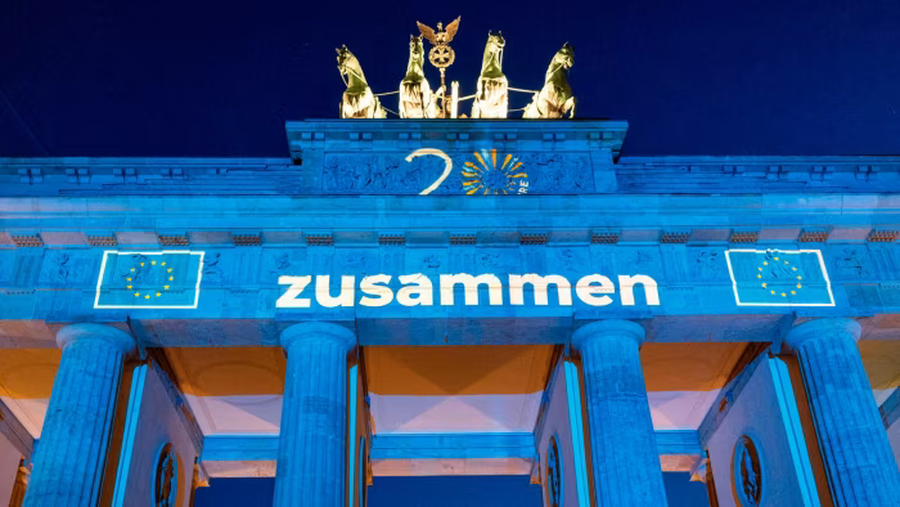
Despite some setbacks, the expansion into ex-communist Europe was a historic success.
Twenty years ago this week, 10 countries – eight of which had been part of the communist bloc – joined the EU in an enlargement dubbed the 'Big Bang'. Despite some Western misgivings at the time, this was an achievement of historical significance. It was a project to create a "full and free Europe" and to nurture freedom and prosperity in its central and eastern parts, much of which had long been under the influence of foreign empires and powers. different. Its success should bolster the EU's strength as it faces the imperative of admitting a new wave of members – including war-torn Ukraine.
EU membership succeeded, by and large, in cementing the comprehensive democratic and economic reforms that the prospect of membership had prompted before 2004. It proved a powerful force for economic convergence, through EU funds and foreign investment. that helped transform many of the new members into manufacturing and exporting powerhouses. Together with NATO protection - the other vital side of a double-sided coin - it created the conditions for countries to make the most of their restored or newly acquired sovereignty to build fast-growing market democracies.
There were inevitable pitfalls. Tensions arose between the enjoyment of sovereignty and the need to surrender some to a supra-national EU. Some sections of society resisted embracing liberal social values that they felt were ahead of local sentiments. Some political and business circles feel that a large part of the economy was handed over to foreign ownership. Free movement of people, while seen as a price of membership, led to population exodus and brain drain - now partially reversed. Such factors fueled populist nationalism that led to democratic backsliding, particularly in Hungary and, intermittently, in Poland.
East-west migration helped fuel nationalist parties, too, in some western EU states. It was a factor in Brexit, robbing the EU of a weighty member. However, enlargement to today's 27-nation bloc has increased the EU's role as one of the three major global powers alongside the US and China.
Beyond the 2004 accessions, however, and Romania, Bulgaria and Croatia that joined later, political and economic progress in other countries of the former communist bloc has been more halting. They became a "grey area" subject to a struggle for influence with a resurgent, revisionist Russia - culminating in Moscow's full-scale invasion of Ukraine in 2022.
This is why future enlargement is so important: securing these countries between them as part of a free, democratic Europe that stretches to the border of Putin's Russia. This new Big Bang will undoubtedly be more difficult. There are serious questions about how willing or committed some applicants are.
Ukraine, which before Russia's devastating invasion was still plagued by corruption, weak rule of law and low productivity, presents a particular challenge. The process of its membership must go in parallel with the victory of the war and the post-war reconstruction. But the Vienna Institute for International Economic Studies says that, measured by economic criteria, Ukraine is not so different from the joiners of two decades ago. Its admission today would expand the EU's output and population to roughly the same proportions as Poland's admission in 2004.
The EU must ensure that this enlargement process enables candidates to reap the rewards of reform in stages and not all at the end. EU governance also needs revamping to ensure it can function with 35 more members, including expanding majority voting and allowing "coalitions of the willing" to proceed with deeper integration. None of this will be easy. But the geopolitical stakes are much higher today than they were in 2004. Along with ensuring that Ukraine prevails, the best way to protect the achievements of the EU's recent enlargement is to go boldly forward with the other./ Adapt "Pamphlet" from "Financial Times"


Lini një Përgjigje