


 Shkruar nga Pamfleti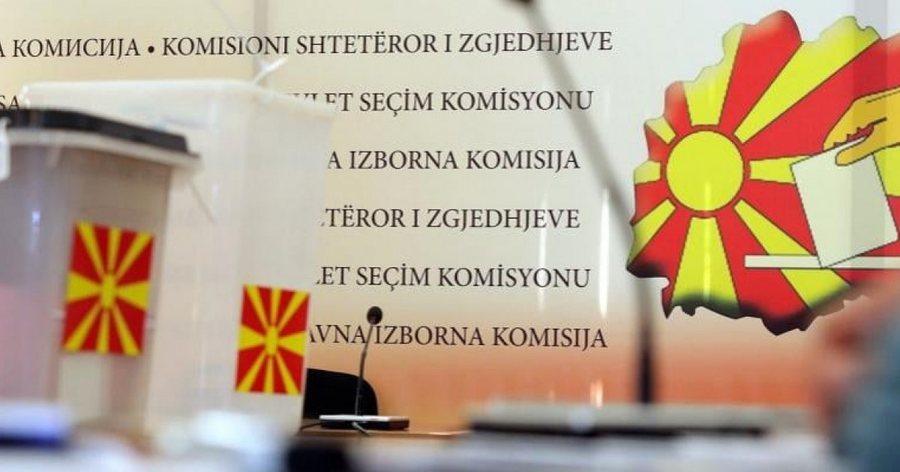
Which Albanian political bloc VMRO-DPMNE will form the government? Will the European Front and VLEN, depending on the constitutional changes, form the government, as they promised by signing a previous statement? Is it likely that parliamentary elections will be held again in the country if VMRO-DPMNE fails to form a government?
Russia's influence in North Macedonia was the main topic of the campaign for the presidential and parliamentary elections. The first round of presidential elections was held on April 24, while the second round will be held on May 8 along with regular parliamentary elections.
The two candidates with the most votes passed the runoff: Gordana Siljanovska – Dafkova from VMRO-DPMNE, who received almost 360,000 votes, and the current president Stevo Pendarovski, who is seeking a second term as a candidate from SDSM, who received 180,000 votes. Siljanovska-Dafkova's large lead heralds a sure victory, not only for her as the next president, but also for VMRO-DPMNE as the opposition party against the SDSM, which has held central power in Skopje since 2017.
Five candidates finished the race in the second round, including Bujar Osman from the European Front and Arben Taravar from the Albanian opposition coalition VLEN. Meanwhile, the other three candidates have not hidden their sympathy for Russia and China and have never condemned Russian aggression in Ukraine. It is about Biljana Vankovska from LEVICA, Stevçe Jakimovski from GROM and Maksim Dimitrievski from ZNAM, who even managed to win about 15 percent of the votes.
Osmani and Taravari have focused their campaign on the consequences of Russian influence in North Macedonia, accusing each other of laying the groundwork for Russia to have such a large influence in the country. Even Osman's slogan was "No to Russia, but to Europe". Osmani highlighted his position as Foreign Minister of North Macedonia, a NATO member country from 2020, and said he had information that the Russian Federation had a large influence on some presidential candidates and was expected to influence the outcome. and parliamentary elections.
On the other hand, Taravari accused that with the support of the "Open Balkans" by the government in Skopje, more space had been created for Russia's influence, which it had reached through Serbia.
However, for the Albanian candidates, the presidential elections were only a gauge for the parliamentary elections. The focus of political parties is on parliamentary elections, as this is where the real power - legislative and executive - originates. However, the president is a ceremonial position without much influence on the development or implementation of policies.
That is why it is not so attractive neither to the parties nor to the voters. Coincidentally, the second round of voting is scheduled for state election day to meet the legal threshold of 40 percent voter turnout for the election of the president to be valid.
Russia and China continue to be the focus of the campaign. The director of the secret service Erold Musliu, an institution operating under the umbrella of President Pendarovski, claimed that Russia and China are working to seriously influence the outcome of the parliamentary elections. He alluded to the LEVICA party and its portal, which are promoting withdrawal from NATO and membership in the BRICS states as an alternative to the EU.
Albanian political parties organized in two blocs - the European Front and VLEN - link the Russian influence with the vote on constitutional amendments for the inclusion of ethnic Bulgarians in the preamble, according to the French proposal of 2022. This document, the removal of the Bulgarian veto is already a precondition that the country to continue the process of negotiations for EU membership.
VMRO-DPMNE's refusal to support these changes has brought some accusations against it that this party is indirectly working for Russia in this way. The delay in starting the negotiations, coupled with the ethno-nationalist tones used by this party in its public vocabulary, has led to historically lower support for the EU integration process. In fact, some polls show that almost half of ethnic Macedonians believe it is time to look for an alternative to European integration.
There is now no doubt that VMRO-DPMNE will win the May 8 parliamentary elections. This party has declared that it sees the Albanian opposition coalition VLEN as a partner in the next government. The European Front led by Ali Ahmeti's DUI won the presidential elections against VLEN with a margin of almost 40,000 votes. This coalition now expects to win the parliamentary elections and represent the Albanians in the government.
If VMRO-DPMNE, as a possible winner of the elections, passes the European front as the winner of the elections among the Albanians, the situation may become tense and inter-ethnic relations may deteriorate. North Macedonia has not legally regulated the issue of the participation of the winning party in power among the Albanians, but so far such a practice has been established due to the stability it creates.
If the result of the election is quite clear, the time after the election remains full of questions. Which Albanian political bloc VMRO-DPMNE will form the government? Will the European Front and VLEN, depending on the constitutional changes, form the government, as they promised by signing a previous statement?
Is it likely that parliamentary elections will be held again in the country if VMRO-DPMNE fails to form a government? All these dilemmas bring back the fog of insecurity in North Macedonia, strain inter-ethnic relations, increase the level of Euroscepticism and thus increase the possibilities of a stronger influence of Russia and China. Such a situation of geostrategic uncertainty would bring back the crisis of 2016, when Skopje barely broke free from Moscow's embrace and became NATO's 30th member./ Adapted "Pamphlet" from "The Geopost"


Lini një Përgjigje