


 Shkruar nga Pamfleti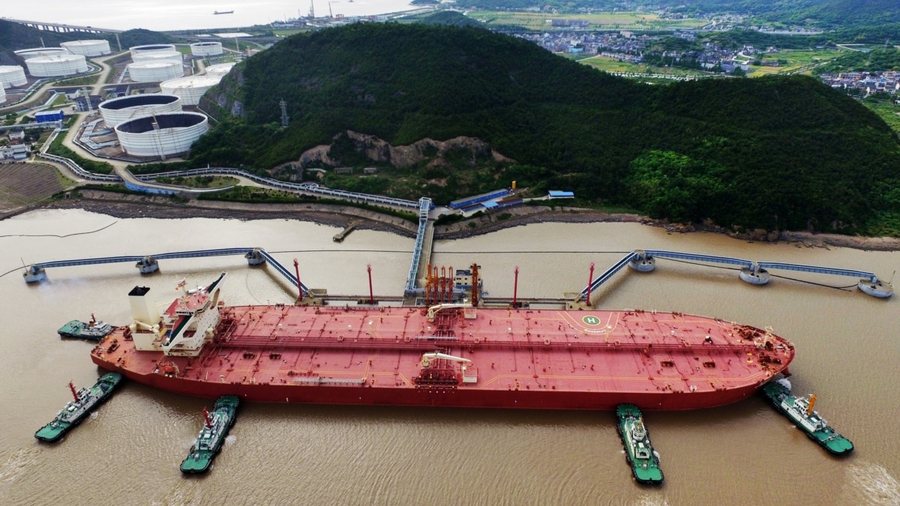
Iran is one of the most sanctioned countries in the world. But restrictions imposed by the United States have largely failed to curb Iran's oil exports - the mainstay of the Islamic Republic's shrinking economy.
US sanctions have alienated Iran from most of its traditional customers, forcing Tehran to find new buyers and sell its oil cheaply.
But China's willingness to buy record amounts of Iranian oil, Tehran's mastery of sanctions-avoidance tactics, and Washington's reluctance to strictly enforce sanctions have led to U.S. crackdowns on Iran's energy exports. be ineffective, experts said.
The lifting of US sanctions, as part of the 2015 nuclear deal between Tehran and world powers, allowed Iran to sell its oil to consumers in Europe and East Asia. Oil exports reached a record level in 2018.
But exports fell after then-US President Donald Trump pulled out of the deal later that year.
In recent years, Iran has increased sales by avoiding sanctions, including by using a "dark fleet" of tankers to illegally transport oil shipments to China.
This tactic includes ship-to-ship operations involving middlemen, secret money transfers and rebranding to hide the Iranian origin of the oil so that it appears the product comes from a third country.
"Iran is constantly developing and expanding, not only its network of brokers and trading companies involved in selling its oil, but also the fleet of tankers it mainly uses to transfer its crude," said Nader Itayim. , Middle East editor at UK-based Argus Media.
The increase in demand for Iranian oil in China has been key to the increase in Iran's oil sales.
Vessel tracking data collected by Argus showed that Iran's oil exports currently stand at 1.5 million barrels per day, with about 85 to 90 percent of that destined for China.
Tehran offers China a very cheap price for its banned oil, removing 15 percent of the price for each barrel of oil so that Beijing takes responsibility for avoiding sanctions.
This price cut has raised questions about Iran's long-term benefit from trade with China. But experts said that Tehran still has the opportunity to benefit.
"Even at a very cheap price, the sale of Iranian oil is extremely profitable and sustainable," said Steve H. Hanke, professor of applied economics at Johns Hopkins University. "This is because the profit margin for production in Iran is approximately $15 or less per barrel of oil."
Gregory Brew, Iran and Energy analyst at Euroasia Group in the United States, said US sanctions had previously been effective in blocking oil exports to China. But this is no longer the case.
"China's rise as a new world power gives it greater freedom to challenge US sanctions," Brew said.
Some analysts said Washington has been reluctant to strictly enforce the sanctions, while others said the sanctions, in general, have failed.
Resources are needed to enforce the restrictions, while new sectors will need to be sanctioned to keep the pressure high, said Itayim from Argus Media.
"On the contrary, the target finds ways to avoid the sanctions, while at the same time the buyer becomes more satisfied to see that the implementation of the sanctions is failing. In the case of Iran and China, I think we've seen a little bit of both of those things," Itayim said.
Analysts have also argued that Washington is reluctant to strictly enforce sanctions because of the risks associated with removing Iranian oil from the world market.
"In addition to the impact such action would have on the price of oil, which is of political and economic importance to [US President Joe] Biden in this election year, aggressive enforcement would provoke both Iran and China into a at a time when the US is trying to manage the risk of escalation in the Middle East and East Asia," said Brew.
The weak enforcement of oil sanctions also applies to Venezuela and Russia, Itayim said, noting that "this has been the key to keeping a ceiling" on oil prices.
Last month, the US Congress approved a security package that also includes the Iran-China Energy Sanctions Act, which gives the administration the authority to further restrict Iran's oil exports.
But experts are not convinced that more sanctions will have any impact.
Hanke said any new measure "will join the long list of failed Western sanctions" against the Islamic Republic.
"Sanctions are always subject to solutions that make the implementation of sanctions useless", he added./ REL



Lini një Përgjigje