


 Shkruar nga Pamfleti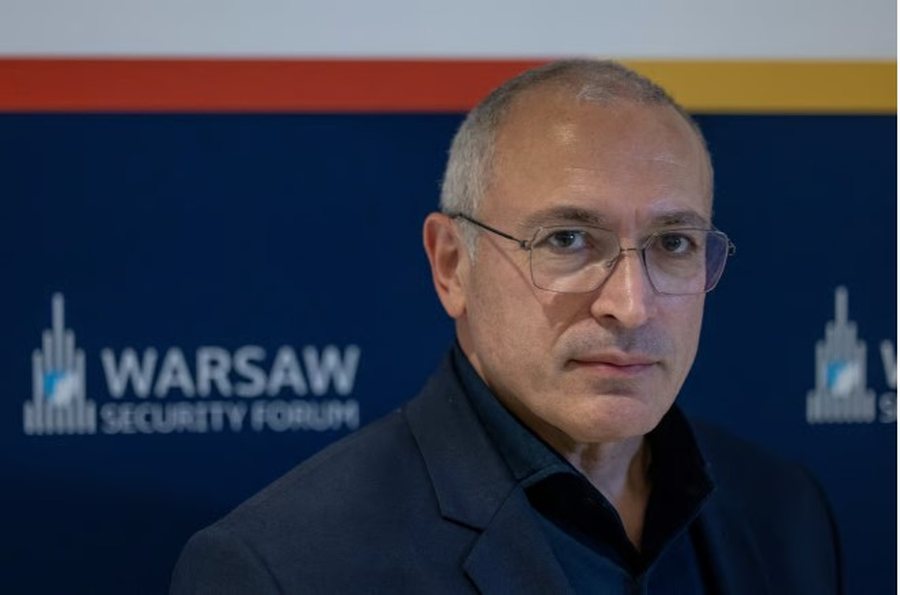
Former oil tycoon Mikhail Khodorkovsky explains why it will take Russia decades to overcome the "imperialist-military narratives" that Moscow pushes...
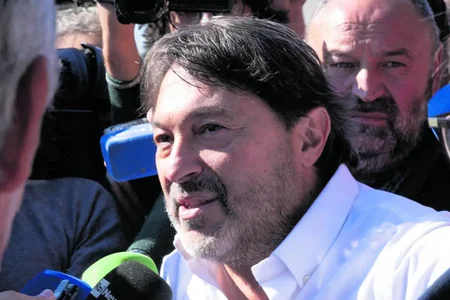
Leading Kremlin critic Mikhail Khodorkovsky warned Europe to prepare for a long-term confrontation with Russia, regardless of how Moscow's war against Ukraine plays out.
"We should expect some kind of Cold War to last at least ten years," former oil tycoon Khodorkovsky predicted this week at a private event in Brussels.
According to the exiled businessman, the only obstacle against further Russian aggression against Europe during that period will be President Vladimir Putin's conviction that the West poses a credible military threat.
During the Cold War, which lasted almost half a century, the Soviet Union and the West worked to undermine each other without risking open conflict in Europe and a possible nuclear war. Senior European and NATO officials now argue that Russia is reviving its policy of attrition, using hybrid warfare tactics to destabilize the West and sow division.
Khodorkovsky, who spent ten years behind bars in Putin's prison system and now lives in London, downplayed the effectiveness of Western sanctions on the Kremlin's influence, saying they were "creating some pressure on the Russian economy, but nothing dramatic."
He was equally skeptical that Ukraine's long drone campaign against Russian oil refineries would cripple the Kremlin's war machine.
"Even the most powerful drone, even a Tomahawk missile, can hit at most about two hectares," explained Khodorkovsky, the former owner of oil giant Yukos and once Russia's richest man.
"A typical structure in Siberia usually covers an area of 1,500 hectares. The damage caused is equivalent to stepping on someone's foot," he said.
In reality, Khodorkovsky argued, the only time Putin's grip on power could have been truly broken was during the first two years after the start of his full-scale invasion, if Russia had suffered a decisive military defeat in Ukraine.
He said that this window is now closed.
But, he added wryly, “we have a tradition [in Russia] that our dictators tend to leave somewhere between the ages of 70 and 80.”
Putin turned 73 this October.
Last month, Russian authorities opened a new criminal case against Khodorkovsky, accusing him of leading a "terrorist organization" and plotting a violent takeover with the help of Ukrainian paramilitaries.
In its statement, the Federal Security Service (FSB) also listed 22 other people linked to Khodorkovsky's Russian Anti-War Committee, a group of opposition-minded Russians in exile.
Some of those named have already served prison sentences in Russia or faced the threat of prosecution for their political activities. But the list also includes academics and businessmen.
Khodorkovsky himself spent a decade in a Siberian penal colony before being pardoned in 2013, in a landmark case widely seen as the opening act of Putin’s campaign to crack down on dissent. Although the case centered on tax evasion and other financial charges and resulted in the expropriation of Yukos, it was largely seen as a political warning to Kremlin critics.
The new charges against Khodorkovsky and his allies came just two weeks after the Parliamentary Assembly of the Council of Europe declared that it would create a “platform for dialogue” with Russian democratic opposition forces.
Speaking in Brussels, Khodorkovsky said the Kremlin's strong reaction showed "how worried Putin is by the idea of Russian democratic forces gaining legitimacy, even symbolically."
Although the FSB appointees now live abroad and are beyond the Kremlin's immediate legal reach, some of them have reported having problems with European banks and say that terrorism charges could complicate travel for fear of extradition to Russia.
Khodorkovsky told Politico that he was confident that a post-Putin Russia would one day return, but warned that it would take decades for the country to free itself from the "imperialist-military narrative" that portrays Russia as surrounded by enemies and justifies invading its neighbors.
"My generation will not live to see the day when Russian society returns to a state of normality," he said.
Asked if he found this prospect discouraging, Khodorkovsky smiled.
"When you work in heavy industry, you get used to starting processes that will take you longer. From exploring an oil field to production it can take 15 years or more," he replied.
"The future is as real to me as the present, and it motivates me." /Adapted from Politico/


Lini një Përgjigje