


 Shkruar nga Pamfleti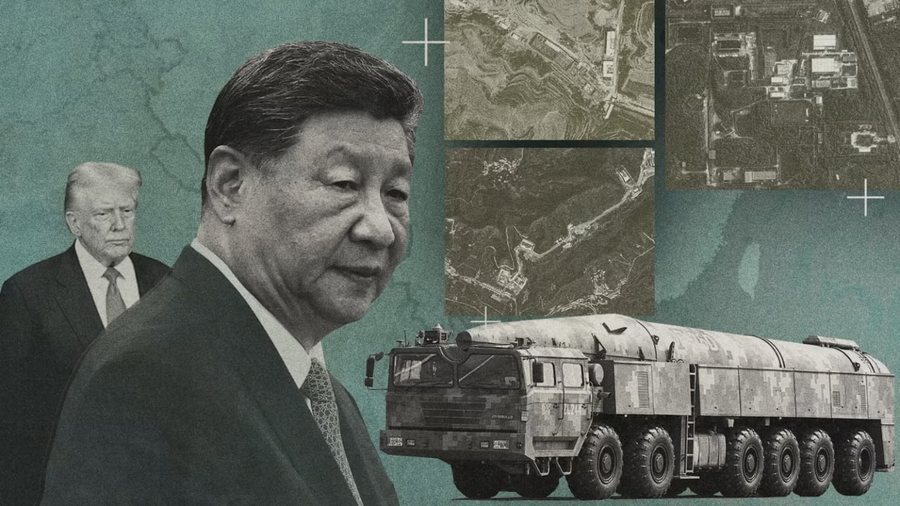
The historic growth contrasts with the United States' own supply problems.
China is expanding missile production since 2020, strengthening its ability to compete with the US military and assert its dominance in the region, writes CNN.
The historic growth contrasts with the United States' own supply problems.
These facilities include factories, research centers and testing facilities, which have added over 2 million square meters of construction space in the past five years. In some cases, parts of missiles are even visible in satellite images.
Security experts warn that this expansion is part of a broader strategy by China to develop more advanced missiles and increase its ability to deter US military intervention in the region.
The missiles produced will be a key component of the strategy to keep Taiwan under pressure and create a buffer near the Chinese coast, which could hinder American assistance in the event of a conflict.
Since Xi Jinping came to power in 2012, China has invested billions of dollars in purchasing and modernizing military equipment. He has also built up the PLA Rocket Force (PLARF), an elite branch that manages the country's nuclear arsenal and ballistic missiles, describing it as the "core of strategic defense" and the foundation for China's national security.
According to SIPRI data, China is increasing its nuclear arsenal by about 100 new warheads per year since 2023, becoming one of the fastest-growing countries in this field, although it still lags behind the US and Russia, which control 90% of global arsenals. The expansion of production has also accelerated after Russia's invasion of Ukraine in 2022, seen as an opportunity to learn from the use of modern technologies in warfare and to improve the country's missile capabilities.
CNN identified 99 facilities linked to missile production and found that 65 of them have expanded significantly over the past five years. The analysis shows that China is building towers, bunkers and other structures related to weapons development, sometimes transforming villages and farmland into modern production centers.
Meanwhile, the US is facing supply challenges for defense systems, such as THAAD, which are expensive and take time to produce. Experts warn that this combination, China's growing capabilities and US supply difficulties, could create new tensions in the Asia-Pacific and on the global stage.
The growth of Chinese missile capabilities has alarmed arms control experts, who warn that it could increase the risk of a potential conflict and transform the global arms race into a "hot war" in the future.







Lini një Përgjigje