


 Shkruar nga Pamfleti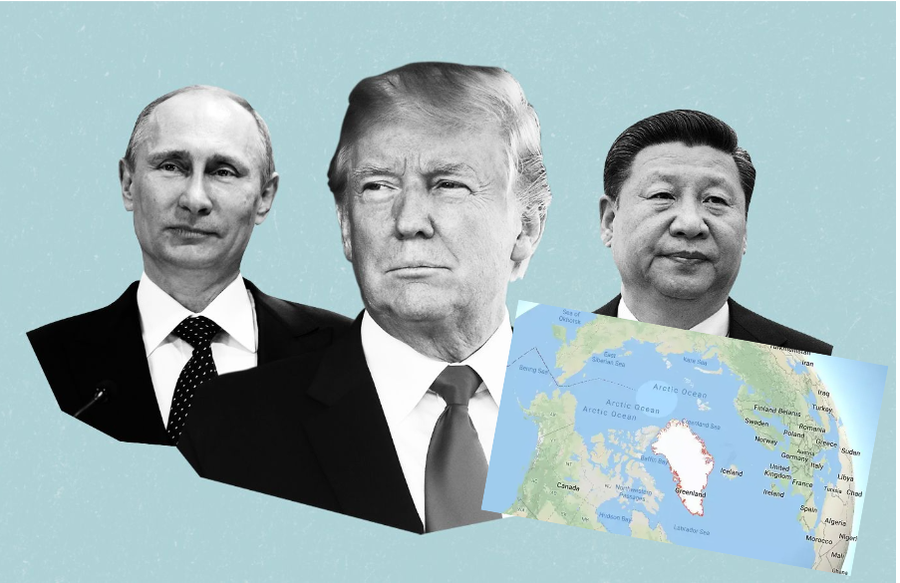
That is why Beijing now aims to consolidate the vassal relationship in the region, to which it has reduced Moscow since the beginning of the war. As early as 2018, a government "White Paper" on the issue defines China as "a quasi-Arctic state" and an "important stakeholder" in the area.
The first strategic act of the Kremlin after the total aggression against Ukraine in 2022 was the launch of the "new naval doctrine".
The doctrine is 100 pages long, and the focal point is not the Black Sea - where Moscow continues to fight - but the Arctic.
The doctrine explains China's objectives and relationship, although it is harder to understand two overlapping developments in recent days: Donald Trump's assertive claims to Greenland and the reluctance of Beijing and Moscow to cooperate on climate change, even as average temperatures are increase more and faster than the thresholds set by the Paris Agreement.
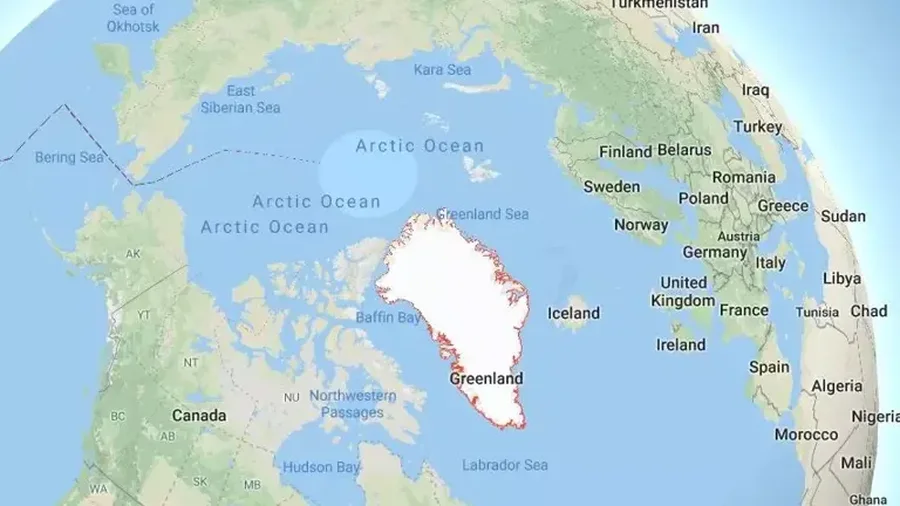
Point 4 of 21 of the Kremlin's "maritime doctrine" on the Arctic makes one of the goals clear: "The development of a Nordic sea route, to establish it as a safe and competitive year-round national route for the Russian Federation at the level global".
That document also describes the systematic militarization of the very long stretch of sea between the Bering Strait and the Norwegian border.
But the commercial stakes are also potentially huge. Until 2018, it was thought that the Arctic route opened up by climate change could be navigable for 3 or 4 months of the year at most.
Now accelerating global warming allows Moscow, which has the world's most powerful fleet of icebreakers, to aim to keep that route open at all times.
For international trade, the change would be profound.
From the major Chinese port of Shenzhen to Hamburg, it takes about 34 days for a container ship, if it goes through the Straits of Malacca and Suez. But now volumes from the Red Sea have fallen chronically to less than 30% of their previous levels, due to the threat from Yemen's Houthis and the associated boom in insurance costs.
Therefore, many merchant ships prefer to circumnavigate Africa to Gibraltar, according to the Sea Fare Analysis Center, an average of 48 days, from China to the main European North Atlantic ports.
Only the big European maritime logistics groups have seen their profits explode, obviously at the expense of producers and consumers. The new Arctic route, on the other hand, would provide the same link in less than half the time, 23 days, at much lower costs.
The problem is that that path, according to the Kremlin's vision, should not be for everyone. Navigation rules approved by the Moscow government in 2020 state that any foreign ship can enter and exit the Northern Sea Route only with official permission from Russia. Of course, this is another violation of United Nations rules: the UN Convention on the Law of the Sea does not give coastal countries the right to control transit, and moreover, maritime boundaries in the Arctic have never been traced with precision, when the area was permanently covered by ice.
That is why Beijing now aims to consolidate the relationship of vassalage in the region to which it has relegated Moscow since the beginning of the war. As early as 2018, a government "White Paper" on the issue defined China as "a quasi-Arctic state" and an "important stakeholder" in the area. The objective is to obtain from the Kremlin an exclusive right of transit, shared only with Russians and in exchange for modest commissions, to transport Chinese products to Europe and the Atlantic at unbeatable costs. Russia would have a permanent income from it. And Beijing would further displace the traditional industrial sectors of mature economies.
According to the official language of the Chinese government, a "Polar Silk Road" would be opened based on the privileged relationship between Xi Jinping and Vladimir Putin.
However, one of the advantages for the Asian superpower would be in the opposite direction: having a fully navigable northern route would mean for the People's Republic, being able to bring Russian liquefied natural gas and crude oil to Shanghai, Shenzhen or Hong Kong without fear of a possible western blockade at the head of the Malacca Strait. After all, it was the Anglo-American blockade of that center in Southeast Asia that fatally weakened Japan in World War II.
This set of geopolitical and commercial goals means that Russia and especially China, until now the world's first greenhouse gas emitter, remain ambiguous in the fight against climate change: they don't care if it helps pave the Nordic way.
But precisely these developments worry the Americans. President-elect Trump's territorial claims to Greenland only heighten the tension and create an alibi for Putin in his attempt to annex territories from Ukraine. But they reveal how America feels the need for a new direct presence in the Arctic: where melting ice paves the way for a new form of global competition. / Corriere della Sera- Adapt Pamphlet/






Lini një Përgjigje