


 Shkruar nga Pamfleti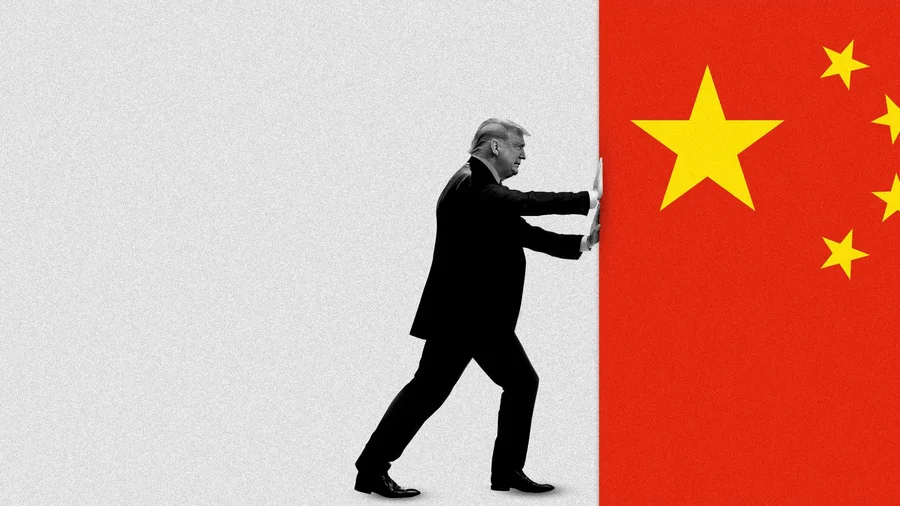
What has been considered an economic risk for years is now a reality.
The retaliatory tariffs effectively end bilateral US-China trade, the latest step in the economic decoupling of the world's two largest economies.
This is the new warning from the World Trade Organization, in the publication of its latest global outlook.
The sudden divorce of the two economies could mean deep pain for American workers and the nation's wealth built on the back of a strong trading relationship.
A protracted trade war risks dividing the global trading system into two distinct blocs – countries that trade with the US and those that trade with China.
The WTO predicts that trade between the US and China will come to a standstill this year.
Trade in goods between the two countries will fall by 80%, a decline that would have exceeded 90% without the White House's recent exemption for smartphones and other technology goods, according to WTO Director-General Ngozi Okonjo-Iweala.
"The decline in US-China trade of the magnitude we are talking about is practically equivalent to a disconnection of the two economies," Okonjo-Iweala told reporters on Wednesday morning.
The total volume of goods traded worldwide is expected to shrink by 0.2% this year – a sudden reversal from growth of almost 3% last year.
The decline in world trade would be as large as 1.5% in 2025 if President Trump reinstates the reciprocal tariffs that are now on hold.
If trade and trade policy uncertainty were low, the WTO says, world trade would grow by 2.7% in 2025.
The group predicts that the trade slowdown – coupled with uncertainty about the end of tariffs – will spill over into weaker global growth.
The WTO expects GDP growth to reach 2.2% in 2025, 0.6 percentage points below its initial forecast that did not take into account the global trade war.
The Trump administration said it would hold trade negotiations with a host of nations facing reciprocal tariffs over the next 90 days.
But China is the exception. High country-specific tariffs have been eliminated for all countries, although tariffs on China have only increased.
Trump ordered the Commerce Department to investigate America's reliance on critical minerals from other countries.
The investigation could further hit trade with China, which produces the majority of all critical minerals, many of which are used in the defense, energy and electronics sectors.
Any tariffs resulting from the investigation will "take the place" of current reciprocal tariffs, according to the executive order Trump signed on Tuesday.
The WTO says countries must reduce excessive support from other trading partners, an acknowledgement that Trump-like protectionism is the new threat.
"The US has a point where it says that many countries are dependent on its market, or the production of some critical inputs is highly concentrated in certain sectors and geographies," says Okonjo-Iweala.
Fears of economic devastation from the US-China disconnect helped temper Biden-era trade policy.







Lini një Përgjigje