


 Shkruar nga Pamfleti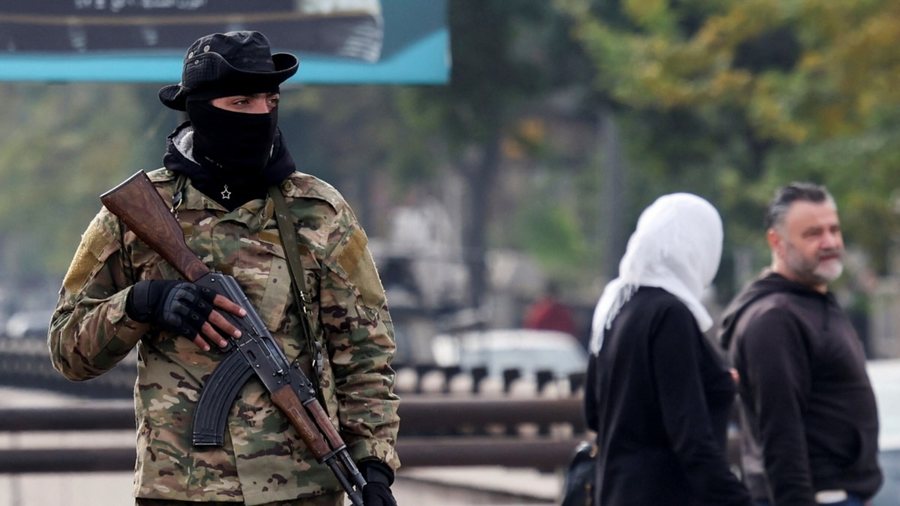
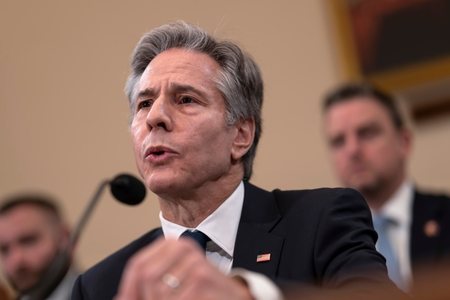
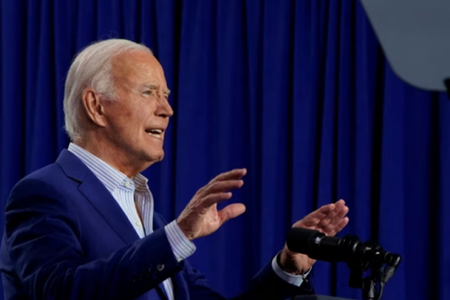
After the fall of Syrian President Bashar al-Assad in Syria, US President Joe Biden's administration said it would support a transition period that would lead to the creation of a non-sectarian government that would be responsive to the Syrian people. US Secretary of State Antony Blinken is making a visit to the Middle East in an effort to unite the countries of the region around a common vision for the future of Syria.
But as VOA correspondent Patsy Widakuswara reports, in less than six weeks, President-elect Donald Trump's new administration will begin its mandate, while Mr. Trump has signaled that his approach will be one of non-involvement. in Syria.
The administration of President Biden is using the prospect of American support as motivation for the further steps of the actors in Syria, at a moment of deep uncertainty after the fall of President Bashar al-Assad.
"What we want to see in Syria is a stable and legitimate government that fulfills the aspirations of the Syrian people and is the result of a process led by the Syrians ," National Security Council spokesman John Kirby told VOA.
The insurgent group Hayat Tahrir al-Sham, which ousted President Assad from power, has been designated a terrorist organization by the United States. The $10 million reward set by the United States for the capture of the group's leader, Abu Mohammed al-Golani, is still in effect.
"This victory, my brothers, constitutes a new chapter in the history of the entire Islamic nation. It is a turning point for the region" , al-Golani declared.
During the last years, Golani distanced himself from the extremist ideology. But he delivered his victory speech on Sunday from an ancient Sunni mosque in Damascus, not the presidential palace - a worrying sign for some.
"On the communication channel of the insurgents on the messaging platform Telegram, it was said 'we took the Umayyad Mosque'; then they wrote, 'now we will take al-Aqsa', which is located in Jerusalem, and then 'we will take the Kaaba', which is located in Saudi Arabia" , says analyst Michael Rubin from the American Enterprise Institute.
US President Joe Biden reacted quickly, ordering airstrikes against Islamic State targets in Syria starting on Sunday.
On Wednesday, he sent Secretary Blinken to Turkey and Jordan to consult with the leaders of those countries.
But on January 20, President Biden will be replaced by Mr. Donald Trump, who is giving signs that he will maintain a stance of non-involvement in Syria.
On social platforms, Mr. Trump warned, “Let's let things take their course. Don't get involved."
But the United States is already involved. They have about 900 forces in Syria and the US supports the Syrian Kurdish rebel group.
Washington also has close relations with all of Syria's neighbors: Iraq, Lebanon, and US allies Israel, Jordan, and Turkey.
"We should not completely give up on involvement. But if we don't want to fully engage, then as the United States of America, this is the time to work very closely with our partners in the region ," says the former US ambassador to Syria, Ryan Crocker.
It remains unclear whether, under Mr. Trump's "America First" doctrine, the United States will aim for what President Biden wants — a future Syrian government that is inclusive and non-sectarian. Meanwhile, other countries have started to make their next moves.
Assad was backed by Moscow, which has already committed to maintaining Russian military bases in Syria. In the north, Syrian Kurds are being displaced as Turkish-backed rebels attack US-backed Kurdish rebels, whom Ankara considers allies of the separatist movement.
For now, Iran has lost most of its influence. Especially while Israel is conducting airstrikes across Syria, further weakening the remaining military capacity of Tehran's former ally./ VOA



Lini një Përgjigje