


 Shkruar nga Tamara Kanuchova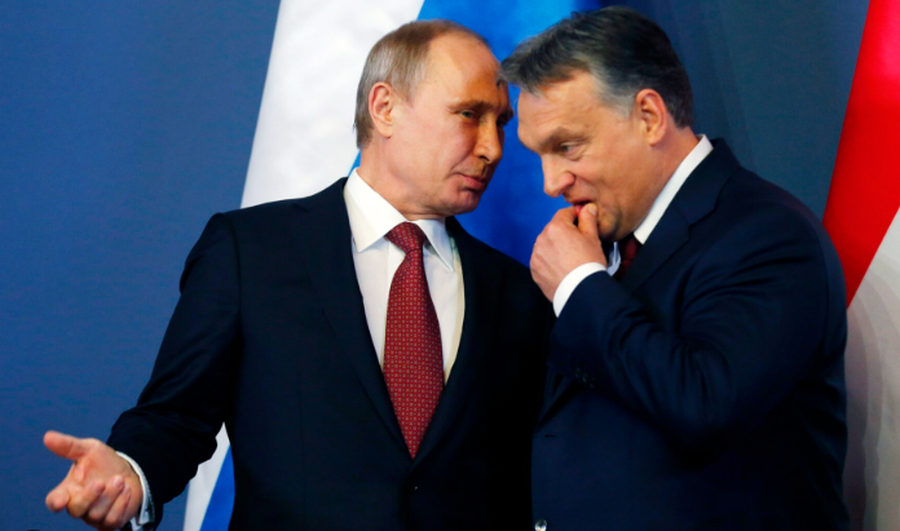
The covert operation, orchestrated by top Kremlin strategists, aims to secure Viktor Orbán’s stay in power through hybrid tactics, which have been tried before in Moldova. Western intelligence has already identified the presence of Russian agents with diplomatic immunity, who are preparing the ground for direct interference in next month’s electoral process.
Moscow has sent a team of specialists to Budapest to interfere in Hungary's parliamentary elections in April, according to multiple European national security sources.
This operation, overseen by Vladimir Putin's close confidant Sergei Kiriyenko, is specifically designed to keep Viktor Orbán in power, following the same plan of action that Russia recently implemented in Moldova.
The Kremlin has tasked a team of political strategists with interfering in the Hungarian electoral process, with the sole purpose of helping Prime Minister Viktor Orbán's government secure another victory.
The operation is led by Sergei Kiriyenko, Putin’s First Deputy Chief of Staff and the chief architect of Russia’s political influence infrastructure at home and abroad. Kiriyenko, the former head of the state nuclear corporation Rosatom, was appointed Putin’s domestic policy chief in 2016 and has since significantly expanded his portfolio to include interference in foreign elections.
His most recent and aggressive engagement was in Moldova, where operatives under his direction ran vote-buying networks, troll farms, and influence campaigns aimed at undermining the pro-European president, Maia Sandu. While the operation produced mixed results, intelligence sources say the same playbook is now being implemented in Hungary. National security agencies from three different European countries said the data was shared with allied services, alerting multiple European Union and NATO agencies.
The United States has also shared sensitive intelligence on this matter since February. Since the operations in Moldova, Kiriyenko's foreign influence structure has undergone a complete reorganization.
Late last year, Russian President Vladimir Putin created a new Presidential Directorate for Strategic Partnership and Cooperation, disbanding two departments previously headed by Dmitry Kozak.
Kiriyenko appointed Vadim Titov to lead the new directorate, a trusted associate from their years at Rosatom, where Titov managed international operations. Titov has no traditional diplomatic background, but like Kiriyenko, he is primarily a political operative.
The focus of this directorate remains the post-Soviet space, a scope that in the Kremlin's current strategic vision also includes Hungary. Meanwhile, the operation also has a significant ground component.
According to European security sources, the plan involves placing a team of social media manipulation specialists inside the Russian embassy in Budapest, who have been provided with diplomatic or service passports to protect themselves from expulsion.
This approach mirrors the tactic used in Moldova, where Russian embassy personnel were discovered coordinating subversive activities, forcing Moldovan authorities to reduce the Russian diplomatic staff by more than two-thirds.
Sources describe the contingent in Budapest as a three-person team operating on behalf of the GRU, Russia's military intelligence service. The group arrived in Budapest weeks ago, although it remains unclear whether they have fully begun their activities.
Their identities have already been determined by Western intelligence agencies. This operation fits into a broader pattern; as Vsquare has previously reported, Hungary has been unusually hospitable to Russian military diplomats with suspected ties to the GRU.
Some of them have cultivated contacts within the pro-government media ecosystem in Hungary, such as the case of propagandist Georg Spöttle, who maintained close relations with the Russian military attaché.
In recent months, pro-Orbán media outlets have intensely reinforced the Kremlin's narratives on Ukraine, creating a media environment that analysts consider highly conducive to influence operations.
According to a national security source in Central Europe, Kiriyenko's team in Hungary is already in active contact with campaign operatives linked to Viktor Orbán's government. / Prepared by Pamphlet




Lini një Përgjigje