


 Shkruar nga Pamfleti
As perpetual war becomes the organizing principle of "late Putinism," it justifies—even demands—the tightening of repression that Putin needs to maintain his grip on the nation.
When Westerners talk about the conflict in Ukraine becoming an "eternal war," they tend to take it as a bad thing. For Russian President Vladimir Putin, however, there is likely a purpose.
Last week, Putin made September 30 an official holiday: the indecently named Day of the Reunification of the New Regions with the Russian Federation. Marking the one-year anniversary of the annexation of Ukraine's Donetsk, Luhansk, Kherson and Zaporizhzhia regions — although most were not even under Russian control at the time — provided an opportunity for Putin to return to one of his current obsessions: that it is a war "for the Motherland, for sovereignty, spiritual values, unity and our victory".
This is not, in his eyes, a war with Ukraine so much as a global war with the West, in which Ukraine is only one battlefield, albeit a particularly bloody and visible one. In his speech at the 2023 Victory Day parade, Putin was somber, declaring that "a real war has been launched against our motherland."
He raised the specter of the Great Patriotic War - how Russians describe World War II - and warned that "civilization is again at a decisive turning point" because "Western globalist elites" were determined to "destroy and destroy" Russia.
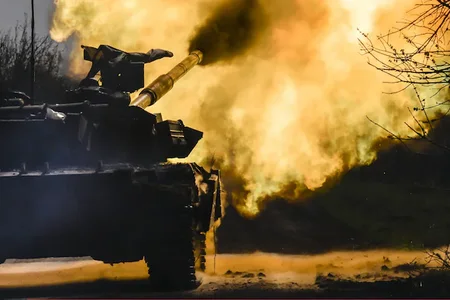
On the one hand, this could be taken as an apocalyptic alibi for the relative failure of his so-called "special military operation" in Ukraine, in which what was supposed to be a quick operation to impose a puppet regime instead it became a bloody one. Large-scale warfare that saw the flower of the Russian military destroyed.
However, it is more than that. When Putin talks about it as one of the "decisive battles for the fate of our Motherland," as he did at this year's Victory Day parade, he also seems to be speaking from the heart — and about his regime's new credo. He was offering no clear vision of the future, not even any real hope, just the message that the nation was locked in an existential struggle with a hostile West with no real end in sight.
That sounds like a bleak prospect, but from Putin's perspective it also has its clear virtues. Of course, the war is a disaster for Russia. US government sources suggest that Russia may have suffered 120,000 killed and 170,000-180,000 wounded.
The economic pain will take years to heal even when peace is achieved and sanctions are lifted. And the second-order effects on underfunded public services, even without the burden of large numbers of physically and psychologically damaged veterans, will be felt for at least the next generation.
But it is also an opportunity. As perpetual war becomes the organizing principle of "late Putinism," it justifies—even demands—the tightening of repression that Putin needs to maintain his grip on the nation. Even the mildest dissent becomes treason and a massive shift of resources to the defense sector becomes a necessity. The latest budget calls for military spending to rise by nearly 70% next year, to a level about three times that of health, education and environmental protection combined.
Në fushën e betejës, Putini mund t'i thotë vetes se ai fiton duke mos humbur. Kundërofensiva ukrainase ka thyer vijën e parë mbrojtëse ruse në rajonin jugor të Zaporizhzhia dhe tashmë ka goditur disa defekte lokale në të dytën. Shpresa e Kievit është se nëse nuk mund t'i ndajë forcat pushtuese në dysh, të paktën do të arrijë aq larg sa të jetë në gjendje të bombardojë lidhjet "urë tokësore" rrugore dhe hekurudhore që lidhin Krimenë me kontinentin rus.
Nga këndvështrimi i Putinit, të folurit për një "luftë të përjetshme" ka një virtyt të fundit që për të është demoralizuese për armiqtë e tij.
Me afrimin e shirave të dimrit, duket se do të jetë e mundur. Nëse jo, Moska do të ketë një hapësirë frymëmarrjeje për të ndërtuar më shumë mbrojtje, për të ngritur më shumë trupa dhe për të shpresuar të shohë zvogëlimin e vullnetit perëndimor për të vazhduar financimin e luftës së Ukrainës në këtë luftë.
Ne nuk mund ta dimë nëse Putini beson me të vërtetë se Rusia mund të tërheqë një lloj fitoreje nga Ukraina ose thjesht ndjen se nuk ka alternativë përveçse të shpresojë se mund t'i kalojë armiqtë e tij. Megjithatë, nga këndvështrimi i tij, të folurit për një "luftë të përjetshme" ka një virtyt përfundimtar për të - është demoralizues për armiqtë e tij.
Në fund të fundit, është një gjë të imagjinohet një fitore ushtarake ukrainase në kurrizin e vendosmërisë së ushtarëve të saj dhe epërsisë së pajisjeve të siguruara nga perëndimi. Megjithatë, ka një hendek të vërtetë midis kësaj dhe një paqeje të qëndrueshme.
Edhe nëse çdo ushtar rus shtyhet nga Ukraina – gjë që do të kërkonte disa veprime – atëherë kjo thjesht e zhvendos vijën e frontit në kufirin kombëtar. Rusia do të jetë ende në gjendje të rindërtojë forcat e saj, të lëshojë dronë dhe raketa në qytetet ukrainase dhe të bëjë çfarë të mundet për të penguar rindërtimin.
Meanwhile, while Putin's handling of the July uprising by Wagner's boss Yevgeny Prigozhin and his mercenary army has left many within the elite unsure whether he has lost his ability to manage the system, the subsequent untimely death and Prigozhin's suspicion was seen as a stern warning to others to challenge him.
Sanctions have a real effect on Russian defense production, but they cannot prevent its escalation, nor is the economy facing collapse. The casualties do not appear to be stopping the Russians from volunteering to fight, so much so that the General Staff says it does not plan another mobilization of reservists.
No war lasts forever, but peace is still on the horizon. /Adapted 'Pamphlet' from 'CNN'


Lini një Përgjigje