


 Shkruar nga Nicholas Westcott
Trump-era diplomacy has challenged many of the traditional norms of international relations. By favoring personal agreements, displays of force, and public communication through social media, Trump has built a new diplomatic model that often bypasses traditional institutions and alliances.
The negotiations to end tensions between the United States and Iran, which culminated in the signing of a memorandum of understanding on June 17, constitute an important test of how Donald Trump conceives of diplomacy. What do they tell us? And has Trump really changed the way diplomacy is conducted in the world?
When he took office for his second presidential term in January 2025, Trump declared that he aimed to be both a "peacebuilder" and a defender of an "America First" foreign policy, focused on avoiding wars and securing direct benefits for the US.
By November 2025, he claimed to have resolved eight major conflicts around the world. In January of this year, after the forced removal of Nicolás Maduro from the Venezuelan presidency and the installation of Delcy Rodríguez as his successor, more friendly to the US, Trump’s deputy chief of staff, Stephen Miller, told CNN:
"You can talk all you want about diplomatic courtesy and everything else. But we live in a real world, which is governed by force, by power and authority."
However, the conflict with Iran showed the collision of Trumpian diplomacy with a reality that does not always obey Washington's will or American demonstrations of strength. The real world turned out to be much more complex than Trump had anticipated.
The five pillars of Trump's diplomacy
So far, Trump's approach to diplomacy has been characterized by five main elements.
First, he eschews traditional diplomatic institutions. The State Department has been overshadowed, while the United Nations has often been ignored. Traditional alliances, multilateral organizations, and international forums are viewed with distrust, except when they provide Trump with a stage to demonstrate his power and dictate the agenda.
Rather than relying on ambassadors or professional diplomats, he prefers a small group of trusted personal emissaries, such as his son-in-law Jared Kushner, investor Steve Witkoff, and Lebanese-American businessman Massad Boulos. Even Marco Rubio, as Secretary of State and National Security Advisor, has had a relatively limited role.
Second, Trump's diplomacy is deeply personal. He prefers to negotiate directly with other leaders, in what he considers "man-to-man" relationships, but only with those he respects.
Në këtë kategori bëjnë pjesë figura si Xi Jinping, Vladimir Putin, Benjamin Netanyahu dhe herë pas here Mohammed bin Salman. Ndërsa me udhëheqës të tjerë, si Volodymyr Zelensky apo Cyril Ramaphosa, ai ka treguar shpesh prirje për të theksuar publikisht epërsinë e tij politike.
Së treti, Trump e sheh fuqinë kryesisht si produkt të forcës ushtarake dhe potencialit ekonomik. Ai është i gatshëm t’i përdorë të dyja për të arritur atë që e konsideron një marrëveshje të favorshme për Amerikën.
Apelimet ndaj parimeve, të drejtës ndërkombëtare, të drejtave të njeriut apo vlerave demokratike kanë humbur rëndësinë që kishin në diplomacinë tradicionale amerikane. Po ashtu, ai ka treguar gatishmëri për të vepruar i pari dhe për të negociuar më vonë, qoftë përmes tarifave tregtare apo ndërhyrjeve ushtarake.
Së katërti, komunikimi publik është një element thelbësor. Për Trumpin ka rëndësi se si veprimet e tij perceptohen nga media, mbështetësit e lëvizjes MAGA, tregjet financiare dhe opinioni ndërkombëtar.
Përdorimi i platformës së tij Truth Social për të zhvilluar negociata publikisht përfaqëson të kundërtën e diplomacisë tradicionale, ku luajnë një rol qendror kanalet sekrete, negociatat konfidenciale dhe ndërmjetësit e besuar. Aftësia e tij për të dominuar ciklin e lajmeve i ka dhënë avantazh, por negociatat me Iranin treguan se kjo strategji ka kufijtë e saj kur deklaratat optimiste nuk përputhen me realitetin.
Së fundi, Trump është i përqendruar pothuajse ekskluzivisht te rezultatet afatshkurtra. Koncepte si “durimi strategjik”, që kërkojnë kohë, vetëpërmbajtje dhe planifikim afatgjatë, nuk duket se bëjnë pjesë në filozofinë e tij politike.
Për të, më e rëndësishme është shpallja e një fitoreje, e një marrëveshjeje apo e një paqeje, sesa zbatimi i plotë dhe i qëndrueshëm i saj. Marrëveshja për Gazën e vitit 2025 mbeti e bllokuar, ndërsa lufta në Ukrainë, që ai premtonte ta zgjidhte brenda 24 orësh, vazhdon ende.
Lufta me Iranin zbuloi dobësitë e modelit Trump
Konflikti me Iranin sfidoi drejtpërdrejt modelin diplomatik të Trumpit dhe nxori në pah kufizimet e tij. Pavarësisht goditjeve ndaj udhëheqjes iraniane, bombardimeve mbi objektet bërthamore dhe sanksioneve ekonomike, Teherani nuk u dorëzua. Përkundrazi, sfidoi SHBA-në të përfshihej në terren, kërcënoi ekonominë globale përmes ngushticës së Hormuzit dhe goditi aleatët amerikanë në Gjirin Persik.
Irani refuzoi të negocionte me emisarët e Trumpit, duke argumentuar se ishte tradhtuar dy herë gjatë proceseve të mëparshme negociuese. Po ashtu, ekspozoi si të pavërteta deklaratat e vazhdueshme të presidentit amerikan se marrëveshja ishte pranë ose se fitorja ishte siguruar.
Rrjedhimisht, Trump u detyrua të mbështetej te ndërmjetës të tretë, si Pakistani dhe Katari, për të negociuar me regjimin iranian. Edhe pse vazhdoi të shmangte Kombet e Bashkuara, ai zbuloi se nuk mund të arrinte gjithçka vetëm përmes presionit dhe forcës.
A do të ndryshojë qasje Trump?
The answer is both yes and no. Trump is not bound by a rigid ideology and can change course at any time if he deems it necessary. However, his distrust of multilateralism and traditional diplomacy is likely to remain unchanged.
Meanwhile, the rest of the world is adjusting to this new reality. Some countries are looking for figures capable of influencing the US president, the so-called "Trump whisperers", such as NATO Secretary General Mark Rutte.
Others are appointing special envoys to communicate with those in his inner circle. Britain has also followed this path through national security adviser Jonathan Powell, who played a key role in improving US-Ukraine relations.
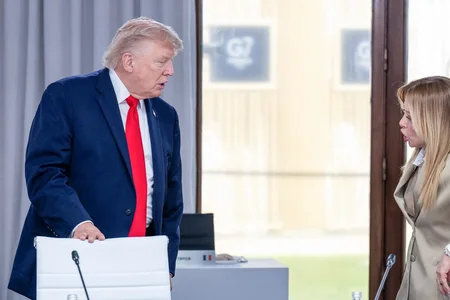
As bilateral diplomacy increasingly replaces multilateral formats, small countries risk being left out of decision-making processes. However, Trump's recent summits with Vladimir Putin and Xi Jinping did not produce the expected results. He spent more time at the recent G7 summit than at similar meetings in the past.
After all, the American president is perhaps beginning to understand that even superpowers need friends./ Adapted from "Pamphlet", from "The Conversation"
Note: Nicholas Westcott is Professor of the Practice of Diplomacy, Department of Politics and International Studies, SOAS, University of London.


Tramp TRAPI NJE GOMAR I PASUR QE NUK KA ASNJE NJOHURI PER DIPLOMACI HISTOTI GJEOPOLITIKE NARCIZIST I SEMURE QE PARDORET E I VURI FLAKEN BOTES TRAP
Eshte turp te thuhen kaq rreshta per trapin. Kur njeriu nuk mesoi deri ne 80 vjec, cdo mesoje me kur trute i kane rrjedhur.