


 Shkruar nga Pamfleti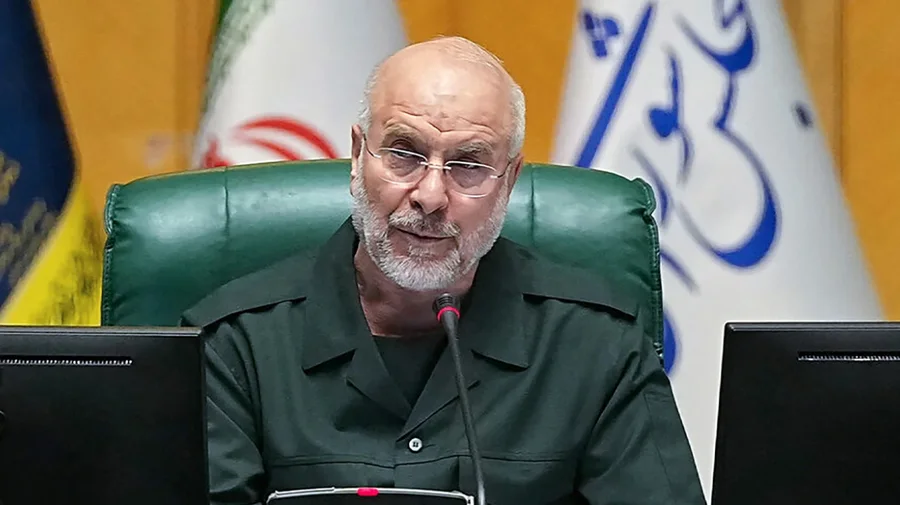
Technical talks between Iran and the United States concluded in Switzerland, with both sides agreeing to establish working groups on issues related to Tehran's nuclear program and international sanctions, according to Iranian state media.
Agreement for four working groups
According to the Iranian news agency IRNA, which quotes Deputy Foreign Minister Kazem Gharibabadi, the negotiators decided to create four working groups with a focus on: lifting sanctions, nuclear issues, reconstruction and economic development, and the mechanism for monitoring and implementing agreements.
"Success" in the talks
The Speaker of the Iranian Parliament, Mohammad Bagher Ghalibaf, positively assessed the results of the talks, speaking of "successes" on a number of issues, including navigation in the Strait of Hormuz, talks on Lebanon, exemptions in the oil sector, and the unblocking of frozen Iranian funds.
He said it was agreed to release two tranches of $6 billion each of the frozen funds, while sanctions on the oil sector remain in place until a final agreement is reached. He added that the necessary authorizations have been secured so that Iran can continue oil sales and banking transactions.
Regarding Lebanon, Ghalibaf said that it was agreed to establish a coordination center to resolve disputes and prevent the resumption of clashes, with the aim of restoring normality and respecting the country's sovereignty.
Regarding the Strait of Hormuz, he stressed that "its management will never return to the previous state," while the creation of coordination mechanisms and a direct line of communication is envisaged to avoid tensions.
"We agreed to establish coordination mechanisms [in the Strait of Hormuz], including a direct line of communication and a center where anyone can turn whenever a doubt or dispute arises," he declared.
Defending talks with the US
The head of the Iranian negotiating team responded to internal criticism of the conduct of the talks, arguing that the mission in Switzerland was aimed at stopping the bloodshed in Lebanon.
In a post on the X platform, Mohammad Bagher Ghalibaf stated that, if the delegation had not gone to Switzerland, "more Muslim and Shiite blood would have been shed in Lebanon at any moment."
Iran on IAEA inspections
The Iranian Foreign Ministry has not yet taken an official stance on the possibility of returning International Atomic Energy Agency (IAEA) inspectors to the country.
However, a ministry spokesman stated that Tehran did not make any commitments on its nuclear program during the talks in Switzerland, stressing that any cooperation with the IAEA will be conducted in accordance with the applicable rules set by the Iranian Parliament and the Supreme National Security Council.
At the same time, it is estimated that the process of restoring inspections will be complicated, both legally and operationally, as new approvals and mechanisms are required for access to facilities that have been damaged.
President Pezeshkian on the negotiations
Iran's President, Masoud Pezeshkian, stated in a tweet that the effectiveness of the talks depends on "full respect for the agreed obligations."
According to him, progress will be assessed by the practical implementation of commitments, while emphasizing that "statements outside the agreed framework do not help the progress of negotiations."
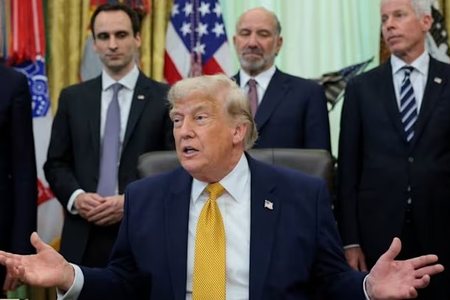
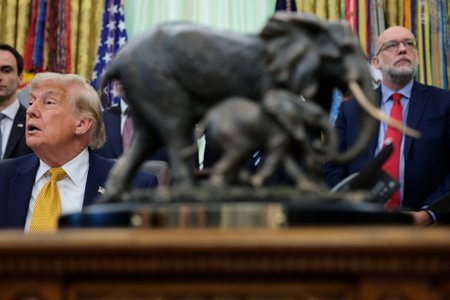
He did not clarify which statements he was referring to. However, in recent hours, US President Donald Trump has made comments that Iranian officials have disputed, including claims about inspections of Iran's nuclear program and the use of unblocked funds to buy American agricultural products.


Lini një Përgjigje