


 Shkruar nga Pamfleti
At some point, the Russian people realized that Putin will stop at nothing to achieve his objective and that he would be fully capable of committing any crime against his people, no matter how terrible.
When Vladimir Putin came to power in 2000, he made one thing clear right away: he would be different from his predecessors — Boris Yeltsin and Mikhail Gorbachev — in his response to terrorism.
Like many KGB-trained officers traumatized by the collapse of the Soviet Union, Putin was convinced that the Russian state was so fragile that it could collapse at any moment if its enemies were given an inch of space. For Putin and his KGB cronies, the famous 1995 phone call made by Yeltsin's prime minister, Viktor Chernomyrdin, to a terrorist leader to save the lives of hostages in a Budyonnovsk hospital was the worst possible way to go. to face the terrorists.
Broadcast live on Russian television, Chernomyrdin's appeal resulted in the release of women and children and the end of the first Chechen war, which was seen as a humiliation for the Russian military. It also led to some traumatic soul-searching in the Russian security services and special forces.
Putin will have none of this. In the following years, he has responded to each new terrorist attack with more restrictions, which have made it impossible to exert any public pressure on him and his agencies during or after a terrorist attack.
Strict censorship of information about terrorist attacks was introduced. I was investigated by the FSB (federal security service) for the first time for publishing a critical account of an FSB operation in October 2002, when more than a thousand people were taken hostage in a Moscow theater. The special operation ended with a terrible loss of more than 130 hostages, most of whom were killed by a gas used by the FSB.
Any criticism of the response of the Russian security services was ruled out, and the idea of relying on the Duma to find the truth was completely compromised after its attempt to investigate the hostage-taking and school siege in Beslan in 2004.
By 2006, Putin's obsession with not giving an inch to his enemies was formalized in a major piece of Russian anti-terrorism legislation, which replaced Yeltsin's 1998 law. It had a striking definition of terrorism: “ Terrorism is an ideology of violence and the practice of influencing decision-making by government bodies, local government institutions or international organizations, through intimidation of the population and (or) other forms of illegal violent actions".
The new legislation placed a strong emphasis on terrorism as something aimed at the Russian state, whereas Yeltsin's 1998 law had defined it as something aimed at civilians. Russian security services understood the issue, and so did terrorist groups. In the 1990s and early 2000s, terrorists took hostages and made political demands, hoping to force the Kremlin into negotiations. They then resorted to brutal, senseless acts of terror, knowing that Putin's Kremlin would not respond to any demands.
Terrorist groups in the North Caucasus first killed security service personnel, but then escalated the carnage by blowing up a Moscow airport and attacking public transport.
Putin is a very systematic person. He has stood by his policy of protecting his agencies throughout his reign. He has kept the KGB's successor, the FSB, his longest-standing and most cherished investment, well-resourced and ensured that it is completely immune to criticism.
This has deeply affected its culture as the main Russian security agency responsible for counter-terrorism. The FSB became very efficient and innovative in repression. Today, the Russian security and intelligence services are world experts in assassination and torture. Russian society has seen many recent examples of this: the horrific death of Alexei Navalny in February, the plight of political prisoners, last month's murder of a Russian defector in Spain and the hammer attack on a political exile in Vilnius, Lithuania .
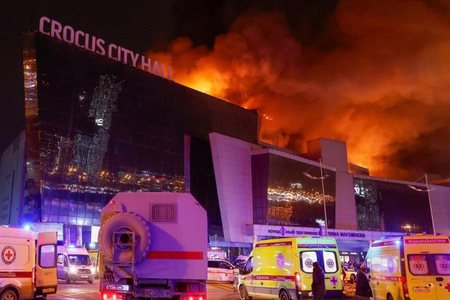
The FSB is also quite competent in investigating attacks after the event, thanks in part to video surveillance combined with modern facial recognition technology. We saw this in the FSB's response to the Crocus City Hall attack in Moscow. Four suspected perpetrators were identified, tracked down and arrested within 24 hours. And, of course, they were immediately tortured - one of the suspects had his ear cut off and forced to eat it by special forces, all of which was recorded and immediately leaked to the pro-Kremlin media.
But these are not the qualities that help prevent attacks, and at times the FSB has failed as an intelligence-gathering agency because other things are needed: the ability to share information between agencies, domestic and foreign, and trust between those agencies and within those agencies. They must also be trusted by the population and be willing to say very unpleasant things to the generals – even the country's leader.
In this country where freedoms are not allowed and political discussion is heavily censored, trust in the national security services is in short supply. Of course, the agitated populace will go along with the government's narrative, but fear and disbelief have already led to the flourishing of all kinds of conspiracy theories, calling into question and undermining everything the Kremlin has said about Friday's attack.
At some point, the Russian people realized that Putin will stop at nothing to achieve his objective and that he would be fully capable of committing any crime against his people, no matter how terrible. This is a problem he faces after the attacks: big brother technology, brute force and repression can only get you so far./ Adapted "Pamphlet" from "The Guaridan"



Lini një Përgjigje