


 Shkruar nga Pamfleti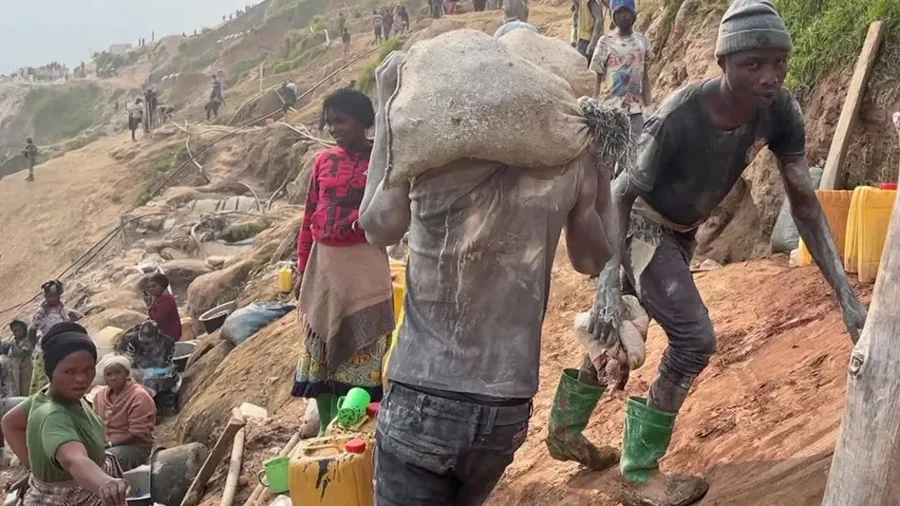
M23 rebels in eastern Democratic Republic of Congo allowed BBC journalists to visit one of the largest mines under their control, a key site for the production of smartphones worldwide. In that vast area, not a single person was left idle.
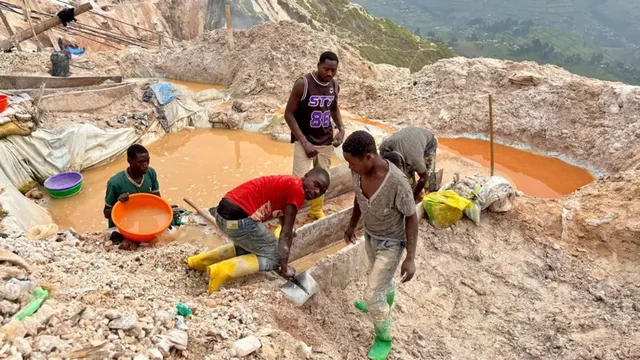
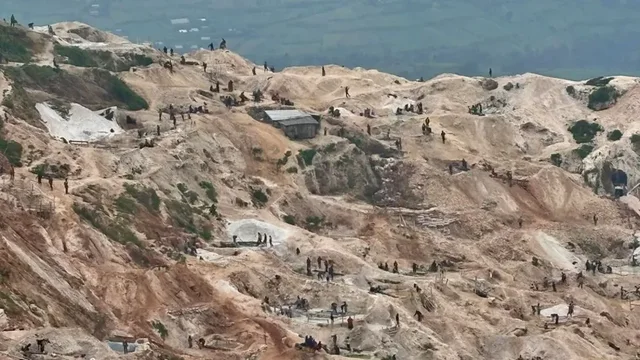
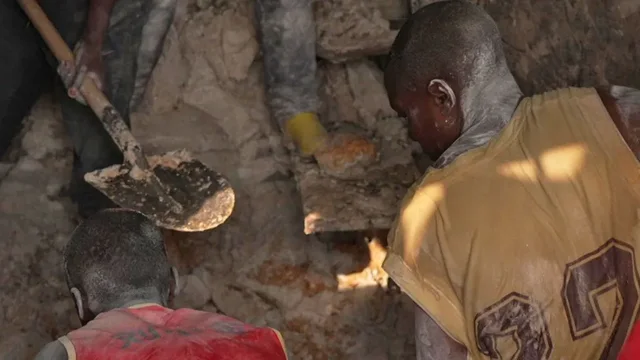
Thousands of miners covered the cracked terrain, riddled with pits and tunnels. Some worked deep underground, digging with shovels to extract coltan, a precious mineral for electronics – while others loaded heavy sacks on their backs and carried them to collection points, where they were cleaned and processed by hand.
"At least 10,000 people work here every day," said Patrice Musafiri, supervisor of the Rubayas mine since M23 took control in April last year.
The terrain is so rugged that our team needed walking sticks and Mr. Musafiri's guidance to avoid falls. But for thousands of men, this is the only life they have known. It is hard work, dangerous and tiring, but the only way to earn a minimal income.

"When we are in the gallery, the temperatures are very high. Digging is very difficult... and there are also harmful gases," says Peter Osiasi, a young miner. "Sometimes cold air is pumped in so that we can continue working."
However, he is grateful that in the five years since he started working in the mine, he has managed to save some money to pay his dowry. He is now married and has children. “My life has really changed. The mine has helped me.”
The area where this giant mine is located is in the Masisi hills, in North Kivu province, about 60 km northwest of the city of Goma. This area contains about 15% of the world's coltan supply and half of the total reserves of the DR Congo.
It's no wonder international investors are obsessed with this territory. For years, its assets have financed armed groups, including the Congolese army.
The BBC team's visit to the mine came just days after a ceasefire agreement was signed in Washington between DR Congo and Rwanda, part of a peace process to end three decades of instability in the region.

The crises in eastern DR Congo are notorious for their complexity. They involve ethnic clashes and the presence of numerous militias, including a Hutu ethnic group linked to the 1994 Rwandan genocide, which Kigali claims is supported by Congolese authorities.
On June 27, both sides in Washington agreed to disarm and stop supporting their suspected allies (although they officially deny having any).
But the M23 – a group led mainly by ethnic Tutsis – was not part of the deal. Since January, they have taken control of major cities such as Goma and Bukavu, as well as two airports. Rwanda has been repeatedly accused, including by the UN, of supporting the M23. Kigali, however, denies any military or financial assistance.

The US intervention in this process appears to be related to access to Congo's rare minerals. "We are securing for the United States significant mineral rights in Congo," President Donald Trump said before the signing of the agreement.
During our brief visit, about 45 minutes of leave, there was no sign that control over the terrain was changing.
The supervisor, appointed by M23, was eager to show how work at Rubaya had been reorganized and how the rebels had brought security to the miners, emphasizing that no armed men were allowed inside the mine.
“We have resolved many issues,” said Mr. Musafiri. “We now have a mining department that oversees safety and resolves internal disputes. If a tunnel becomes dangerous, we notify people to leave.”
"People from different groups come here every day to extract the mineral, others to buy it and today we have a big market in Goma where large quantities are sold," he concluded. /BBC



Lini një Përgjigje