


 Shkruar nga Pamfleti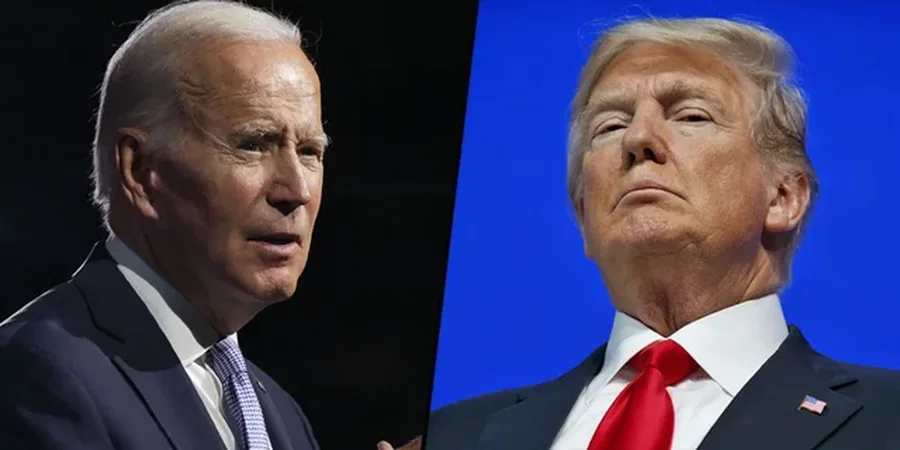
Most Americans say they prefer presidential candidates other than Joe Biden or Donald Trump in 2024, yet the parties are on track to give them just that choice.
So why has the group that is trying to give voters an alternative become the target of hostility from the media and Democrats?
That's the predicament of No Labels, a centrist group of Republicans and Democrats organizing to get a spot on the ballot in 2024 if the major parties don't succumb to a Biden-Trump race. Democrats contend the group will elect Mr. Trump if a third party gets on the ballot. One of the donors to No Labels is Harlan Crow, the wealthy friend of Supreme Court Justice Clarence Thomas. But anyone who knows Mr. Crow knows that he is no fan of Mr. Trump.
No Labels has other donors and its founder and CEO is Nancy Jacobson, wife of Mark Penn, former Hillary and Bill Clinton pollster. Its national co-chairs include Ben Chavis, the civil rights legend, and Joe Lieberman, the former Democratic senator and vice presidential candidate. Former GOP Govs. Larry Hogan and Pat McCrory are also co-chairmen. None are admirers of Mr. Trump.
Democrats say a third candidate would get Mr. Biden more votes, possibly deny him the 270 Electoral College votes to win and throw the House election. With every House delegation having one vote for the president, they say, Mr. Trump would be the likely winner.
This is possible, as everything seems to be in politics these days. But it's hardly guaranteed. The last most successful third-party candidate, Ross Perot, won 19% of the popular vote and no electoral votes in 1992. But he split the GOP coalition and caused President George HW Bush's support to plummet to a 37.5% share of the vote. . Bill Clinton won with 43%.
The last three elections have shown that a significant portion of GOP voters do not want to vote for a party dominated by Mr. Trump. A third-party candidate could be a safe haven for these voters to abandon Mr. Trump again.
It is true that the odds of a third party candidate winning the election are long. The Electoral College means that winning a majority of votes is not enough. You must come out on top in enough states to reach 270 electoral votes.
In today's polarized presidential map, each major party has an advantage in states of nearly 220 electoral votes. That means a third-party candidate would have to build a central Electoral College majority by holding swing states like Wisconsin, Virginia, North Carolina, Pennsylvania, Michigan, Colorado and many others. To call this a tall order is an understatement.
Më pas, No Labels thotë se sondazhi i tij tregon se publiku është i hapur ndaj një kandidati të palës së tretë—59% e të gjithë votuesve do të konsideronin një të pavarur të moderuar, duke përfshirë 53% të republikanëve dhe 59% të demokratëve. No Labels është tashmë në fletën e votimit në pesë shtete dhe shpreson të hyjë në të 50.
Grupi planifikon të ketë një konventë pranverën e ardhshme pas primareve të marsit, kur ata do të shohin se ku do të shkojnë nominimet Demokratike dhe GOP. Nëse një kandidat më i mirë del në secilën palë, No Labels do të përulet. Nëse gara është vazhdimi i Biden-Trump, grupi ka të ngjarë të emërojë një biletë centriste.
Who those candidates are would be crucial, and in our view could require a moderate Republican like New Hampshire Gov. Chris Sununu at the top of the ticket. Democratic Senator Joe Manchin would be a plausible candidate. The party will then have to fight to get its candidate on the presidential debate stage, assuming there is a debate.
Another obstacle is that the group lacks a galvanizing issue or agenda that both sides are ignoring. Her platform is likely to be a series of compromises on immigration, the budget deficit and other issues on which the two parties are deadlocked. But his main step would be as an alternative to what would by then be an 81-year-old President and a 78-year-old former President, both of whom are unpopular./wsj.com




Lini një Përgjigje