


 Shkruar nga Pamfleti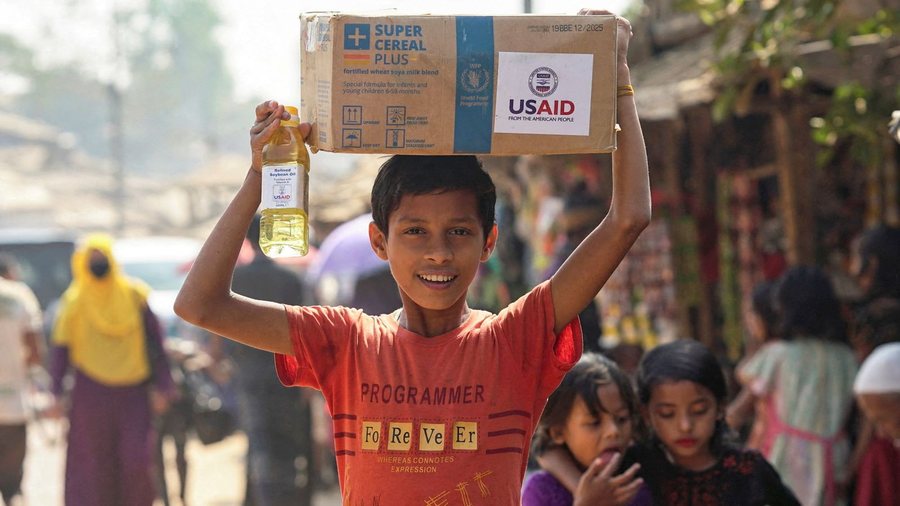
As many as 14 million people could die worldwide over the next five years due to cuts to the US Agency for International Development (USAID), researchers have warned. Children under five are expected to account for about a third (4.5 million) of the deaths, according to a study published in the medical journal The Lancet.
Estimates showed that if the immediate funding cuts announced and implemented in the first half of 2025 are not reversed, a staggering number of avoidable deaths could occur by 2030.
"Beyond causing millions of avoidable deaths - especially among the most vulnerable - these cuts risk reversing decades of progress in health and socio-economic development in low- and middle-income countries," the report said.

USAID programs have prevented the deaths of more than 91 million people, about a third of them children, the study suggests. The agency’s work has been linked to a 65% decline in deaths from HIV/AIDS, or 25.5 million people. Eight million deaths from malaria, more than half of the total, about 11 million from diarrheal diseases, and nearly five million from tuberculosis (TB), have also been prevented.
USAID has been instrumental in improving global health, especially in low- and middle-income countries, particularly in African countries, according to the report.
Founded in 1961, the agency was tasked with providing humanitarian aid and helping economic growth in developing countries, especially those considered strategic to Washington.
But the Trump administration has made no secret of its antipathy toward the agency, which became an early victim of cuts carried out by the Department of Government Efficiency (DOGE), formerly led by Elon Musk in what the US government called part of a broader plan to eliminate unnecessary spending.
In March, US Secretary of State Marco Rubio said that more than 80% of USAID schemes had been closed after a six-week review, leaving about 1,000 active.
The US is the world's largest humanitarian aid donor, providing about $61 billion (£44 billion) in foreign aid last year, according to government data, or at least 38% of the total, and USAID is the world's leading donor for humanitarian and development assistance, the report said.
Between 2017 and 2020, the agency responded to more than 240 natural disasters and crises around the world - and in 2016 it sent food aid to more than 53 million people in 47 countries.
The study assessed mortality rates at all ages and from all causes in 133 countries and territories, including all those classified as low- and middle-income, supported by USAID from 2001 to 2021.








Lini një Përgjigje