


 Shkruar nga Pamfleti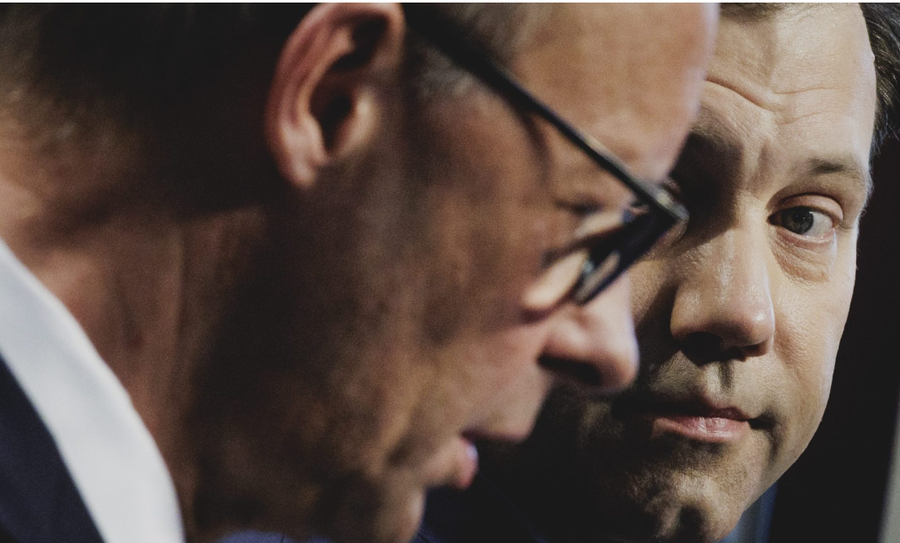
The center-right coalition enjoys little room for error in parliament, with just 13 MPs more than a simple majority. Its fragility was evident early on when Merz was rejected for the chancellorship in the first round...
The center-left Social Democrats (SPD), the junior coalition partner of Chancellor Friedrich Merz, have emerged weak and damaged after a divisive party conference over the weekend.
At the center of all developments is the leadership of Vice Chancellor and Finance Minister Lars Klingbeil, who was at the center of criticism from delegates. Klingbeil was re-elected as chairman, but with only 64.1% of the votes among delegates, despite running unopposed.
It was a historically bad result, which raised doubts about Klingbeil's ability to keep the party in line with the pragmatic coalition agreement he reached with Merz's Christian Democrats, just as he faces the crucial test of passing his first budget.
The center-right coalition enjoys little room for error in parliament, with just 13 MPs short of a simple majority. Its fragility was evident early on when Merz was rejected for the chancellorship in the first round.
Growing dissatisfaction among SPD MPs could make it difficult to achieve a majority on contentious issues, as several coalition officials have previously told Euractiv that the coalition needs to pay extra attention to gathering support for key parliamentary votes.
He returned to being the party's undisputed leader after the German election in February, when the SPD suffered its worst national election result in more than 150 years, despite being called the "architect of failure" at the time.
Then-Chancellor Olaf Scholz took the blame, while Klingbeil took over the SPD parliamentary leadership on election night.
Instead of resigning as party co-chairman, he sidelined his rivals and took control of coalition negotiations, where he secured senior posts as finance minister and vice-chancellor for himself.
Along the way, he purged a number of prominent figures, particularly from the party's left wing.
A divided party
This has certainly left many in the party angry that they were left out, with ideological objections to the new course Klingbeil is pursuing also playing a role. Klingbeil, along with Defense Minister Boris Pistorius, represents a noticeable shift towards the center for the party and a sidelining of the party's left wing.
Pistorius has strongly supported German rearmament and further military support for Ukraine in its fight against Russian occupation.
A group of over 100 party members published a policy document just two weeks before the conference, sharply criticizing higher defense spending as “irrational” and calling for Germany to “re-enter dialogue” with Moscow. The signatories included the recently expelled Mützenich.
Klingbeil has also strained the tolerance of some rank-and-file members of the left by tacitly accepting Merz's tougher migration policy, which includes controversial unilateral border controls.
A divided coalition partner?
The SPD is no stranger to compromise and pragmatism. After all, the party has been part of Germany's governing coalition almost continuously since 1998.
However, experts believe the vote shows that Klingbeil still faces a significant challenge.
Benjamin Höhne, a political scientist at Chemnitz University of Technology, said Merz's Christian Democrats "will certainly view the SPD's credibility with some trepidation after this party conference."
The vote showed that "this party is not as controllable as it once was in the past," Wolfgang Schroeder, a political scientist at the Berlin Center for Social Sciences research institute, told broadcaster n-tv.
This comes as Klingbeil soon faces another key test in approving his first budget as finance minister. The budget contains record debt, largely intended to bring Germany's defense spending to 3.5% of GDP.
Höhne believes that a significant part of the disappointment at the SPD conference was directed at Klingbeil's ruthless power grab, which would not be the focus of attention during the budget vote.
But the conference vote was “a sign that Klingbeil needs to talk more to all wings of the party and can’t simply dictate his course from the top down,” he said. /Adapted from Pamphlet/





Lini një Përgjigje