


 Shkruar nga Pamfleti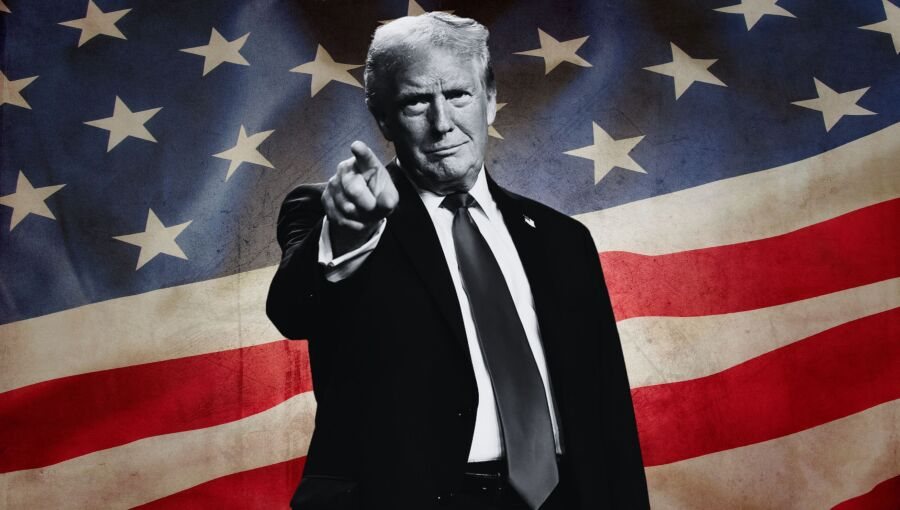
"Trump's welcome by a group of people in non-Western countries may be fueled by an enthusiasm for the winners," but warned that "these warm attitudes could change quickly, perhaps because of Trump's tariff policies, or if he fails to meet public expectations about ending conflicts in Europe and the Middle East."
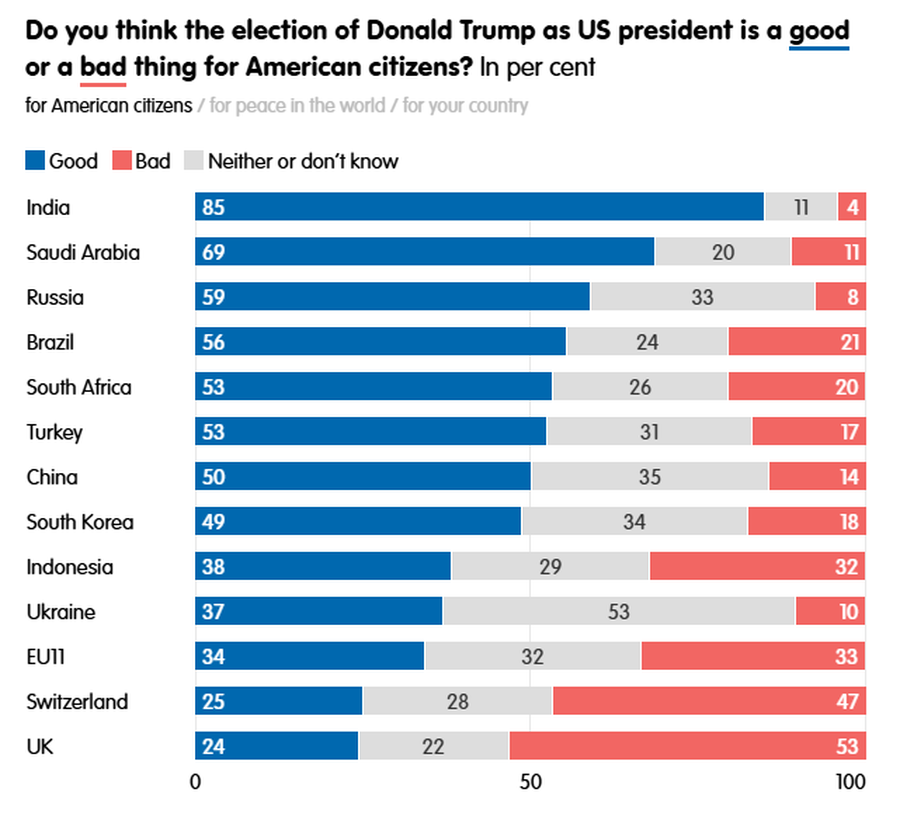
Donald Trump's return to the White House has sparked mixed reactions around the world, with traditional US allies expressing deep concern while rivals and emerging powers show marked optimism, according to a new poll.
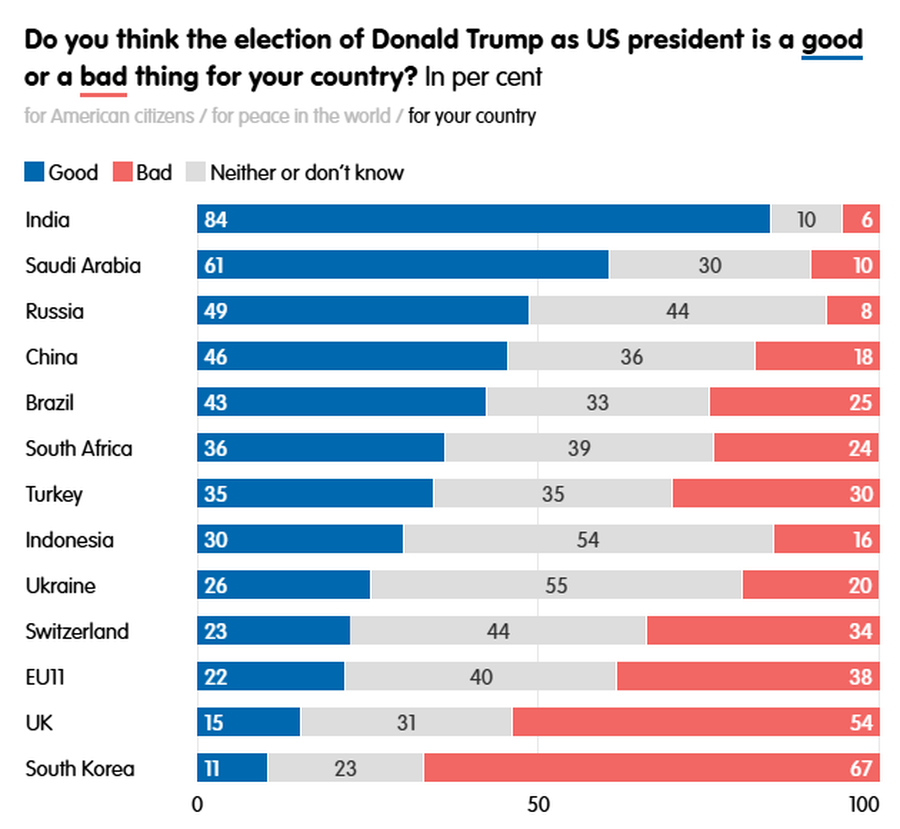
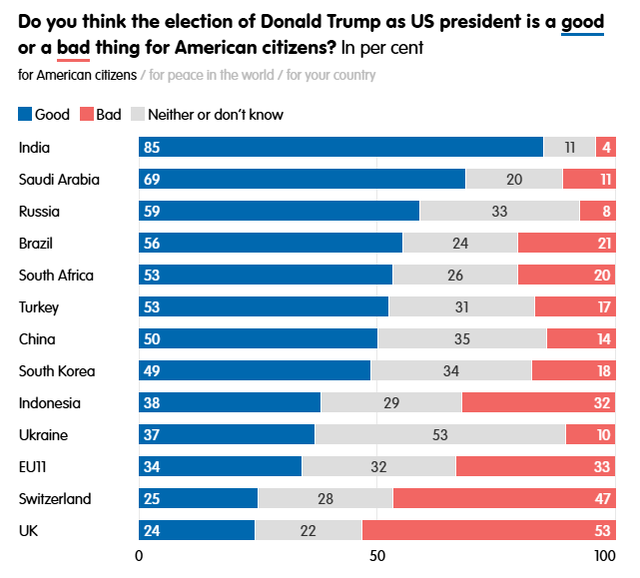
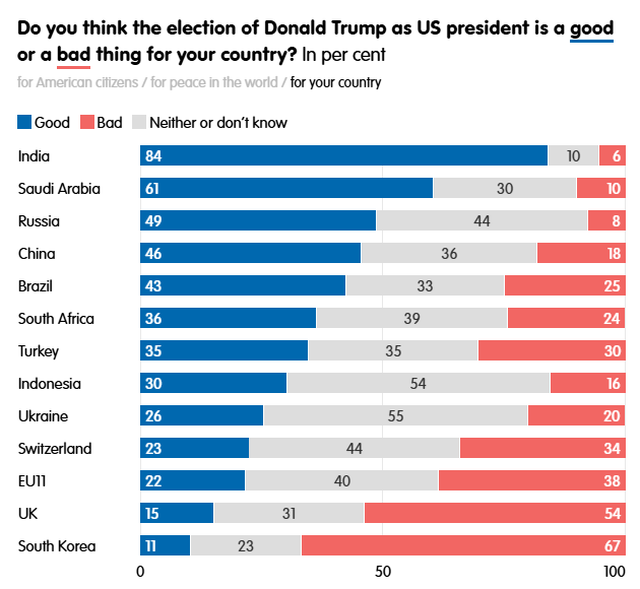
The European Council on Foreign Relations (ECFR) study of 28,549 people in 24 countries found particularly strong support in Saudi Arabia, India and Russia, where 60% of respondents saw Trump's election as positive for American citizens, with 49% seeing it as beneficial for Russia.
In China, 46% viewed Trump's return positively, despite his threats to impose 60-100% tariffs on Chinese imports.
The prospect of such unpredictable trade policies, including potential global tariffs ranging from 10% to 20%, has already sparked international concerns and market worries as Trump prepares to take office on January 20.
"Europeans are almost alone in mourning Trump's election," the ECFR report said, with South Korea standing as the only non-European nation expressing major concern.
Half of British respondents fall into the "Never Trumpers" category, representing the highest concentration globally of those who see his victory as harmful to both Americans and world peace.
The transatlantic alliance appears increasingly strained, with only 1 in 5 Europeans now viewing the United States as an ally, while 2 in 5 Americans consider the EU an ally. The proportion of Americans who see the EU as an "indispensable partner" has risen from a quarter to a third.
In Ukraine, the data revealed dramatic shifts in public opinion. Expectations of victory have fallen from over 50% in May 2024 to just over a third by November. Only 1 in 10 Ukrainians now expect a complete victory under Trump, while one in five predicts a compromise solution.
The ECFR writes that "Trump's welcome by a group of people in non-Western countries may be fueled by an enthusiasm for the winners," but warned that "these warm attitudes could quickly change, perhaps because of Trump's tariff policies, or if he fails to meet public expectations about ending conflicts in Europe and the Middle East."
Saudi observers have expressed mixed reactions to Trump's return, particularly regarding the potential impact on oil markets, IntelliNews reported. "We are the ones who are harmed by this policy because oil prices fall when production increases," one Saudi expert noted.
Another Saudi commentator, Mohammad bin Abdullah, suggested a more aggressive approach: “the best means of defense is offense, including returning production levels to previous levels and allowing price control to be determined by the ability of high-cost countries and companies to continue operations. This will reduce their ability to spend capital and then the price will return to current levels without losing production or market share.”
In several major non-Western powers, including India, Indonesia, China and Saudi Arabia, many respondents consider Russia and Ukraine equally responsible for the ongoing conflict, potentially indicating support for pushing Ukraine towards major concessions in any settlement.
"Here in Europe, we are concerned. However, the rest of the world is not particularly concerned about the magnitude of the change that could come," market strategist Bill Blain said in emailed comments last week.
The European Union, despite its concerns, is seen globally as a great power capable of taking on the US and China on equal terms. "Ironically," the report noted, "the people who believe least in European power are Europeans themselves."
The survey, conducted in November 2024, used different methodologies in different regions, including online surveys in most countries, face-to-face interviews in India, and telephone interviews in Ukraine.
The study included 16 European countries and eight non-European countries, including major economies such as Brazil, China, India and Indonesia. / Adapt Pamphlet /


Lini një Përgjigje