


 Shkruar nga John Bolton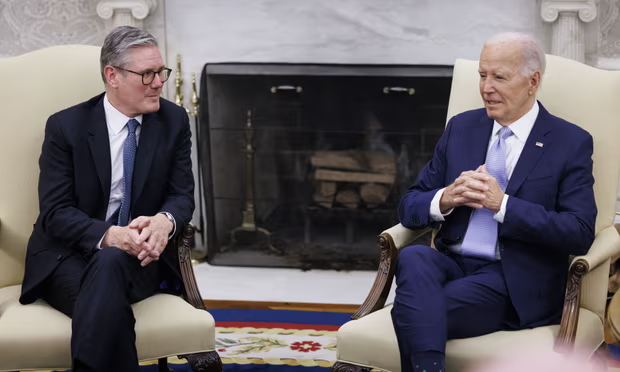
Jerusalem's bold strike in the heart of terror should redden the cheeks of Western states still in danger of false peace
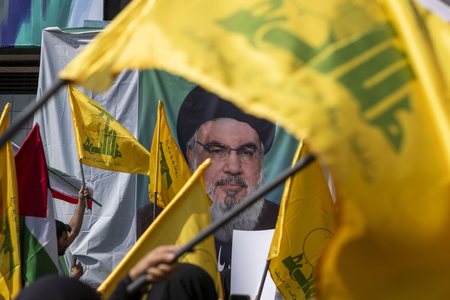
Hassan Nasrullah, the Secretary General of Hezbollah, died on Friday, thanks to an Israeli airstrike. Iran's "Ring of Fire" strategy, deployed militarily against Israel across the Middle East since last October 7, has suffered a major blow.
Jerusalem has already nearly destroyed Hamas's organized military capabilities in Gaza and, combined with "Operation Grim Beeper" just over a week ago, has consistently imposed shock and awe on Hezbollah's core cadre and infrastructure.
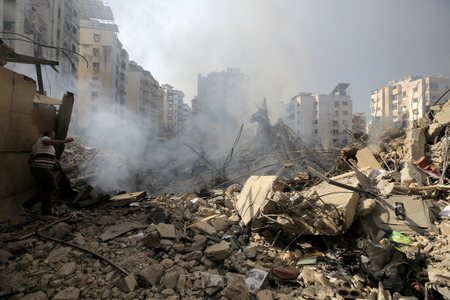
Since Nasrullah met his maker, Israeli forces have been striking Hezbollah strongholds from the air and are preparing a ground assault, likely aimed at clearing all terrorist threats south of Lebanon's Litani River.
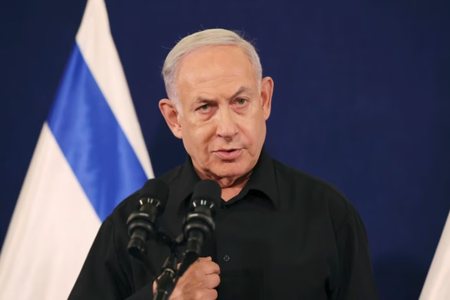
Israeli Prime Minister Bibi Netanyahu pointedly ignored President Joe Biden's pressure not to escalate military action against Hezbollah, as well as British Prime Minister Keir Starmer's speech at the United Nations.
The BBC derided Israel's efforts, headlined that Netanyahu was trying to "chase victory" for Israel, however, clearly signaled his resolve against Iran, a quality sorely lacking in recent US and British policy. Hezbollah and, more importantly, its paymasters in Tehran, must recognize that Israel is determined to do what it takes to establish its security, despite tremendous external pressure.
Also on Friday, Yemen's Houthi rebels attacked US Navy ships in the Red Sea, the latest example of a year-long campaign by Iran through its Houthi proxies to close the Suez Canal-Red Sea passage to all but friendly ships. . The Houthis openly declared that they would support Hezbollah "without limit". Showing solidarity with their comrades, the Houthis again fired rockets at Israel itself.
These terrorist groups, like their allies Hamas and Shiite militias in Iraq and Syria, have been armed, equipped, trained and financed by Iran for decades as part of Tehran's Ring of Fire strategy. Tehran is now arranging for Moscow to arm the Houthis with anti-ship missiles, evidence of Iran's growing ties to Russia.
Both the White House and 10 Downing Street must turn their eyes to the strategic level. Hamas' barbaric attacks on October 7 constituted only one facet of Iran's multifront threat against Israel.
Britain and America once understood what it meant to fight a war on many fronts. They did this together successfully in two World Wars, and then again during the Cold War.
Today, Messrs. Biden and Starmer have trouble with this concept. Fortunately, Israel's leaders do not. For the good of the West as a whole, Israel is now destroying our terrorist enemies in the Middle East.
Although Jerusalem still receives military aid from Washington, London has turned icy and the Biden White House is getting colder. Neither America's Secretary of State nor its ambassador to the UN attended Netanyahu's speech to the General Assembly. And that was before Israel's strike on Nasrullah.
Despite pro-terrorist propaganda and the media echo chamber of supporters, the current conflict was never a struggle of Palestinians against Israeli oppressors. From the beginning, it has been an Iranian war against Israel.
The failure to grasp this bigger picture, a common failure for national security departments and agencies in Washington and London since October 7, continues in their opposition to Jerusalem's determination to at least neutralize the serious terrorist threats it faces. face.
Of course, Israel has made its share of mistakes over the past year, along with the West in general, and can be blamed for allowing the terrorist threat to grow to its current levels.
We have all been dealt with repeatedly by Iran's efforts to develop nuclear weapons. But now that the reality of the present danger has become crystal clear, discussing Israel's determination to survive is quite inappropriate for Western leaders.
Failed and botched diplomacy towards Iran and Hezbollah in particular has helped fuel the current conflict. I know him personally because of my service as the US ambassador to the UN during and after the 2006 Israel-Hezbollah War.
Although the shortcomings of Security Council Resolution 1701, which halted that conflict, were evident even when the Council was voting unanimously to approve it, recent years have shown it to be completely ineffective. The central objective of Resolution 1701 was to prevent Hezbollah from rearming after Israel's devastating retaliation for combined Hamas-Hezbollah attacks from Gaza and Lebanon (sound familiar?).
To say the least, this UN diplomacy facilitated exactly the opposite outcome. It did not strengthen an independent Lebanese government, with the support of an expanded UN peacekeeping force, to stand against Hezbollah. Instead, Hezbollah effectively took over the Lebanese government.
As with Hamas in Gaza, truly innocent civilians will not have a chance at a representative government until Hezbollah is eliminated.
The real issue today is Iran. Far from being eager to help the already beleaguered Hamas and Hezbollah, Iran is clearly concerned that it will face direct, devastating retaliation from Israel. Indeed, there were reports even before Israel ousted Nasrullah that Iran was shunning Hezbollah's pleas for Iran to come to its defense.
Iran has been visibly nervous about the response to Israel's July 31 assassination of Hamas leader Ismael Haniyah, and Nasrullah's exit will only make the ayatollahs more nervous.
The fear that this time Netanyahu will not bow to American pressure to "take the win," as Israel did in April after Iran's failed missile and drone strike, is clearly inviting Iran's leadership. As it should.
While the future is undoubtedly bleak, the Israelis undoubtedly remain determined to defend themselves. Too bad the current governments of the United Kingdom and the United States are not proud to stand with them./ The Telegraph





Lini një Përgjigje