


 Shkruar nga Aldo Cazzullo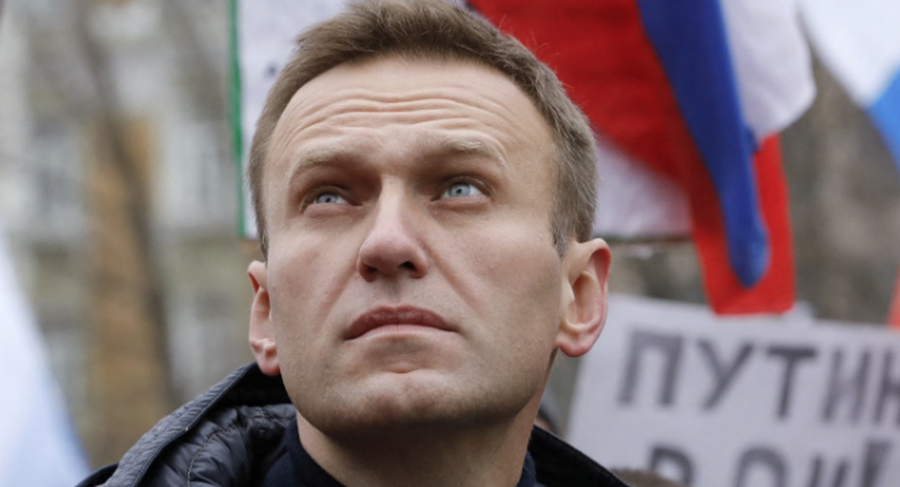
Of course, Navalny was not a liberal. But he lived and died a hero. He jumped into the battlefield because he wanted to live and fight in his homeland. There is one way to ensure that his sacrifice does not go to waste: to realize that if Putin wins, we all lose...
Now they will try to smear it, they are already doing it, the Russian disinformation is very organized and articulate. They will say that he was a chauvinist, not a saint. An extremist, a madman, who even had his own skeletons in the closet, after all, everyone has them, right? But don't be fooled.
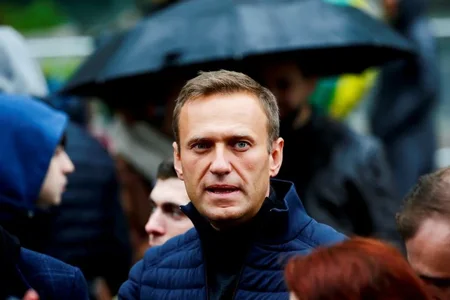
Alexei Anatolevich Navalny is a hero.
He lived a hero and died a hero.
Many are those who say they are ready to die for their country; and up to this point it is rhetoric. But when one really dies, in the tyrant's Siberian prisons, it is not rhetoric; it is flesh and blood. Many keep opponents in prison, there are more dictatorships in the world than democracies. But few dictators wage wars of aggression like those launched by Putin in Georgia and Crimea, few have systematically massacred entire populations as Putin did with the Chechens.
But the Chechens are Muslims and Georgia is far away. Then Putin attacked Ukraine, on the borders of Europe, causing a dramatic escalation of an already existing conflict. Regarding Navalny, he said: "If I had poisoned him, he would have died." Now he is satisfied.
Let's be clear: Navalny was a Russian nationalist. He was not a liberal, much less a leftist. He was a patriot who, unlike the war criminal Putin, wanted the good of his country, for which he risked his wealth, his loved ones, his very life.
Navalny had spent more than a year under house arrest. He was poisoned, he ended up in a coma, he was in danger of dying. Germany welcomed him. But Navalny did not want to live in exile; let alone become a hostage in the conflict between Putin and Angela Merkel. Navalny wanted to fight and, if necessary, die at home. So he returned to Moscow, where he knew that handcuffs and a cell would await him, showing a physical courage of other times, worthy of a hero of the Italian Renaissance. However, Garibaldi was the most famous man in the world in his time. Unfortunately, the same cannot be said for Navalny. The arrest, the persecution of his collaborators - all in exile or prison -, the brutal repression of the demonstrators who took to the streets in his defense, have not aroused in the world public opinion the emotion they deserve.
Of course, many of Navalny's ideas were controversial, as emerged from the interview with Paolo Valentino in Corriere della Sera eight years ago. In his eyes Enzo Bettiza had seen that "light of madness", which according to him shone "in the eyes of the white Russians". But Navalny is not completely isolated. The last time he was able to stand in the elections, when he ran for mayor of Moscow in 2013, he got 27%. His complaints about the regime's corruption were borne out by the facts.
Dictatorships usually fall when they lose wars. Beating Russia is very difficult, maybe impossible. A negotiation must be opened, a compromise must be found. But this war cannot end without finding a lasting solution that guarantees the security of Europe's eastern borders. It is a fatal mistake not to realize that if Putin wins, we all lose, if the dictator has an open field, each of us is at risk.
If we understand this, Navalny's sacrifice will not have been in vain; for his people and for the world./ Corriere della Sera


Lini një Përgjigje