


 Shkruar nga Paul Molga
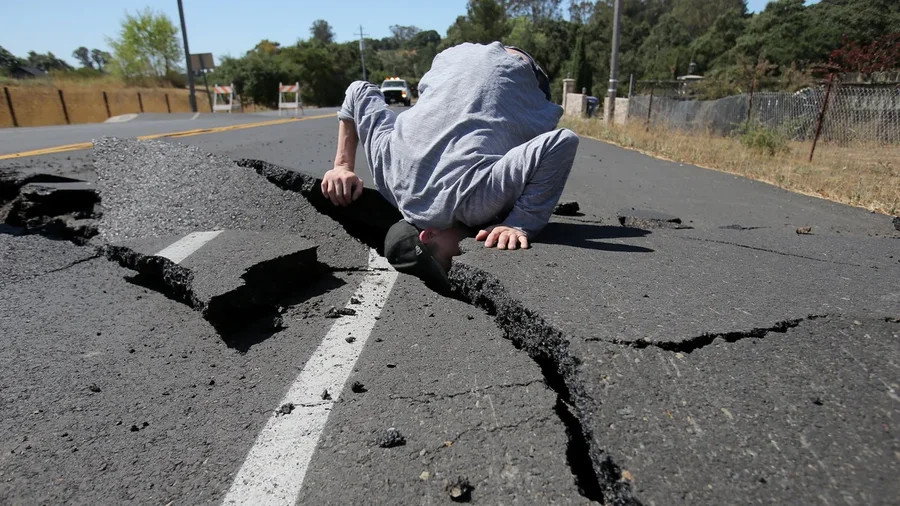
The return of seismic activity that Scandinavia temporarily experienced 9,000 years ago coincided with the rapid melting of the Finno-Scandinavian ice cap that at the time covered the entire region...
Between 1900 and 1950, the Earth recorded an average of 3.4 earthquakes per year with a magnitude greater than 6.5. This figure doubled to 6.7 earthquakes per year by the early 1970s, and nearly quintupled in the 2000s. Their intensity has also increased, with more than 25 major earthquakes per year, or twice as many as in previous periods.
This is according to the database of emergency events EM-DAT, which compiled the occurrence and effects of 22,000 major natural disasters during the 20th century. Can we conclude that there is a causal relationship with increased human activities, as some experts suggest?
This idea was first mooted in 2011 by an Australian research team led by geology professor Giampiero Iaffaldano. At the time, it was claimed that the intensification of the Monsoon season in India had accelerated the movement of the Indian tectonic plate by 20 percent over the past 10 million years.
Iaffaldano emphasized that the closing and opening of ocean basins, or the appearance of high mountains such as the Andes or Tibet, are geological processes that affect the climate. "We have shown for the first time that the opposite is true. So the evolution of the climate can affect the acceleration of the movement of the tectonic plates" - he emphasized.
Until this study, no team had been able to show a convincing link between short-term climate change and an increase in the number of earthquakes in the world. But now scientists are wondering about the impact of glacial melting on the Earth's mantle.
"Ice keeps large parts of the Earth's crust under pressure," says geophysicist Andrea Hampel. Together with his colleagues from the Ruhr University in Bochum, Germany, she has discovered that the weight of large glaciers on land slows the movement of continental plates.
With the help of computer simulations, she showed that the return of seismic activity that Scandinavia temporarily experienced 9,000 years ago coincided with the rapid melting of the Finno-Scandinavian ice cap that at the time covered the entire region.
According to this simulation, the vertical pressure exerted by the ice may have prevented the spontaneous sliding of the continental plates along the geological dividing lines. But as a source, mechanical stresses due to crustal movements continued to build up, and were released when the ice melted, causing more frequent and stronger earthquakes in Northern Europe.
A mund të ndodhë më gjerësisht sot i njëjti fenomen për shkak të ngrohjes globale? Disa studiues thonë se po, madje pretendojnë se ky mekanizëm ka filluar tashmë që të vihet në lëvizje, sidomos në Alaskë. Sepse pikërisht aty janë akullnajat më të mëdha në botë me sipërfaqe disa qindra kilometra katrorë dhe qindra metra të trasha.
Degradimi i shtresave të akullit në Grenlandë dhe Antarktidë, do të çojë në një rritje të shpeshtësisë së tërmeteve. Në 200 vitet e fundit, ato kanë humbur më shumë se 5000 km2 akull. “Toka po ngrihet në mënyrë të njëpasnjëshme, dhe kjo ngritje ndodh në dy faza. Së pari, është ngritja e menjëhershme për shkak të efektit elastik të humbjes së masës së akullit, dhe më pas është faza e ngritjes më e ngadaltë teksa ri-pozicionohet manteli i Tokës”- shpjegon Chris Rollins, studiues në Universitetin Fairbanks në Alaskë, SHBA.
Alaska Jugore, është një zonë e kuqe në koren e Tokës ku ndodhin shumë tërmete për shkak të mbivendosjes së pllakës kontinentale të Amerikës së Veriut dhe asaj të Paqësorit. “Teksa akulli shkrin, vijat ndarëse arrijnë ndonjëherë kufirin e tyre maksimal të tolerimit të presionit”- shpjegon ai.
Dhe kjo është ndoshta ajo që ndodhi në vitin 1958, kur një tërmet me magnitudë 7.8 shkaktoi një rrëshqitje të jashtëzakonshme. “Bazuar në modelet tona, ne parashikojmë se degradimi i shtresave të akullit të Grenlandës dhe Antarktidës gjatë ngrohjes globale, do të çojë në një rritje të shpeshtësisë së tërmeteve në këto rajone”- thotë Andrea Hampel, që drejtoi studimin e fundit.
Por kjo nuk është e gjitha. Sipas disa vullkanologëve, midis tyre Bill McGuire, profesor në Kolegjin Universitar të Londrës, shkrirja e kapakut të akullit në Grenlandë, mund të çlirojë presionin që mbante të mbyllura vrimat vullkanike dhe të shkaktojë rrëshqitje gjigante dheu në shtratin e detit në brigjet e këtij territori shumë pranë Danimarkës.
“Ndryshimet klimatike kanë ndodhur disa herë në historinë e Tokës, dhe ato prodhojnë dallgë të mëdha shkatërruese”- paralajmëroi ai së fundmi në një intervistë për “New Scientist”. Ka të ngjarë që në të ardhmen të ketë edhe më shumë rrëshqitje të dheut, sepse akullnajat malore po vazhdojnë të tkurren dhe po shkrin akulli deri dje i përhershëm. Shkencëtarët kanë gjetur gjurmë gjeologjike të ngjarjeve të ngjashme. 100.000 vjet më parë, rrëshqitja e një pjese të madhe të vullkanit Mauna Loa në Hawai pati shkaktuar dallgë kataklizmike mbi 300 metra të larta në mbarë rajonin.
Më së afërmi në kohë, më 17 tetor 2015, shkrirja e akullnajës Tyndall në Alaskë, solli rrëshqitjen e mbi 180 milionë tonëve gurë në ujërat e fiordit të pabanuar Taan, duke ngritur një dallgë gjigante 193 metra që përmbyti 20 kilometra katrorë tokë, përpara se të tërhiqej sërish në det.
"More such landslides are likely to occur in the future, as mountain glaciers continue to shrink and melt what were until recently permafrost," writes American geologist Bretwood Higman, lead author of a study on these scenarios. scary, published in "Nature".
But in these very disturbing developments, a vicious circle may be hidden. These earthquakes are accelerating global warming, claims a team of Russian scientists. To reach this conclusion, they observed two periods of sudden temperature increase in the Arctic, in the 1930s and 1980s.
"These two periods were preceded by large earthquakes in a region 2000 km away" - explain the authors of the study. But it took time for the tectonic waves to reach the thick ice sheet in the Aleutian Islands in Southwest Alaska. Between 15 and 20 years, and at a speed of about 100 km per year. If this hypothesis is confirmed, it means that large amounts of methane, the most powerful greenhouse gas, will be released into the atmosphere by the tectonic oscillations that have occurred since then./ Adapt Pamphlet from "Worldcrunch"








Lini një Përgjigje