


 Shkruar nga Pamfleti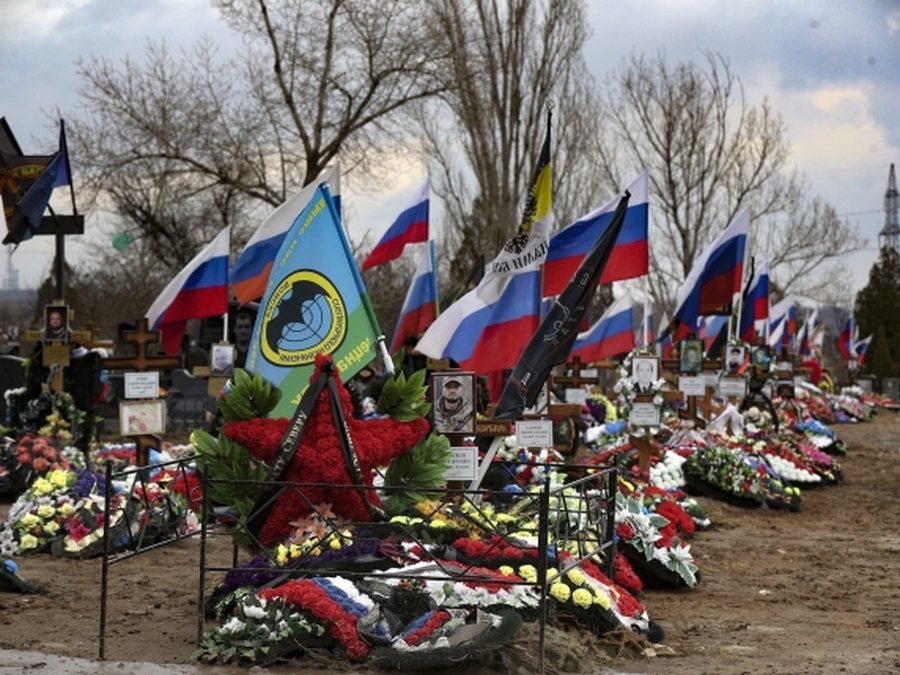
A grueling war is never linear, nor is it easy to take stock. However, the data also helps to measure the extent of the Russian military's real or perceived successes and the sustainability of what the Kremlin continues to call a "special military operation."
In the ten months from December 1, 2024, to October 25, 2025, for example, Moscow’s army in Ukraine reportedly took control of approximately 2,700 square kilometers, according to the Institute for the Study of War in Washington. This represents an advance of 0.73% of Ukraine’s land area. This expansion of occupied areas is smaller than that recorded through the end of November 2024. It took the Russians 20 months and tens of thousands of deaths to reach Avdiivka from Pokrovsk, separated by less than 50 kilometers.
Of course, it is possible that they will continue to advance and register invasions of a similar magnitude to those of last year in the year until the end of this month. This would imply an acceleration that is currently not observed. But above all it is important to measure the human and economic cost of this invasion for the aggressor himself. It seems to be increasing.
According to Meduza, the independent Russian media outlet in exile that counts Moscow's losses, this has been the "deadliest year" for Russian soldiers: Some 65,000 lives lost in the nine months from December to August, or roughly 80,000 from December to the final days. And the wounded are usually two to three times that number.
The Kremlin is reportedly suffering roughly 400,000 casualties for every 1% of Ukrainian territory it manages to capture. And often, the cities it seizes are so devastated by the Russian advance that it would require hundreds of billions of dollars to rebuild. Donetsk, the capital of the occupied province, has been without running water for months (it is brought in by tankers from Russia, but in largely inadequate quantities). Meanwhile, the Russian economy is in a tailspin, as the Kremlin announces the “capture” of what is left of Pokrovsk.


Lini një Përgjigje