


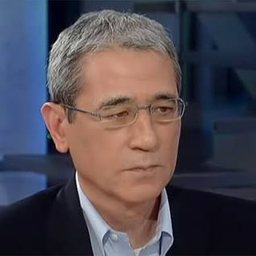
 Shkruar nga Gordon G. Chang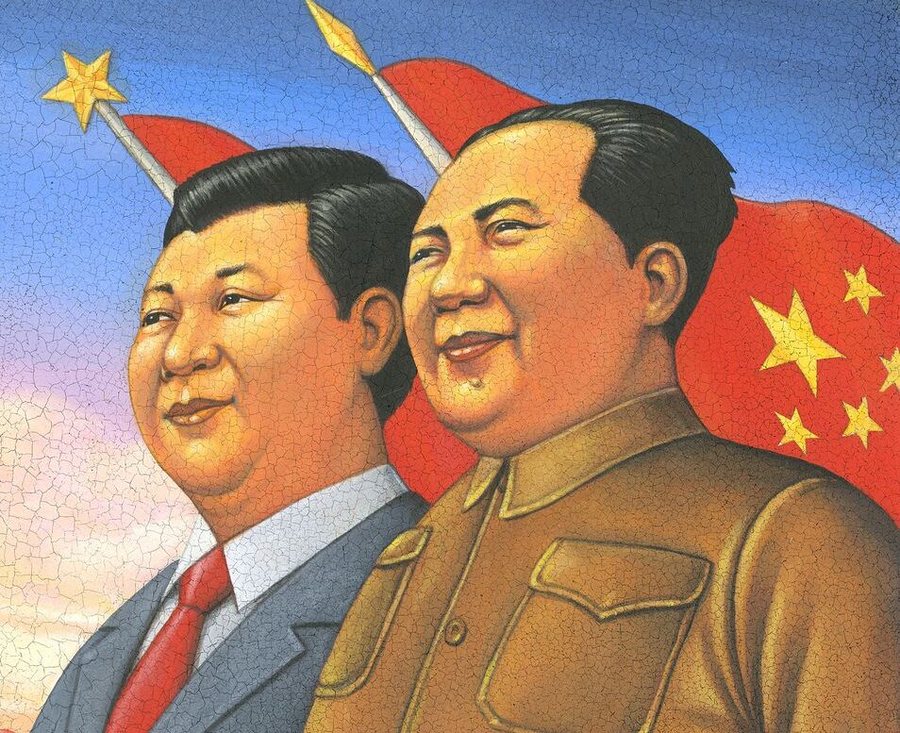
Xi's current actions very clearly fit Mao's former model. This is a sign that the situation inside China is worse than it appears outside. Moreover, this pattern of behavior warns us that Xi may not be deterred by the US today, no matter how many coalitions Washington forms or how many weapons it sends to Taiwan...
Taiwan is in "a dangerous situation". This is what the Office of Taiwan Affairs at China's State Council said about the island republic, right after US President Joe Biden signed an aid package that included Taiwan.
And who can disagree with the Chinese government's assessment of the situation? Finally, Xi Jinping has prepared his army for an invasion across the Taiwan Strait and talks all the time about starting a war. "Dare to fight!" is his new favorite catchphrase.
But he chose not to fight in February when he had the perfect opportunity to do so. Two Chinese fishermen drowned that month after being chased by Taiwan's coast guard. Instead of the attack, China's military engaged in several theatrical and provocative air and naval exercises near the site of the incident, on Taiwan's Kinmen Island.
Simultaneously, Beijing's propaganda organs were in full operation warning and threatening. However in the end. Xi did not send his ships and troops to land on Taiwan's beaches. And that's where the conundrum lies: China's authoritarian leader constantly talks like he's going to attack his neighbors and authorizes military drills all the time.
His current moves, however, do not appear to be aimed at fulfilling his stated goals. Even Xi's actions are counterproductive, as countries on China's periphery, from Australia in the south to South Korea in the north, are responding by seeking America's protection, and spending even more on defense.
In fact, Xi is encouraging the creation of large, formidable and stable coalitions against his China. For example, in 2021, Australia, Great Britain and the USA formed AUKUS, of which Japan may soon be a part. Japan and the US have also organized two informal groupings, JAROKUS, which includes the Republic of South Korea, and JAROPUS with the Republic of the Philippines.
Because China's leader is engaging in behavior in his foreign policy that doesn't make much sense—Barbara Tuchman calls the approach "stupid" when countries pursue policies contrary to self-interest—we know something serious is going on in the capital. Beijing.
Riots are happening within the regime. Charles Burton of the Synopsis think tank, based in Prague, Czech Republic, told me this week that "a significant part of China's military leadership opposes any kind of military action against Taiwan."
There are reports that Liu Yazhou, a former Chinese air force general considered one of the country's leading military thinkers, was sentenced to death in 2022 - a decision only revealed early last year - for opposing the idea. of the invasion of the island republic.
Since then, there have been many purges in the Chinese military, especially in the Missile Force, which controls almost all of China's nuclear weapons. Last year, the 2 main leaders of the Missile Forces were replaced. At least 70 soldiers in this branch of the army are said to have disappeared during the second half of last year alone.
In July last year, before the mass shootings, the head of the Third Department of the Missile Forces committed suicide by hanging. While in late December, we learned that 5 current or former commanders of that branch were fired by the Standing Committee of the National People's Congress and China's highest legislative body itself.
Apparently, the leaders of the largest state military companies in the country have also been dismissed. Three of them left in December 2023, by the decision of China's highest advisory body, the Chinese People's Political Consultative Conference.
Then there's something else extremely strange: The last Minister of Defense, General Li Shangfu, appointed on March 12 last year, was last seen in public on August 29, and was officially dismissed on October 24. 2023. His successor was appointed only on December 29.
The short term - although he was considered Xi Jinping's handpicked - and the long and inexplicable interval between his disappearance and replacement, indicate that there has been a major falling out with the big boss.
The wrangling at the top of the military — the People's Liberation Army reports directly to the Communist Party, not the Chinese state — is consistent with unexplained personnel moves at the highest levels of the political system. Even more surprising is the disappearance of another close associate of Xi, former Foreign Minister Qin Gang.
There are rumors that he is alive. But other voices claim that he was executed or committed suicide. "The extraordinary disappearances from the scene of Foreign Minister Qin Gang and senior military figures are occurring without any possible explanation," says Burton, who once served as Canada's diplomat in Beijing.
"Their frequency, and the fact that the newly purged have all been closely linked to Xi Jinping, suggests the beginning of a political upheaval that is spiraling out of control, and which is unprecedented in Chinese communist history," he adds.
Of course, political turmoil in the Chinese capital does not bring anything good to the world. It looks like Xi is copying a page from his hero's playbook. Mao Zedong, the first leader of the People's Republic, often threatened neighbors as a means of mobilizing the Chinese people, and preventing attacks from his political enemies.
Mao was fond of quoting the ancient Chinese philosopher Mencius on the critical need for a country to have an enemy. Mao did not want war with the Soviet Union in March 1969. Yet he nearly provoked another war on Zhenbao Island—the Soviets called it Damansky—after ordering the killing of Soviet troops as a means of uniting the Chinese people.
Xi's current actions very clearly fit Mao's former model. This is a sign that the situation inside China is worse than it appears outside. Moreover, this pattern of behavior warns us that Xi may not be deterred by the US today, no matter how many coalitions Washington forms or how many weapons it sends to Taiwan.
It appears that China's leader is reacting mainly - or perhaps only - to domestic pressures. If this is true, others cannot do much to stop the outbreak of the next war in Asia./ Adapted Pamphlet from "Newsweek"
Note: Gordon G. Chang, analyst and author of the books "The Coming Decline of China" and "China is Going to War."


Lini një Përgjigje