


 Shkruar nga Pamfleti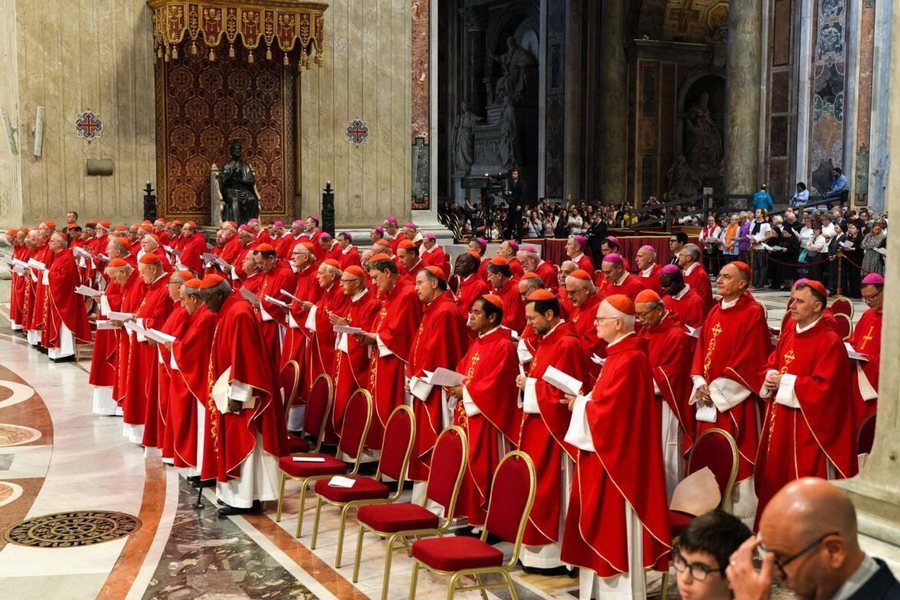
On May 7, the process of electing a new Pope begins, as cardinals under the age of 80 from around the world will decide on Francis' successor. But what is written on the ballot papers and how does the process begin, who counts the votes and why is each ballot paper pierced with a needle and then hung on a thread?
Thousands of people gather in St. Peter's Square, waiting for a sign that a new Pope has been chosen. Everyone watches as the dark plumes of smoke rising from the Sistine Chapel turn white and a cheer is heard. The new earthly leader of the Roman Catholic Church has been chosen.
This will soon be the scene when the world's cardinals under the age of 80 gather to elect the successor to Pope Francis, who died on April 21 of a stroke. The conclave is scheduled to begin on May 7.
Below are answers to some frequently asked questions.
1. Who can become pope?
One of the cardinals from the College of Cardinals is usually elevated to the office of pope, but any male of good standing in the church may be elected. If he is not a bishop, he must first be ordained. A layman may be elected. However, the election of a heretic or a schismatic is forbidden.
2. Who elects the Pope?
The college of electors of the Supreme Pontiff is composed of the cardinals of the Roman Catholic Church, excluding those aged 80 and over. At the time of the Pope's death, 135 of the church's 252 cardinals were eligible to vote. At least one cardinal has refused to participate, citing health problems. During the papal election, active campaigning is prohibited and debate is frowned upon. Cardinals must rely on the guidance of the Holy Spirit.
3. How soon after the death or resignation of a pope is a new pope elected?
At least 15 days after the death of a pope and no more than 20, the cardinals meet in the morning to celebrate the Eucharist. They continue that afternoon in the Sistine Chapel, where deliberations and votes take place. The cardinals have chosen May 7 as the date for the start of the next conclave.
4. Who governs the church until a pope is elected?
During the vacancy of the Apostolic See, the central figure is the cardinal camerlegno (Camerlengo of the Holy Roman Church), currently Cardinal Kevin J. Farrell, an Irish-born American and former Bishop of Dallas. The camerlegno works with the College of Cardinals to take care of the ordinary affairs of the church and emergency matters, but his priority is the election of a new Pope. Until then, no single person is the governing authority for the church. After the death of a Pope, the cardinals and archbishops who head the departments of the Roman Curia cease to exercise their duties. A handful of officials, notably the camerlegno, continue their functions, presenting to the College of Cardinals matters that would otherwise have been referred to the Supreme Pontiff.
5. What is a conclave?
Conclave, from the Latin words for "with" and "key", refers to the closed meeting of cardinals to elect the Pope. Pope Gregory X initiated the practice of closing the doors in 1274 both to prevent outside influences and to speed up the process. The conclave is traditionally held in the Sistine Chapel.
While the electors previously stayed in makeshift bedrooms around the chapel, they now stay in the Domus Sanctae Marthae (House of Saint Martha), a reception facility for dignitaries and others visiting Vatican City and the place where Pope Francis has made his permanent residence.
One of the most popular traditions is the burning of ballots. If the smoke rising from the Sistine Chapel is black (made so by the addition of chemicals and, in earlier times, wet straw), no pope has been elected. When the smoke is white, the church rejoices in its new pope.
6. How is the Pope elected?
The Pope is elected by secret ballot. During the election, the cardinals are forbidden from communicating with the outside world "whether in writing, by telephone or by any other means of communication." Before they begin, the cardinals take a solemn oath of secrecy. Then, the Master of the Papal Liturgical Celebrations orders all those not participating in the conclave to leave the Sistine Chapel.
7. How does the voting process proceed?
Before the voting begins, some cardinals are chosen by lot to collect the ballots of the sick who cannot attend the regular voting session; others are chosen to “review” the counting of the ballots. Voting begins with one ballot on the first day. On the following days, if necessary, two ballots are held in the morning and two in the afternoon.
The rectangular ballot paper has the words “Eligo in Summum Pontificem” (“I Elect as Supreme Pontiff”) on the top half and space to write the name of the candidate on the bottom half. Cardinals are asked to write the name of the person they choose, then fold the ballot paper in half. Cardinals take their ballot papers to the altar and say aloud: “I call Christ the Lord, who will be my judge, to witness that my vote is given to him whom I think before God should be elected.” Then they place the ballot paper in the box, bow, and return to their seats.
Once all the ballots have been placed in the ballot box, they are immediately counted. Each ballot is pierced with a needle through the word "Eligo" and placed on a thread. After the names have been read aloud, the ends of the thread are tied in a knot. If someone has received two-thirds of the votes, the canonically valid election of the Roman Pontiff is complete.
Twice a day, after the ballots have been checked and before the cardinal electors leave the Sistine Chapel, all ballots must be burned, along with any notes that a cardinal may have written.
If no pope is elected by a two-thirds majority after three days, the vote is suspended for a day of prayer, discussion, and spiritual counsel. After a series of seven more votes, the process may be suspended again for reflection, until finally only the two cardinals who received the most votes in the last vote are qualified for a runoff. However, the two candidates themselves do not have the right to vote.
8. Can someone “campaign” to become pope?
No. Although there is always speculation about who might become pope, the choice is often a surprise. In 1958, for example, few expected someone as old as Pope St. John XXIII, 77, to rise to the office. (Pope Francis, elected in 2013, was 76.)
9. Can a man refuse to accept the office of the papacy?
Yes, although it is unlikely. Rumor has it that some individuals have refused the task, but because the events of the conclave are secret, no one knows for sure if this happened.
10. When does the new pope take office?
After accepting office, the new Pope declares the name by which he will be known and the cardinals swear allegiance to him. Tradition has it that the Pope then greets the faithful by appearing in his new vestments. Three pairs of vestments - small, medium and large - are prepared in advance to fit the new Pope's size. From the moment of his election, the Pope assumes responsibility for the governance of the church. / Adapted Pamphlet by OSV News/





Lini një Përgjigje