


 Shkruar nga Pamfleti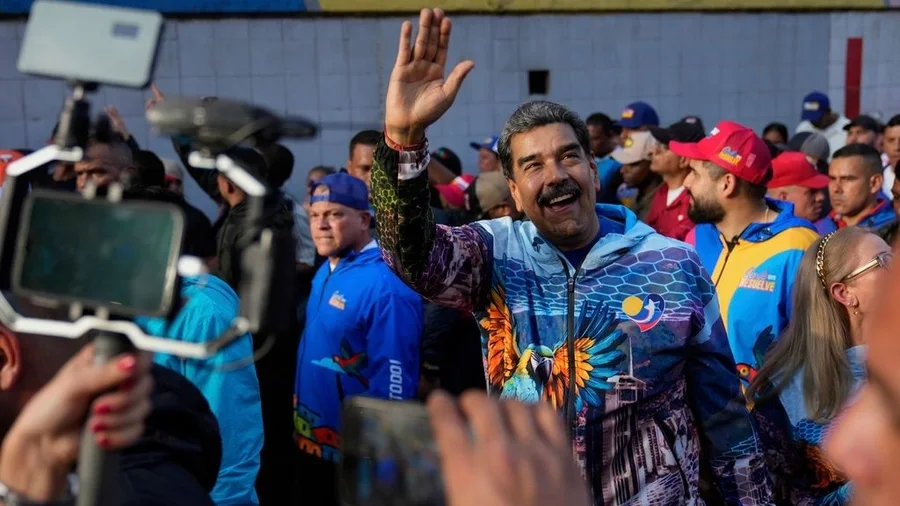
Venezuelans are being called to the polls today to elect their deputies and governors, in a vote that is expected to be won by the government, as most of the opposition is boycotting it ten months after the re-election of President Nicolas Maduro, whose victory it disputes.
More than 400,000 members of the security forces will be deployed for the vote, which will be held from 6:00 a.m. to 6:00 p.m. local time, with results expected in the evening.
The elections have already been marred by the arrest on Friday of Juan Pablo Guanipa, an opposition figure and close ally of leader Maria Corina Machado, who is calling for a boycott. The former deputy is accused of belonging to a "terrorist network" that sought to "sabotage" today's elections.
This arrest sparked protests, notably from US Secretary of State Marco Rubio, who described it as "unjustified and arbitrary".
The authorities, who regularly denounce conspiracies - real or imaginary - announced on May 19 the suspension of flights from Colombia, denouncing the infiltration of "mercenaries" who want to "sabotage" today's elections.
During the vote taking place today, the government wants to elect a governor and eight deputies for Essequibo, an oil-rich region of neighboring Guyana, which Caracas claims as part of a conflict dating back to the colonial era and which has recently been revived.
Last week, Guyana's President Irfaan Ali told AFP that this was "a threat", although voting is only taking place in the border area on the Venezuelan side. There are no polling stations in the 160,000 square kilometer territory administered by Georgetown.
Chavismo, a movement founded by the late President Hugo Chavez, whose heir is Maduro, currently controls 19 of the country's 23 states and holds 253 of the 277 seats in Congress.
Polls show an absolute majority for Maduro's party in the National Assembly. And according to analysts, the opposition is only able to win two states: Zulia, the oil state, and Nueva Sparta, with Margarita Island.
"The majority of the opposition will not go to vote, which favors a victory for the government. On May 25, we will have a very red map," predicts Jesús Castillo, director of the Polianalitica company, referring to the color of Chavismo.
The election campaign was discreet, both on the part of the opposition and the government.
With "54 parties, more than 6,500 candidates... There's something for all tastes," boasts Maduro, who promises a "crushing victory" for his faction.
For her part, Machado denounced a "great farce that the regime wants to play to bury its defeat (in the presidential elections) of July 28". "We will confirm this defeat with a complete absence, (...) leaving all the polling stations empty", he said.
The opposition, which is not united in its boycott of the vote, continues to claim victory in the 2024 presidential elections, which it claims were marred by fraud. The post-election unrest resulted in 28 deaths and 2,400 arrests (1,900 of those arrested have since been released).
Henrique Capriles, a two-time presidential candidate, led a section of the opposition convinced of the need to participate in the vote.
"The vote is a tool for change, for struggle, for resistance. I understand people's frustration, but that's how the problems are, they are difficult (...) You have to fight," says Juan Requesens, a candidate for governor of Miranda state, which includes part of Caracas.




Lini një Përgjigje