


 Shkruar nga Pamfleti
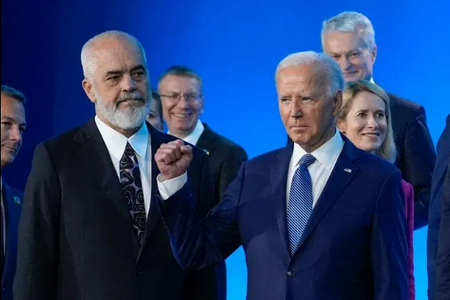
Prime Minister Rama's government continues to receive slaps from the USA. The US Department of State has published the 2024 report on the investment climate, and corruption and money laundering are seen as the biggest problems.
According to the report provided by "Pamphlet", informal money, mainly from drug trafficking, has disrupted the balance in the market.
" Albania suffers from a large informal sector and money laundering activities. The Financial Action Task Force on Money Laundering (FATF) included Albania on its gray list in 2020. From 2020-2022, the country underwent four follow-up reports and improved its performance in technical compliance, resulting in its removal from the list. gray in October 2023. The business community reports that the large flow of illegal income from drug trafficking, smuggling, tax evasion and corruption distorts market competition. Allegations of corruption are common, and investors report that they may be the target of extortion by public administration, the media, and criminal groups ," the report said.
Excerpts from the report
Reports of corruption in government procurement are common, with investors frequently reporting instances of government corruption delaying and preventing investment in Albania. The continued use of public private partnership (PPP) contracts has reduced opportunities for competition, including from foreign investors, in infrastructure and other sectors. Poor analysis and lack of technical expertise in the drafting and monitoring of PPP contracts are persistent concerns. Some US investors have faced contentious commercial disputes with public and private entities, including some that have gone to international arbitration.
Property rights continue to be a challenge in Albania because clear title is difficult to obtain. There have been cases of individuals allegedly manipulating the court system to obtain illegal land titles. Overlapping of property titles is a widespread issue. The process of compensation for lands confiscated by the former communist regime continues to be cumbersome, inefficient and insufficient. The government has declared a will to address this problem, but progress has been halted.
To address systemic corruption, Albania adopted comprehensive constitutional amendments to reform the country's judicial system and improve the rule of law in 2016. Albania has functional and independent anti-corruption bodies, including the Special Prosecution Office (SPO) and the Bureau National Bureau of Investigation (NBI). ), part of the Special Structure Against Corruption and Organized Crime (SPAK.) The judicial reform is strongly supported by the United States and the EU and implementation is ongoing, with the expectation that its success will eventually improve the investment climate in the country.
The implementation of the justice reform includes the vetting of judges and prosecutors. More than half of the judges and prosecutors who have been vetted have been dismissed for unexplained wealth, or links to organized crime, or have resigned to avoid vetting. The EU expects Albania to show progress in prosecuting judges and prosecutors whose vetting revealed possible criminal behavior. She also expects Albania to build a history of prosecutions for high-level corruption and money laundering cases. In February 2022, the Assembly of Albania voted overwhelmingly and unanimously to extend the vetting mandate until December 2024.
Foreign investors cite corruption, including in the judiciary, government, public procurement and the media, a lack of transparency and competition, a large informal economy and weak contract enforcement as some of the biggest problems hampering Albania's business environment.
In update...



Lini një Përgjigje