


 Shkruar nga Diplomatico | Pamfleti.net
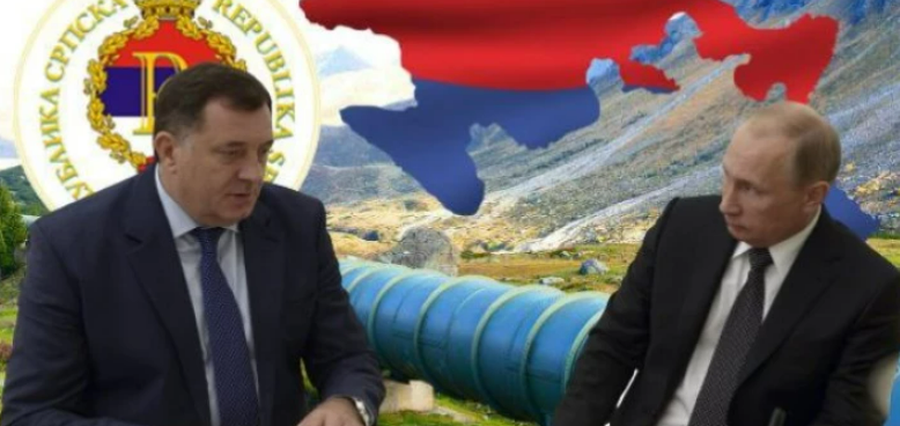
Dodik on the attack against Bosnia: The plan to undermine the elections and the invisible ties with Moscow and Belgrade...
The recent political crisis in Bosnia and Herzegovina, sparked by Milorad Dodik, is not simply an internal battle between a rebel leader and state institutions. It is a pawn in a much broader game, a game where Belgrade and Moscow are not mere spectators, but actors with clear strategic interests.
Following the decision of the Court of BiH to give him a year in prison and a 6-year ban on public office, Dodik not only refused to step down as President of Republika Srpska (RS), but also announced a plan to block early elections.
His statements, ranging from threatening to “not allow any ballot boxes” to calling for a referendum, indicate a clear strategy: creating an artificial crisis to challenge the authority of the central state.
Connection with Moscow and Belgrade
Diplomatic sources in the region have long spoken of Dodik's strong ties to the Kremlin, which sees the RS as a pressure point on the West in the Balkans. Since the start of the war in Ukraine, Dodik has been one of the few leaders in Europe to refuse to support sanctions against Russia, receiving public support from Moscow for this.
On the other hand, Belgrade, while not openly endorsing separatist rhetoric, offers Dodik tacit political and diplomatic support. A destabilization of Bosnia serves as a means of pressure on the West and as a distraction from the Kosovo issue.
Plan for chaos
According to security analysts, Dodik's strategy is divided into several phases:
1. Logistical blocking of the elections, through the non-cooperation of the police and local administration in setting up voting centers.
2. Mobilization of citizens for a boycott, attempting to delegitimize the result.
3. Political annexation of the crisis, presenting Bosnia as a failed state and RS as a self-sustaining entity.
Why is this a risk for the region?
A blocking of elections in RS is not just a legal issue; it is a dangerous precedent that could fuel separatist movements in other countries in the region. Moreover, it opens the door to Russian influence at a time when the West is focused on Ukraine.
Message for Tirana and Pristina
The crisis in Bosnia should be seen as part of a chain of pressures coordinated by power centers that do not see the Balkans as oriented towards the EU and NATO.
The weakening of BiH weakens the entire security front in the region and indirectly affects Albanian interests in Kosovo and North Macedonia.
This is not just Dodik's confrontation with the law, it is a test of the ability of the Bosnian state and the West to curb a political operation that goes beyond the borders of BiH./ Pamphlet







Lini një Përgjigje