


 Shkruar nga Sadri Ramabaja
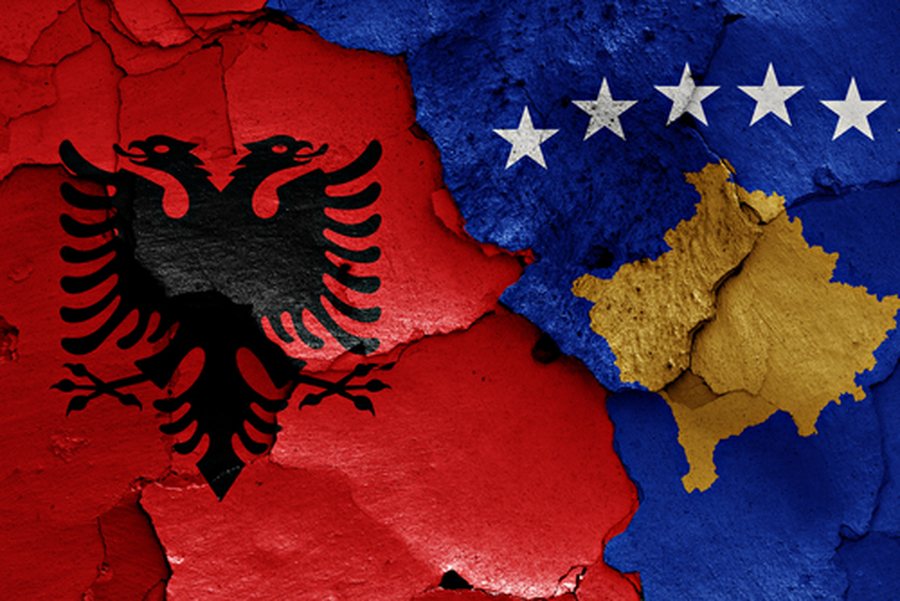
The creation of the Albanian Federation, in which the legal subjectivity of the Republic of Kosovo would be preserved, is important to understand that, in the new geopolitical circumstances, it will increasingly be seen as a factor guaranteeing peace and security in the region...
Kosovo declared its independence on February 17, 2008, but its independence has not been recognized by the five EU member states, four of which are also NATO members. This fact has made the process of Kosovo's integration into Euro-Atlantic structures very complicated. If this division continues within the EU and NATO itself, the move towards the creation of the Albanian Federation, except as the political will of the Albanian people and a completely natural process, remains the only way out of this closed circle.
The insistence to keep the north of Kosovo as a frozen conflict, after September 24, cannot pass. In this context, Serbia has intensified the misuse of the Serbian minority to impose political tensions in order to impose political control in some parts of Kosovo, especially those with a Serbian majority, and continues to apply methods that are typical of neo-colonialism. These tensions have affected the relations between the two countries and have made the process of normalizing relations between them difficult.
Vučić's regime is recently isolating Kosovo, moving into action. The application of open military aggression and complete disregard for the territorial integrity of Kosovo marks a new level of Serbian strategy. However, taking into account the current geopolitical realities, there are already strong signs that the application of these methods against Kosovo would have to further weaken Serbia's influence in the Balkans, imposing the full return of the pre-nemocratic factor.
With Serbia openly committed to the annexation of the Serbian Republic of Bosnia and the deep involvement of the Serbian influential structures in Montenegro, transforming it definitively into a Serbian Republic of the Adriatic, the harsh reaction of the West remains an inevitable act.
In fact, given that the project for the accelerated implementation of the "Serbian World", even through the imposition of a pro-Serbian government in Montenegro, or the deep penetration of the influence of the Serbian Orthodox Church, has raised legitimate fears of Serbia's neighbors to turn ethnic Serbs everywhere into a "fifth column", a tightening of legal regulations at the expense of the Serbian minority, could be used as a tool that would encourage accelerated migration of Serbs to Serbia.
It is also doubtful that Serbia will be able to rely on its ally Russia, especially now that it is mired in war with Ukraine, to serve as a "protectorate power" as it has served at the beginning of the creation of the modern Serbian state in the era of the Eastern War [1875–1878].
The future of Kosovo should no longer be treated as a complex issue and different from historical examples such as that of Federal Germany, which followed its reunification during
the end of the process of the disintegration of the USSR.
In the case of Kosovo, independence is no longer an open issue and the subject of international debates. Kosovo declared its independence from Serbia in 2008 and has been recognized by a large number of countries [117 so], with an emphasis on the corpus of the states of the Pre-Rednium - i.e. liberal democracies. This support of the Western world was not accidental. Finally, the position of the Albanian Nation, based on its spiritual configuration and Western cultural affiliation, while also being an integral part of the sphere of Western civilization, with the independence of Kosovo has gained specific weight.
Historian Eugen Weber in his study of the making of the French state and society, Peasants into Frenchmen, proposed several "agencies of change"—factors he believed to have been essential in the development of modern French society. It started with a chapter called "Roads, roads and more roads". According to him, basic infrastructure, by creating a national community, can mobilize society, change their demands and transform the political agenda."
The appearance of the KLA on the political stage at the end of the experiment that was failing with the LDK at the turn of the century that we left behind, was the factor that essentially changed the political agenda among Albanians. Meanwhile, the compromise imposed on the Kosovars through the creation of the Republic of Kosovo, in accordance with the Austrian model, will in the meantime begin to be considered by the international factor as temporary. The credit for this, however, belongs to Lévizjs Vetëvendosje and the generation of dignified politicians who lead it. The spirit already created around the ideologist and its leader, at the basis of which is the most progressive Albanian political thought, dominates the political and social life not only in Kosovo; it already extends all over the Albanian space. This political thought has the role that the streets had in France for the transformation of the peasant into the French. This political spirit is gradually transforming the passive Albanian citizen into an active and bleeding citizen of the union. The gradual embrace of the concept on the necessity of the creation of the Albanian Federation, based on the principles of progressive Albanian political education and action in full accordance with the ideals of European social democracy, without conflicting with the interests of the European Union, is the real guarantor of victory. If the modern state, but also the EU for many reasons can also be considered as a political product of Hobbs' concepts on Leviathan, which are based on the strong competition between the state and society, the Albanian Federation turns out to be the most progressive stage of these concepts and the guarantor of peace and progress in the region. In this process of developments, see for this, the future of Kosovo is an important issue and remains the interest of liberal democracies.
The creation of the Albanian Federation, in which the legal subjectivity of the Republic of Kosovo would be preserved, is important to understand that, in the new geopolitical circumstances, it will increasingly be seen as a factor guaranteeing peace and security in the region.
This act will certainly take into consideration, in addition to the political will of the citizens of both federal units, also the appropriate preliminary processes and actions, which must nevertheless be in accordance with the international rules and standards that are based on the achievement of its goals ./ Pamphlet


Lini një Përgjigje