


 Shkruar nga Gjergj Zefi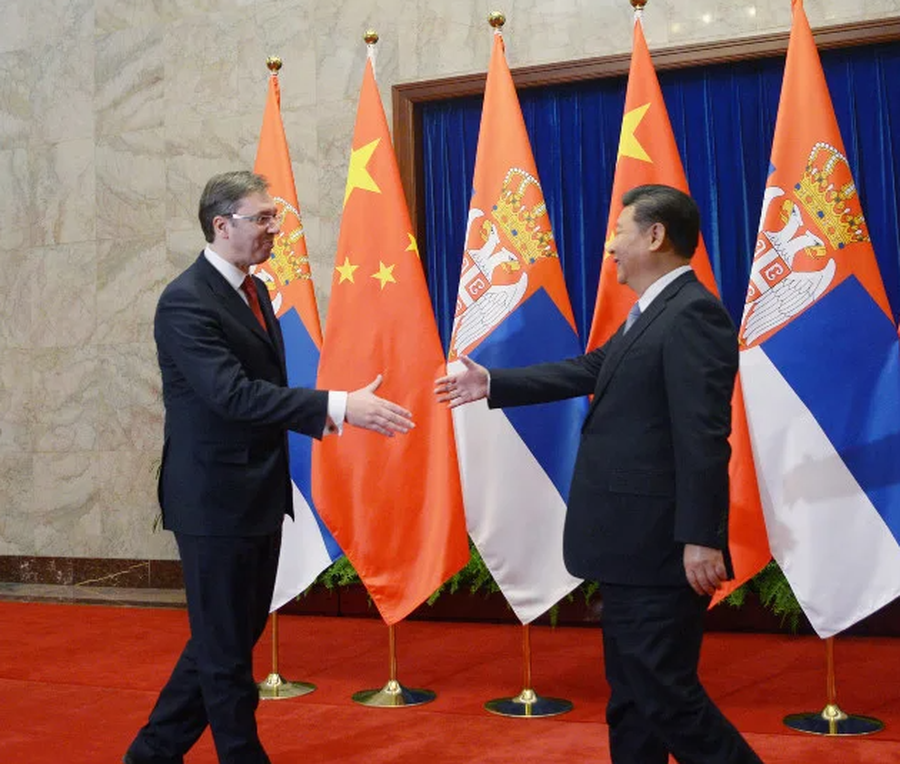
Beijing parade unites the world's most repressive leaders: Serbia on the side of the authoritarian East...
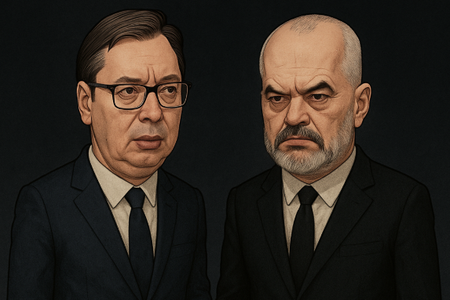
Serbian President Aleksandar Vučić finds himself once again in a situation where his symbolic and diplomatic choices align more with the logic of eastern autocracies than with the declared course towards the European Union.
Vučić's announced participation in the military parade to be held on September 3 in Beijing, on the occasion of the 80th anniversary of the end of World War II, has once again highlighted the real preferences of the Serbian regime.
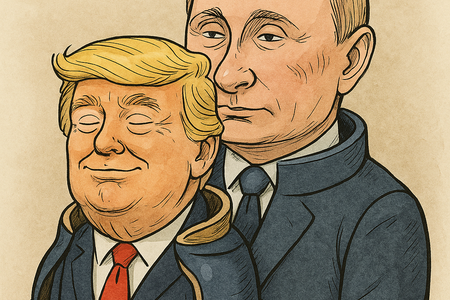
In addition to Vučić, well-known authoritarian leaders such as North Korea's Kim Jong Un, Russia's Vladimir Putin, and Belarus' Aleksandr Lukashenko are also expected to participate in this event.
This symbolic alignment, which coincides with an important event on China's geopolitical agenda, has greater value than a ceremonial visit: it is a positioning statement.
Vučić is aware of the consequences of participating in an event dominated by the most repressive figures on the international scene.
Kim Jong Un represents one of the most closed and brutal regimes in the world; Vladimir Putin is in the midst of a war of aggression in Ukraine that has united the West against him, while Lukashenko shoulderes the contested legitimacy of a power that is maintained only through repression.
If a democratic leader attends an event where these figures are present, he sends a clear message that he belongs to a different world than the one he proclaims on official foreign policy platforms.
For Serbia, this is not an isolated diplomatic incident, but part of a sustainable political pattern that repositions the country as part of an informal bloc of autocrats who share not only common geopolitical interests, but also methods of rule.
If for China this is a way to affirm the new multipolar order where it takes on the role of locomotive, for Vučić it is a measured and calculated step to maintain the balance between Brussels and the Beijing-Moscow axis. But this balance is increasingly difficult to manage, especially when Brussels seeks clear political signals about progress in the integration process.
Indeed, Vučić is in a favorable position to blackmail the West by swinging between the two camps. He has built a regime that imitates the Putinian model: complete control over the media, weakened opposition, strong ties to the economic oligarchy, frequent use of nationalist rhetoric, and deliberate manipulation of regional crises to preserve domestic power.
In this context, his appearance next to Kim Jong Un is not a protocol deviation, but a natural reflection of his real political orientation.
For the Balkan region, and especially for Albanians, this development is a wake-up call. A Serbia that is drawn closer to repressive regimes is always a Serbia that seeks to strengthen its capacity to control not only its own people, but also to exert regional influence in an uncompromising manner. It also endangers the stability of Kosovo, where tensions fuel internal nationalism and justify repression.
Vučić's Serbia, appearing alongside Putin, Lukashenko and Kim Jong Un, is not a partner for peace or integration, but an organic part of a global bloc that challenges the liberal and democratic order./ Pamphlet


Lini një Përgjigje