


 Shkruar nga Diplomatico | Pamfleti.net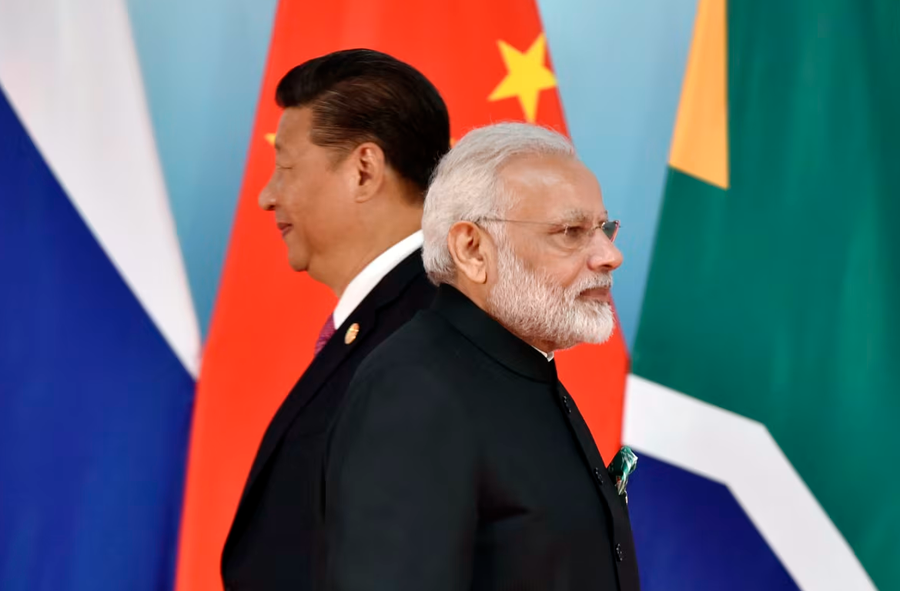
Faced with punitive tariffs from the US and tensions with China, India tests strategic autonomy at a summit that could reshape the global economic balance...
Indian Prime Minister Narendra Modi will travel to China for the first time after a seven-year period of silence and tension.
The visit will take place on the occasion of the Shanghai Cooperation Organisation (SCO) Summit, to be held in Tianjin at the end of August 2025.
A forum where over 20 world leaders are expected to participate, including Russian President Vladimir Putin and Chinese President Xi Jinping.
This meeting is not just a protocol formality; it is a clear signal that India is trying to carefully review its place in the global mosaic of middle powers.
Modi's visit comes just days after US President Donald Trump's drastic decision to impose 50% tariffs on Indian imports in retaliation for Russian oil purchases. While the West sees India as an ally in checking Chinese influence, Modi's India is sending signals that it is not willing to become a tool of American economic warfare.
Delhi cannot ignore either China's economic potential or Beijing's key role in industrial supplies.
Officially, Modi will promote counterterrorism cooperation and regional economic integration. But behind the scenes, diplomatic channels between Delhi and Beijing, frozen since violent clashes on the Ladakh border in 2020, are being reopened.
A concrete signal is the resumption of military communication between the two countries, a move aimed at preventing further incidents. China has also agreed to lift restrictions on some strategic exports, such as rare earth minerals and fertilizers, which India needs.
Once dubbed the "club of autocrats," the SCO is turning into a new arena where Central Asian countries, Russia, China, and India discuss balancing the global order.
India will not give up on cooperation with the West (through the Quad or strategic partnerships with France and Japan), but it is clearly articulating that its policymaking will be multidimensional.
Despite border conflicts, economic connectivity is inevitable. With his visit, Modi is sending a clear message: India has neither the interest nor the luxury of isolating itself from mainland Asia. On the contrary, it is seeking to play a constructive role in the global dialogue between emerging powers.
Modi's appearance in Tianjin is neither a turning point nor a new ideological movement. It is a continuation of a cautious foreign policy, where decision-making independence is as important as old alliances. And this is a lesson that Balkan actors should also study./ Pamphlet


Lini një Përgjigje