


 Shkruar nga Gjergj Zefi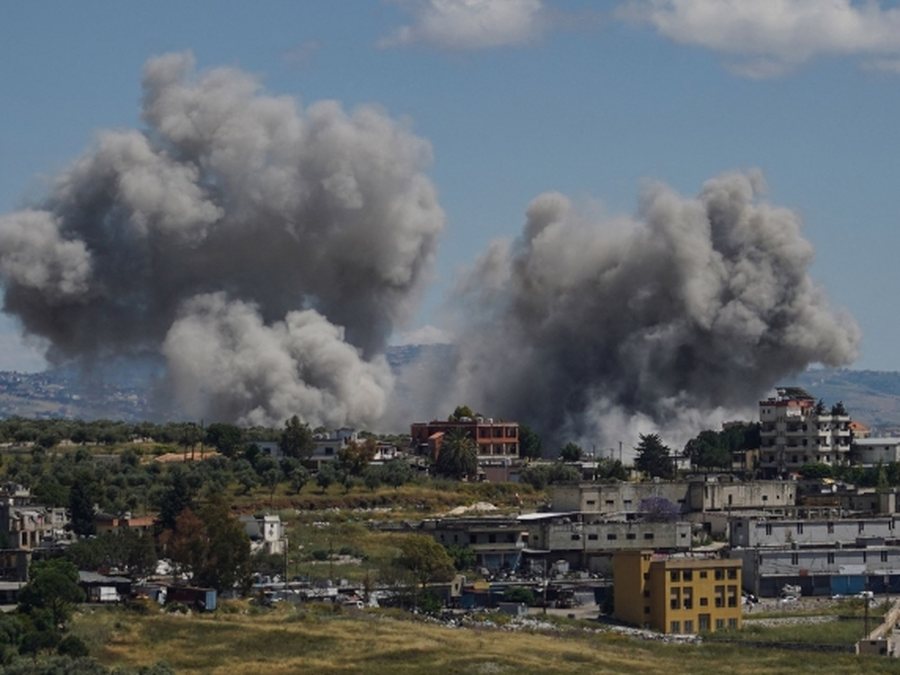
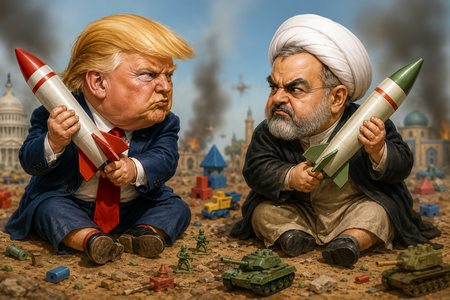
As the US strikes Iranian targets amid ceasefire negotiations and Tehran threatens escalation in Hormuz, the Middle East is revealing the real face of the "peace" imposed by missiles and geopolitical interests...
The Middle East is no longer simply a military conflict. What the world is witnessing today is the gradual collapse of the modern concept of peace as a product of diplomacy and the brutal return of the logic of force as the main instrument of international order.
From Gaza to Hormuz, from Beirut to Damascus, from Tehran to Tel Aviv, every declaration of a ceasefire sounds more and more like a tactical pause between bombings and not a serious project for long-term stability.
The events of the last few hours have exposed more clearly than ever the hypocrisy of the international diplomatic architecture. In the midst of so-called negotiations to reduce tensions and reopen the strategic oil corridors in Hormuz, US forces have launched new strikes on Iranian targets, justified as "self-defense actions."
Tehran has responded with harsh warnings, declaring that the American presence in the region "is no longer safe."
In the background, Israel continues to maintain high military readiness, while Iran's allied groups in Lebanon, Iraq, and Yemen are signaling that a broader escalation remains a realistic scenario.
Peace in the Middle East has become the greatest illusion of global diplomacy. An illusion fueled by international conferences, solemn declarations, and mediations that often aim not at resolving crises, but at managing them.
The great powers are no longer negotiating to stop wars; they are negotiating to control their pace. And that is the most frightening difference of the current era.
The United States of America continues to talk about regional stability, while at the same time projecting military force into the Persian Gulf and supporting operations that push the region toward permanent escalation.
Washington seeks to present itself as an architect of peace, but on the ground it is increasingly perceived as a manager of a controlled crisis. This dual policy has produced a dangerous paradox: every offensive is justified in the name of security, while every response is used to legitimize another offensive.
On the other hand, Iran has carefully constructed a narrative of “strategic resistance,” extending its influence through military and political networks in Lebanon, Syria, Iraq, and Yemen. But Tehran, despite its anti-hegemonic rhetoric, is also part of the same architecture of tension that is fueled by perpetual conflict. Regimes and regional powers have realized that controlled war produces more political gain than real peace.
Israel is at a historic moment of existential uncertainty. After the trauma of attacks and border instability, the Israeli government is pursuing a maximum security strategy that is pushing the region towards extreme militarization. Any compromise is seen as weakness. Any ceasefire is considered temporary. And in this climate, peace is no longer perceived as a strategic objective, but as a political risk.
But the biggest problem is not just war. It is its normalization. The world has become accustomed to images of destroyed cities, columns of refugees, global markets shaken by a missile in Hormuz or a drone over the Red Sea. Tragedy has become diplomatic routine. The Security Council meets, the powers condemn each other, while on the ground the same cycle of blood and revenge continues.
In reality, the Middle East is paying for the moral bankruptcy of the international order. Global powers speak of international law only when it suits their strategic interests. Standards have become selective. Victims have become statistics. And diplomacy has been reduced to producing declarations that lose meaning as soon as the bombing sirens begin.
The greatest illusion is that stability can be built on fear. The history of the Middle East has repeatedly shown that peace imposed by military superiority is always temporary. No bombing has produced historic reconciliation. No sanctions have extinguished geopolitical ambitions. On the contrary, each intervention has created new wounds, new radicalism, and new generations growing up with the conviction that diplomacy is simply a mask for the interests of great powers.
Today, the region is at a point where the very concept of order is unraveling. Alliances are shifting rapidly, traditional brokers are losing authority, and regional actors are seeking new security models outside the American umbrella. Saudi Arabia negotiates with Iran, Turkey vacillates between NATO and regional interests, while China and Russia are exploiting the West’s diplomatic vacuum to increase their influence.
In this strategic chaos, peace has become a worn-out slogan. Everyone talks about it, but no one seems willing to pay its real price: compromise. Because peace requires limiting ambitions, accepting new realities, and giving up the logic of absolute domination. And this is precisely what none of the main actors in the region are accepting.
Therefore, the Middle East today is not experiencing the end of a war, but the beginning of a new era of global uncertainty, where diplomacy is used to buy time rather than build trust. An era where agreements are signed with one hand and drones are launched with the other. An era where peace exists only in declarations, while the reality on the ground is controlled by missiles, energy interests, and rivalry for hegemony.
And perhaps this is the biggest alarm for the world: when peace is an illusion, war becomes the system./ Pamphlet



Që nga viti 586 para Krishtit nuk ka paqe. Nuk do të ketë derisa Tempulli i Salomonit të ndërtohet për herë të tretë! Nëse e njihni bodrumin e Tempullit, do ta kuptoni se do të ketë paqe ose më shumë luftë!