


 Shkruar nga Pamfleti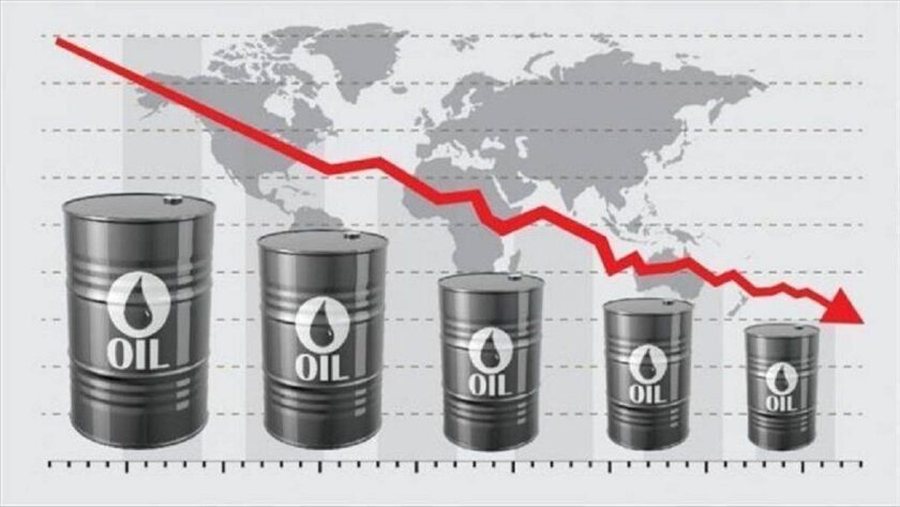
Global markets are reacting positively to reports of a memorandum of understanding that could ease tensions in the Strait of Hormuz and open new nuclear negotiations...
Oil prices fell sharply on Wednesday, with Brent crude losing about 10% of its value, as reports of a possible deal between the United States and Iran raised expectations of an easing of geopolitical tensions. Benchmark oil and gas futures fell sharply in Europe on reports that the United States and Iran may be close to a deal to end the two-month conflict.
Brent and U.S. West Texas Intermediate (WTI) crude futures fell on fresh diplomatic signals from Washington and Tehran, raising hopes of a de-escalation of tensions around the Strait of Hormuz after weeks of military escalation. Brent crude traded at $97.62 a barrel, down about 9.5% from its previous close, according to market data. However, oil prices remain well above the $70 a barrel level they were at before the start of the U.S.-Israeli war against Iran, a conflict that has hit oil production and transportation in the region.
While oil prices have fallen, stocks in global markets have risen.
The FTSE 100 index of Britain's largest companies and the German DAX index rose more than 2% in mid-day trading, while France's CAC 40 gained 3%. Asian markets also closed higher.
As for the stock markets, major European markets remain lower compared to the end of February, while the US S&P 500 index is rising. Major Asian markets all rose on Wednesday. South Korea's Kospi index closed up 6.45%, Hong Kong's Hang Seng gained 1.22%, while Japan's Nikkei rose 0.38%.
The Hang Seng has remained in decline since the start of the war, while the other two markets are in positive territory. On April 8, the US and Iran agreed to a ceasefire, which caused oil prices to fall and stock markets to rise.
According to a report by Axios, the White House believes it is close to reaching an agreement with Iran, based on a one-page memorandum of understanding aimed at ending the conflict and creating a framework for broader nuclear negotiations.
Citing two US officials and two other sources, Axios reported that Washington expects a response from Tehran on key issues within the next 48 hours.
The document would reportedly declare an end to the war in the region and open a 30-day period of negotiations to reopen the strait, limit Iran's nuclear program, and lift US sanctions. Reports suggest this is the closest point to an agreement since the conflict began.
Meanwhile, Iranian Foreign Minister Abbas Araghchi declared on Wednesday that Tehran remains committed to diplomacy, while maintaining its readiness to respond to any "malicious act."
Araghchi also briefed Chinese Foreign Minister Wang Yi, during a meeting in Beijing, on recent diplomatic efforts to end the US-Israeli war against Iran, including Pakistan-mediated talks between Tehran and Washington.
"Iran, just as it acted decisively in self-defense and remains fully prepared to confront any aggression, is also serious and steadfast in the field of diplomacy," Araghchi said.
These developments come after US President Donald Trump announced on Tuesday that the US military will temporarily halt the "Project Freedom" operation, which aims to secure commercial shipping in the Strait of Hormuz.
Trump then declared on social media on Tuesday that he would suspend the operation "for a short period of time to see if the deal can be finalized and signed."
He added that “great progress has been made towards a full and final agreement with Iran’s representatives.” Trump also said the US would continue to block ships moving to or from Iranian ports, a move aimed at putting pressure on the Iranian economy.
US Secretary of State Marco Rubio told reporters on Tuesday that the initial US-Israeli offensive against Iran had ended, as Washington's objectives had been achieved.
"We prefer the path of peace. What the president prefers is a deal," Rubio said.
Iran did not respond to Rubio's statements. Iranian Parliament Speaker Mohammad Ghalibaf stated earlier that we know very well that the continuation of the current situation is unacceptable for America, while we have just begun. / Pamphlet /








Lini një Përgjigje