


 Shkruar nga Pamfleti
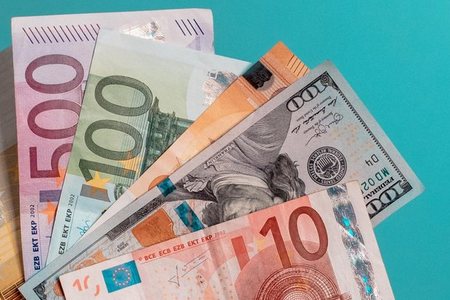
Transferring an amount of 1,000 euros to or from Albania previously had a commission ranging from 10-15 euros to 40 euros. Now that Albania is among the latest countries to join SEPA payments, a European Union initiative that standardizes cross-border payments, ensuring the same rules, standards and costs across the 41 SEPA members, the fee for a transfer of this amount is no more than 2 euros.
Through the Single Euro Payments Area, Albanian citizens can now send and receive payments in euros under the same conditions as citizens of EU countries, in terms of fees, processing times and security standards.
“Using traditional channels through correspondent banks for cross-border payments with EU countries was costly and time-consuming. It involved several actors in the process of sending payments and as a result multiple, and often high, intermediary commissions. Due to the participation of several links, the processing time for a payment could take up to three or four days, and if weekends were included, even longer. Tracing payments also became more difficult, depending on the territories where the banks were located and the legislation regulating their payment activities,” explains Ledia Bregu, Director of the Payment Systems, Accounting and Finance Department at the Bank of Albania.
The European Union has played a crucial role in supporting Albania's integration into SEPA. The European Commission enabled the Western Balkan EU candidate countries to apply for SEPA membership and included Albania's accession as a key pillar of its Growth Plan for the region.
This elevated SEPA to a national priority, prompting rapid coordination among Albanian institutions. The Bank of Albania, which had already been aligning its payments legislation with EU standards, submitted its application in June 2024 and received approval in November.
Throughout the process, the European Commission and the EU Delegation to Albania have accompanied Albania in this process and have provided technical support and continuous financing, including through the Western Balkans Payments Modernization project led by the World Bank.
With SEPA payments, the same rules apply to both sending and receiving banks in 41 European countries. In addition to significantly lower fees for both parties, transfers are executed no later than the next business day.
In many cases, payments are completed on the same business day, especially if initiated early. This processing standard is a core rule of the SEPA scheme and is applied uniformly by all member banks, regardless of their location. Before the integration of SEPA, incoming transfers in euros were subject to significant fees, typically starting at €10 and going up to €50-100.
“We have set a limit on fees for incoming payments. Fees for these payments cannot exceed 3 euros, regardless of the payment amount,” says Bregu. “The Bank of Albania has revised the commission limits for SEPA payments, aligning them with the fees applied for domestic transfers in euros. They were further reduced after the operational start of SEPA transfers. Specifically: for payments up to €20,000, the fee is no higher than €2; for payments between €20,000 and €100,000, the fee does not exceed 0.01% of the transaction value; for payments above €100,000, the fee is capped at €25. Fees for incoming payments are also regulated and cannot exceed €3, regardless of the amount. Overall, payment costs are now almost ten times lower than before.”
The adoption of SEPA schemes is expected to generate savings of around €20 million for businesses and consumers within the first year, benefiting every commercial enterprise and every citizen with financial commitments abroad, such as students, migrant workers, families receiving remittances or individuals making international purchases and transactions. This results in lower costs, faster services and greater financial inclusion, especially considering that the majority of remittances to Albanian households (around 80%) come from EU countries and the United Kingdom, which is also part of SEPA.
According to Ms. Bregu, Director at the Bank of Albania, the speed of bank transfers and reduced commission fees are not the only advantages of SEPA. The scheme also promotes the creation of an efficient and reliable payment system for small countries like Albania and improves the country's image at the international level.
SEPA integration fosters the expansion of trade relations with the European Union and offers Albanian businesses, especially exporters, tourism operators and small and medium-sized enterprises, equal access to the European payments market. This harmonisation brings significant improvements in liquidity, increases the predictability of cash flows and strengthens overall financial stability. Furthermore, it helps reduce informality in financial transactions and has prepared Albanian banks for the next phase of the country's integration into the European Union. / Kapitali



Keto jane vetem genjeshtra,po wester union,mani gram rea,sa i kane tarifat ne shqiperi,pa llogaritur lojrat ,do nis doller por duhet ti paguaj me euro me kursin qe duan keta,ps,po nise 100 dollar per usa duhet te paguash ne shqiperi 15 dollar,si e shpjegon shteti shqiptar kete meqe o qane zemra oer popullin
Po Sepa eshte Banke apo bankomat. Po une qe Dua te bej nje Transferte ne Itali.. per te blere nje makine ku ta Gjej Sepen..